
HIIT and Body Composition: What Your DEXA Scan Reveals About How High-Intensity Interval Training Affects Fat, Muscle, and Bone
High-intensity interval training has become one of the most popular exercise formats in the UK, with classes, apps, and gym programmes built around short bursts of maximum effort followed by brief recovery periods. The appeal is obvious: HIIT sessions are typically 20 to 30 minutes long, and proponents claim they deliver results that match or exceed traditional steady-state cardio in a fraction of the time.
But what does the clinical evidence actually show when you measure the results with a DEXA scan rather than a bathroom scale? The answer is more nuanced than most fitness marketing suggests. HIIT does produce measurable changes to body composition, but the pattern of those changes, particularly across fat, lean tissue, and bone mineral density, depends on the type of HIIT you do, how long you sustain it, and what your body looked like before you started.
Quick answer: A 2025 meta-analysis published in Scientific Reports found that HIIT significantly reduces body fat percentage in adults, while a separate 2025 review in Frontiers in Endocrinology confirmed the same pattern in older adults. However, total body mass and BMI often remain unchanged, which means the scale may not reflect the improvements a DEXA scan can detect. HIIT appears to preserve lean mass better than steady-state cardio during fat loss, making it a time-efficient strategy for improving body composition rather than simply losing weight.
What HIIT Actually Means in Clinical Terms
HIIT involves repeated bouts of exercise performed at or above 80 per cent of maximum heart rate, separated by periods of low-intensity recovery or complete rest. A typical session might involve 30 seconds of all-out cycling followed by 60 seconds of gentle pedalling, repeated for 15 to 25 minutes. The key distinction from continuous moderate-intensity exercise is that HIIT deliberately pushes you into an anaerobic zone, which triggers different metabolic and hormonal responses.
In research settings, HIIT protocols vary considerably. Some use running, others use cycling or rowing. Work intervals range from 10 seconds (sprint interval training) to four minutes (the well-known 4×4 Norwegian protocol). This variation matters because different protocols produce different body composition outcomes. Running-based HIIT, for instance, appears to reduce visceral fat more effectively than cycling-based HIIT, likely because it loads a greater proportion of total muscle mass and involves impact forces that cycling does not.
When reading claims about HIIT and body composition, it is worth checking which protocol the study actually used. A four-minute Tabata-style session and a 30-minute interval run are both labelled HIIT, but their physiological demands are quite different.
How HIIT Affects Body Fat: What DEXA Scans Show
The most consistent finding across HIIT research is a reduction in body fat percentage. A 2025 systematic review of 15 studies in recreationally active women, published in Scientific Reports, found that HIIT significantly lowered body fat percentage even when total body mass did not change. This pattern, where fat decreases while lean tissue is maintained or slightly increases, is exactly the kind of shift that a DEXA scan detects but a scale misses entirely.
A separate 2025 meta-analysis in Frontiers in Endocrinology confirmed that HIIT reduces body fat percentage in older adults, a population where preserving lean mass alongside fat loss is clinically critical. BMI did not change significantly in these studies, reinforcing the point that HIIT produces compositional improvement rather than simple weight loss.
On a body composition DEXA scan, this typically appears as a drop in the percentage column for total body fat and regional fat (particularly trunk and android regions), while lean mass in the limbs remains stable or improves slightly. For someone who has been doing steady-state cardio and seeing the scale drop but feeling weaker, switching to HIIT may explain the reversal: less total weight lost, but a better ratio of what remains.
HIIT and Visceral Fat: The Deeper Question
Visceral fat, the metabolically active fat stored around your organs, is the single most important fat compartment that a DEXA scan measures. It drives insulin resistance, systemic inflammation, and cardiovascular risk independently of your total body weight. The question of whether HIIT reduces visceral fat more effectively than moderate-intensity continuous training has been studied directly.
A widely cited 2018 meta-analysis by Maillard and colleagues found that HIIT significantly reduced total abdominal fat and visceral fat, with running-based protocols showing a stronger effect than cycling. However, more recent evidence has tempered those conclusions. A 2023 systematic review comparing HIIT with continuous aerobic training in overweight and obese adults found no significant advantage for either modality when it came to visceral fat reduction. Both approaches reduced it; neither was clearly superior.
What HIIT does offer is time efficiency. If 20 minutes of HIIT produces a similar visceral fat reduction to 45 minutes of steady-state walking or jogging, the practical advantage for people with limited time is obvious. A DEXA scan before and after an eight to twelve week programme can quantify whether the visceral fat compartment is responding, regardless of which exercise format you choose.
Does HIIT Preserve Muscle Mass Better Than Steady Cardio?
One of the most common claims about HIIT is that it preserves lean mass during a calorie deficit better than traditional cardio. The evidence supports this cautiously. In a six-month trial that measured outcomes with DEXA, the steady-state walking group lost fat-free mass alongside fat, while the HIIT group maintained their lean tissue. The researchers noted that the average changes were small relative to normal DEXA measurement variability, so individual results will vary.
The mechanism is straightforward. HIIT recruits fast-twitch muscle fibres that steady-state cardio largely bypasses. Those fibres receive a stimulus to maintain or grow, even as the overall energy deficit drives fat oxidation. This is not the same as resistance training, which remains the gold standard for building muscle, but HIIT sits in a middle ground that pure aerobic exercise does not occupy.
On a DEXA report, this shows up as stable or slightly improved appendicular lean mass (the lean tissue in your arms and legs) even while trunk fat decreases. If your previous DEXA scan showed declining lean mass alongside weight loss, adding HIIT sessions while maintaining adequate protein intake may help reverse that pattern.
HIIT and Bone Density: What the Evidence Actually Shows
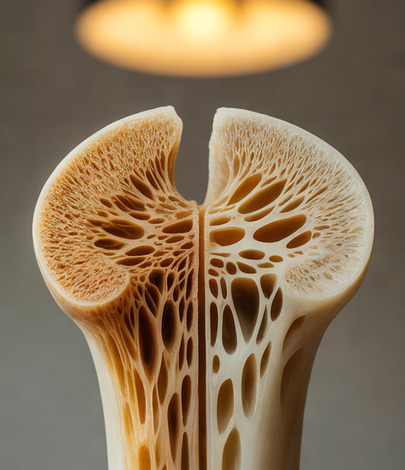
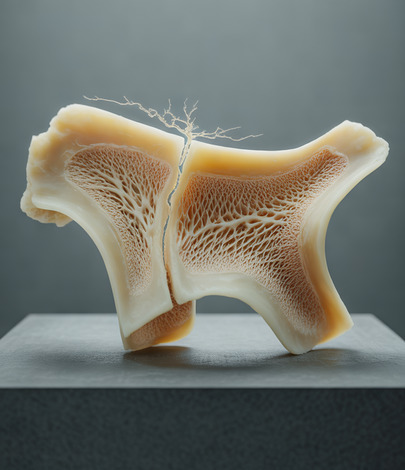
Bone responds to mechanical loading, specifically to impact forces and muscle contractions that create strain across the skeleton. Whether HIIT improves bone mineral density depends almost entirely on whether the chosen protocol involves impact.
Running-based HIIT, which involves repeated ground-reaction forces at high speed, provides the kind of impact stimulus that research consistently links to improved bone density at the hip and spine. A study of military cadets undergoing a HIIT-style programme found measurable improvements in hip bone density on DEXA compared with controls. Cycling-based HIIT, by contrast, is non-weight-bearing and does not generate the same skeletal loading. Swimmers and cyclists are well documented to have lower bone density than runners, and HIIT on a bike does not change that fundamental biomechanical reality.
If you are doing HIIT primarily on a spin bike or rowing machine and your bone density DEXA scan shows declining T-scores, the exercise format may not be providing the skeletal stimulus you need. Adding impact-based intervals, such as sprints, box jumps, or jumping rope, may help. For anyone with existing osteopenia or osteoporosis, high-impact HIIT should be discussed with a clinician before starting, because the same forces that build bone can also increase fracture risk in already-weakened bones.
Who Benefits Most from HIIT According to DEXA Data
DEXA-measured outcomes suggest that HIIT produces the most meaningful body composition changes in people who start with elevated body fat, particularly visceral fat, and who have been relatively sedentary or doing only low-intensity exercise. For someone already lean and well-trained, the incremental benefit of HIIT over other training methods is smaller.
Older adults appear to benefit substantially. The 2025 Frontiers in Endocrinology review found that HIIT reduced body fat percentage in adults over 60 without compromising lean mass, a combination that is difficult to achieve with caloric restriction alone and that directly addresses sarcopenic obesity risk. For this population, a DEXA scan before starting HIIT and again at 12 weeks provides objective evidence of whether the programme is working at a tissue level. We explored the mechanics of simultaneous fat loss and muscle gain in our guide to body recomposition and what your DEXA scan shows, and HIIT is one of the training formats best positioned to deliver that outcome.
Women navigating perimenopause or early menopause may also see particular benefit. Hormonal shifts during this period drive fat redistribution toward the trunk and visceral compartment. HIIT’s demonstrated ability to reduce android-region fat, documented on DEXA, makes it a practical complement to other interventions during this transition.
Frequently Asked Questions
How long does it take to see body composition changes from HIIT on a DEXA scan?
Most clinical trials measure outcomes at 8 to 12 weeks, and this is a reasonable timeframe to expect detectable changes on a DEXA scan. You may see a reduction in body fat percentage and stable or slightly improved lean mass within this window, provided sessions are performed at genuine high intensity at least three times per week.
Is HIIT better than weight training for body composition?
They serve different purposes. Resistance training is superior for building and preserving muscle mass. HIIT is more effective for cardiovascular fitness and time-efficient fat loss. For optimal body composition changes on a DEXA scan, combining both, with adequate protein intake, produces better results than either alone.
Will HIIT make me lose muscle?
The evidence suggests HIIT preserves lean mass better than steady-state cardio during a calorie deficit. However, excessive HIIT volume without sufficient recovery or protein can lead to overtraining and muscle breakdown. Three to four sessions per week, combined with strength training, is a well-supported approach.
Does HIIT reduce visceral fat specifically?
Yes, HIIT reduces visceral fat, but current evidence suggests it does so at a similar rate to moderate-intensity continuous exercise. The advantage of HIIT is achieving comparable results in less time. A DEXA scan is the most accurate way to measure visceral fat changes, as waist circumference and BMI often fail to detect shifts in this compartment.
Can I do HIIT if I have low bone density?
It depends on the type of HIIT and the severity of your bone loss. Low-impact HIIT on a bike or rower is generally safe but provides minimal bone benefit. High-impact HIIT involving jumping or sprinting may help build bone but carries fracture risk if bone density is already significantly reduced. Discuss your DEXA results with a clinician before starting a high-impact programme.
What This Means for You
HIIT is not a magic bullet, but it is a genuinely time-efficient way to improve body composition when measured objectively. The clinical evidence shows it reduces body fat percentage, appears to preserve lean mass better than traditional cardio, and, when impact-based, may support bone density. What it does not do is guarantee weight loss on a scale, which is precisely why a DEXA scan matters: it shows you what is actually changing beneath the surface.
If you are considering HIIT or are already training this way, a baseline DEXA scan gives you a precise starting point for fat mass, lean mass, visceral fat, and bone density across every region of your body. A follow-up scan at 12 weeks shows you exactly what your programme has achieved, measured in grams and percentages rather than guesswork.
To book your DEXA scan at our Harley Street clinic, call 0207 637 8227 or book online. We provide a full body composition and bone density report with a clinical consultation to help you understand your results and plan your next steps.
Weight management next step
If your DEXA results show elevated visceral fat or trunk fat that exercise alone has not shifted, a supervised medical weight-loss programme may help accelerate your progress. CutKilo, the sister service to DEXA London, offers doctor-led Mounjaro treatment from Dr. Emil Gadimali, combining medication with the kind of body composition monitoring that ensures you are losing fat, not muscle. Start the CutKilo questionnaire to see if you are suitable.