

Strength Training and Body Composition: What Your DEXA Scan Reveals Before and After Resistance Exercise
You have been lifting weights consistently for months. The mirror shows subtle changes, but you want hard numbers. A body composition DEXA scan gives you exactly that: precise measurements of fat mass, lean tissue, and bone mineral density across every region of your body, tracked over time with clinical accuracy.
Strength training reshapes your body in ways a bathroom scale cannot detect. You may gain muscle while losing fat, keeping total weight almost unchanged. Without a DEXA scan, you would have no reliable way to know whether your programme is working at the tissue level.
Quick answer: Resistance exercise increases lean mass, reduces fat mass (particularly visceral fat), and improves bone mineral density. A DEXA scan is the gold standard method to measure all three changes simultaneously, giving you a complete picture of how strength training is transforming your body from the inside out.
How Strength Training Changes Your Body Composition
Resistance exercise triggers a cascade of physiological adaptations. Muscle fibres repair and grow larger (hypertrophy), resting metabolic rate rises, and the body shifts toward using stored fat as fuel between sessions. A 2022 systematic review and meta-analysis published in Sports Medicine found that resistance training alone reduced body fat percentage by an average of 1.46% and total fat mass by 0.55 kg, while increasing lean body mass by 0.5 kg over programme durations of six to 52 weeks (Wewege et al., 2022).
These changes happen simultaneously, which is why the number on your scales can be misleading. If you gain 1 kg of muscle and lose 1 kg of fat, your weight stays the same, but your health profile and physical appearance improve meaningfully. A body composition DEXA scan captures both shifts in a single appointment, showing exactly where fat has decreased and where lean tissue has increased.
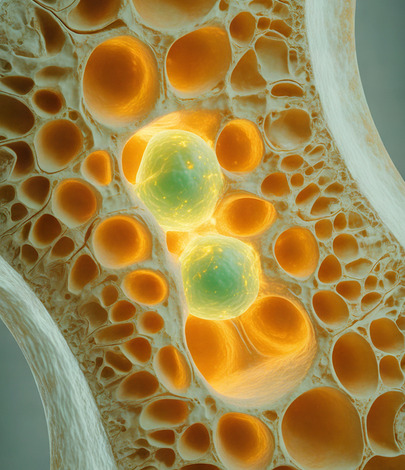
Bone mineral density also responds to mechanical loading. The International Osteoporosis Foundation notes that weight-bearing and resistance exercises stimulate bone formation and slow age-related bone loss, particularly at the hip and lumbar spine (IOF, 2023). This is especially relevant for women approaching or past menopause, when oestrogen-related bone loss accelerates.
Why Scales and BMI Miss the Full Picture
Body mass index divides your weight by the square of your height. It tells you nothing about what that weight consists of. A person with 30% body fat and a person with 18% body fat can share the same BMI if they weigh the same. The NHS acknowledges that BMI does not distinguish between fat and muscle mass, and that it may underestimate health risks in people who carry excess visceral fat despite a normal BMI (NHS, 2024).
Bathroom scales add another layer of noise. Daily weight fluctuates by 1 to 2 kg based on hydration, food intake, glycogen stores, and bowel contents. Over a 12-week strength programme, you might lose 2 kg of fat and gain 1.5 kg of muscle, yet the scale shows only a 0.5 kg drop. That small number can be discouraging if you do not have a way to see the full composition change beneath it.
Bioelectrical impedance devices (the scales and handheld gadgets that estimate body fat) are convenient but unreliable. Their readings shift with hydration status, recent meals, and skin temperature. A study in the British Journal of Nutrition found that BIA devices underestimated fat mass by up to 8% compared with DEXA in adults with higher body fat levels (Verney et al., 2015). For anyone tracking the subtle shifts that strength training produces, that margin of error is too wide to be useful.
What a DEXA Scan Measures and Why It Matters for Lifters
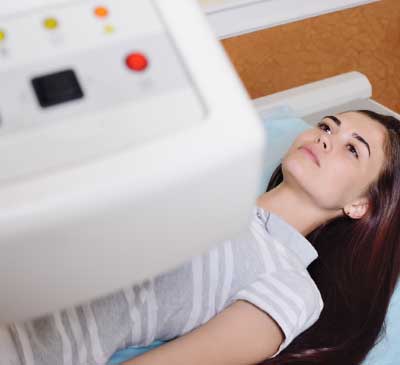
Dual-energy X-ray absorptiometry works by passing two low-dose X-ray beams through your body. Different tissues (bone, lean mass, fat) absorb each beam at different rates, allowing the scanner to map your composition region by region. The scan takes around 10 minutes and delivers a radiation dose roughly equivalent to one day of natural background exposure.
For someone following a strength training programme, the DEXA report breaks down several key metrics. Total and regional lean mass shows whether your arms, legs, and trunk are gaining muscle symmetrically or whether one side lags behind. Total and regional fat mass reveals where you are losing fat and whether visceral fat (the metabolically dangerous fat around your organs) is decreasing. Bone mineral density confirms whether your loading programme is maintaining or building bone strength. The full breakdown of how DEXA scanning works explains the technology and what each measurement means in clinical terms.
Tracking these values over time, ideally every three to six months, creates a clear trend line. You can see whether your training is producing the composition changes you want, whether your nutrition is supporting recovery, and whether any adjustments are needed.
What to Expect From Your First DEXA Scan as a Strength Trainee
Your first scan establishes a baseline. Arrive in light clothing without metal (zips, belt buckles, underwiring), and avoid training in the two hours before the appointment so that fluid shifts from exercise do not skew the lean mass reading. The scan itself is painless and non-invasive. You lie still on an open table while the scanner arm passes over you.
After the scan, you receive a detailed report. Pay particular attention to your appendicular lean mass index (ALMI), which divides your limb lean mass by your height squared. Healthy reference ranges exist for both sexes and various age groups, making it a useful benchmark for tracking muscle gain. Your android-to-gynoid fat ratio will tell you how your fat distribution compares to metabolic risk thresholds, which is especially relevant if fat loss is one of your training goals.
Schedule a follow-up scan after 12 to 16 weeks of consistent training. That window is long enough for measurable changes to appear. Comparing the two reports side by side will show exactly how much lean tissue you have gained, how much fat you have lost, and whether your bone density has shifted.
How to Use Your DEXA Results to Optimise Your Training Programme
If your follow-up scan shows lean mass increasing and fat mass decreasing, your programme and nutrition are aligned. If lean mass has plateaued, you may need to increase training volume, adjust protein intake, or improve sleep quality. The British Dietetic Association recommends 1.2 to 2.0 g of protein per kilogram of body weight daily for active adults aiming to build or preserve muscle (BDA, 2023). We covered the relationship between protein and muscle preservation in detail in our guide to how much protein you really need to preserve muscle and lose fat.
Regional data adds another layer. If your left leg has gained less lean tissue than your right, you may have a strength imbalance worth addressing with unilateral exercises. If trunk fat has dropped but limb fat has not, your programme may benefit from more metabolically demanding compound movements such as squats, deadlifts, and rows.
For older adults, maintaining or gaining bone mineral density at the hip and spine is a critical outcome. If your DEXA shows stable or improving T-scores alongside lean mass gains, your loading programme is doing its job. If bone density is declining despite regular training, a conversation with your GP about calcium, vitamin D, and hormonal factors may be warranted. You can learn more about what T-scores and Z-scores mean in our guide to DEXA T-score vs Z-score and bone health.
Strength Training, Visceral Fat, and Metabolic Health
Visceral adipose tissue sits deep in the abdominal cavity, wrapping around the liver, pancreas, and intestines. It is strongly linked to insulin resistance, type 2 diabetes, cardiovascular disease, and systemic inflammation. A 2021 meta-analysis in Obesity Reviews found that resistance training significantly reduced visceral fat in adults, independently of changes in body weight or dietary intervention (Verheggen et al., 2021).
DEXA scanners with CoreScan technology quantify visceral fat directly, measuring the volume in the android (abdominal) region with a precision that waist circumference or skinfold callipers cannot match. Tracking your visceral fat reading across scans is one of the most clinically meaningful ways to monitor whether your strength programme is reducing metabolic risk.
This matters even if your total body weight does not change much. Replacing visceral fat with lean tissue while maintaining overall weight is one of the most health-positive changes a strength training programme can produce. A bone density DEXA scan can also confirm that the mechanical loading from resistance exercise is supporting skeletal health at the same time.
Weight management next step
If your DEXA results show elevated visceral fat or you are combining strength training with a supervised weight-loss programme, preserving lean mass during fat loss is essential. CutKilo, the sister service to DEXA London, offers doctor-led Mounjaro treatment from Dr. Emil Gadimali, with body composition monitoring built into the programme. Start the CutKilo questionnaire to see if you are suitable.
Frequently Asked Questions
How often should I get a DEXA scan if I strength train regularly?
Every three to six months is ideal. That allows enough time for measurable changes in lean mass, fat mass, and bone density to appear. More frequent scanning is unlikely to show meaningful differences and may not be cost-effective.
Will strength training make me gain weight on the scale?
It can. Muscle tissue is denser than fat, so gaining muscle while losing fat may keep your weight stable or even increase it slightly. This is exactly why a DEXA scan is more informative than a scale: it shows whether the weight is lean tissue or fat.
Can DEXA detect muscle imbalances between my left and right side?
Yes. DEXA provides lean mass data for each arm and each leg individually, making it straightforward to spot asymmetries that might increase injury risk or limit performance.
Is the radiation from a DEXA scan safe if I scan every few months?
The radiation dose from a DEXA scan is extremely low, roughly equivalent to one or two days of natural background radiation. Scanning every three to six months poses no meaningful additional risk. The NHS and the International Society for Clinical Densitometry both consider serial DEXA scanning safe at these intervals.
Do I need to change my training before a DEXA appointment?
Avoid intense exercise in the two hours before your scan, as fluid shifts from training can temporarily alter lean mass readings. Otherwise, maintain your normal routine. Consistency across scan conditions improves the accuracy of comparisons over time.
Book Your DEXA Body Composition Scan
If you are serious about understanding what your strength training is doing beneath the surface, a DEXA scan is the most precise tool available. At DEXA London, our Harley Street clinic offers body composition and bone density scans with same-week availability. Your results are explained by a clinician and delivered in a detailed report you can use alongside your training log.
Call us on 0207 637 8227 or book online to schedule your scan. Whether this is your baseline or a follow-up, the data will give you clarity that no mirror, scale, or fitness tracker can match.
Dr Emil Gadimali