

Stress Fractures and Bone Density: What Your DEXA Scan Reveals About Why Bones Break Under Repetitive Load
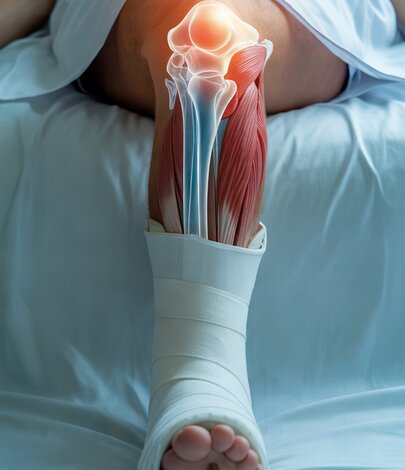
A stress fracture is not the dramatic snap most people picture when they hear the word “fracture.” It is a small, incomplete crack in bone caused by repetitive loading over time. The bone never experiences a single force large enough to break it outright. Instead, it absorbs thousands of smaller impacts that gradually outpace its ability to repair itself. By the time pain appears, the damage is already well established.
For runners, military recruits, dancers and anyone who trains on their feet, stress fractures are one of the most common overuse injuries. But the question clinicians increasingly ask is not just why did this bone crack but what does the underlying bone look like. That is where a DEXA scan changes the conversation. Rather than treating the fracture as an isolated event, a bone density assessment reveals whether the skeleton as a whole is weaker than it should be, turning a single injury into an early warning system for longer-term bone health.
Quick answer: Stress fractures happen when repetitive loading exceeds a bone’s capacity to repair itself. Low bone mineral density, measured by DEXA, is a well-established risk factor. A single stress fracture, especially in someone under 50, warrants investigation of underlying bone health. A DEXA scan quantifies that risk and guides prevention of future fractures.
What Causes a Stress Fracture
Bone is a living tissue in constant flux. Specialised cells called osteoclasts break down old or damaged bone, while osteoblasts lay down fresh bone matrix in its place. Under normal conditions, this remodelling cycle keeps pace with daily mechanical stress. A stress fracture develops when loading consistently outstrips repair.
Two broad categories describe how this imbalance occurs. In fatigue fractures, abnormal or excessive force is applied to normal bone. This is the classic runner’s stress fracture: a sudden jump in weekly mileage, a switch to harder running surfaces, or worn-out shoes that no longer absorb impact. In insufficiency fractures, normal everyday forces are applied to bone that is already weakened. Osteoporosis, poor calcium or vitamin D status, hormonal disruption and certain medications can all reduce bone density to the point where routine walking or standing creates enough strain to crack the cortex.
In practice, many stress fractures sit somewhere between these two extremes. An active person with mildly low bone density who increases training volume may experience both excessive load and insufficient bone quality simultaneously. That overlap is exactly why investigating bone density after a stress fracture matters so much.
Where Stress Fractures Happen Most Often
Stress fractures overwhelmingly favour the lower limbs, because these bones absorb the greatest repetitive impact during weight-bearing activity. Research published in the British Journal of Sports Medicine and military injury surveillance data consistently identify the same high-frequency sites.
The tibia (shinbone) accounts for roughly a quarter of all stress fractures and is especially common in distance runners and military recruits. The metatarsals of the forefoot rank next, particularly the second and third metatarsals in runners and dancers. The tarsal navicular, a small bone on the inner midfoot, represents about 18 per cent of cases and is classified as a high-risk site because of its limited blood supply and tendency toward non-union if not caught early. The femoral neck is less common but clinically serious: a missed femoral neck stress fracture can progress to a complete fracture requiring surgery.
The location itself can offer clues about bone quality. A metatarsal stress fracture after a sudden training spike in an otherwise healthy 25-year-old suggests a loading problem. A pelvic or sacral stress fracture in a 55-year-old who has not changed their activity level should prompt a more thorough investigation of underlying bone density.
The Link Between Bone Density and Stress Fracture Risk
Bone mineral density, measured by dual-energy X-ray absorptiometry (DEXA), is one of the strongest predictors of fracture risk across all fracture types. For stress fractures specifically, the relationship is nuanced but clinically important.
Large military cohort studies have shown that recruits in the lowest quartile of bone density at baseline suffer stress fractures at significantly higher rates during basic training than those in the highest quartile. A study published in the Journal of Bone and Mineral Research found that each standard-deviation decrease in tibial bone mineral density was associated with a measurable increase in stress fracture incidence. The Royal Osteoporosis Society notes that low bone density is a recognised risk factor for both fragility fractures and stress fractures.
What makes the DEXA scan particularly valuable is that it can detect low bone density before a fracture ever occurs. A runner whose bone density DEXA scan reveals a T-score in the osteopenic range has actionable information: targeted nutrition, training modification and possibly medical treatment can reduce future risk before the next hairline crack appears.
The scan also helps distinguish between someone who sustained a stress fracture purely due to overtraining and someone whose bone density contributed to the injury. That distinction changes the treatment plan entirely.
Who Should Get a DEXA Scan After a Stress Fracture
Not every stress fracture warrants a bone density investigation, but several clinical scenarios make a DEXA scan a sensible next step. The National Osteoporosis Guideline Group (NOGG) and the Royal Osteoporosis Society recommend considering bone density assessment in the following situations:
Recurrent stress fractures. A second stress fracture, particularly at a different site, strongly suggests an underlying bone quality issue rather than a one-off training error.
Stress fracture without a clear loading trigger. If you have not recently increased training volume, changed surfaces, or started a new sport, the fracture may reflect bone insufficiency rather than mechanical overload.
Menstrual irregularity or amenorrhoea. In female athletes and active women, disrupted periods are one of the strongest independent predictors of stress fractures, with research showing roughly four to five times higher odds compared with women who menstruate regularly. This links directly to the concept of Relative Energy Deficiency in Sport (RED-S).
Low body weight or restricted eating patterns. Chronic energy deficit impairs bone remodelling. A stress fracture in someone with a low BMI or a history of dietary restriction should prompt both a DEXA scan and a nutritional assessment.
Age over 50 with a stress fracture at a low-trauma site. In this group, a stress fracture can functionally be treated as a fragility fracture, and bone density assessment is part of standard clinical workup.
Use of medications known to affect bone. Long-term corticosteroids, proton pump inhibitors, certain anticonvulsants and aromatase inhibitors all reduce bone density. A stress fracture while on these medications justifies a DEXA scan to quantify the impact. We covered several of these in our guide to medications that cause bone loss.
How to Reduce Your Risk of Stress Fractures
Preventing stress fractures requires addressing both sides of the equation: managing the load placed on bone and strengthening the bone itself.
Progress training gradually. The most consistent modifiable risk factor for stress fractures is a rapid increase in training volume or intensity. The widely cited 10 per cent rule, which limits weekly mileage increases to 10 per cent, is a reasonable starting framework, though individual tolerance varies. Cross-training with lower-impact activities like swimming or cycling distributes load across different tissues. Our guide to endurance exercise and bone density in runners, cyclists and swimmers explores how different sports affect skeletal health in more detail.
Prioritise calcium and vitamin D. The NHS recommends 700 mg of calcium daily for adults, though many sports medicine bodies suggest 1,000 to 1,500 mg for athletes at high risk of bone stress injury. Vitamin D supports calcium absorption and bone mineralisation. A blood test can identify deficiency, which is common in the UK, particularly between October and March. Our article on calcium and bone density explores this in more detail.
Maintain energy availability. Chronic under-fuelling is one of the most underappreciated causes of bone fragility in active people. When calorie intake consistently falls short of expenditure, the body downregulates reproductive hormones, and bone remodelling slows. This applies to men as well as women, though the consequences tend to appear earlier in women because of the link between oestrogen and bone turnover.
Include impact and resistance training. Bones adapt to the specific forces placed on them. Runners who only run miss the multi-directional loading that strengthens bone more broadly. Adding two or three sessions of resistance training per week, along with occasional plyometric work (jumping, hopping), stimulates bone formation at clinically relevant sites like the hip and spine.
Address hormonal health. Irregular or absent periods in women and low testosterone in men are red flags for bone health. If these coincide with a stress fracture history, medical evaluation is warranted.
Frequently Asked Questions
Can a DEXA scan detect a stress fracture?
No. A DEXA scan measures bone mineral density across large skeletal regions. It does not image individual fractures. MRI is the gold standard for diagnosing a stress fracture. However, a DEXA scan reveals whether the bone density that contributed to the fracture is lower than expected, which is a different and equally important question.
How long after a stress fracture should I wait to get a DEXA scan?
There is no required waiting period. A DEXA scan measures systemic bone density at the hip and spine, not at the fracture site. You can have a scan while the fracture is still healing without affecting the results.
I am a runner and I have never had a stress fracture. Should I still get a DEXA scan?
If you run regularly and have any additional risk factors for low bone density, such as a family history of osteoporosis, low body weight, dietary restrictions, menstrual irregularity, or you are over 50, a baseline DEXA scan provides valuable reference data. You can read more about scan timing in our guide to how often you should get a DEXA scan.
Are stress fractures a sign of osteoporosis?
Not always, but they can be. A stress fracture in a young, otherwise healthy athlete who dramatically increased training is usually a loading issue. A stress fracture in someone over 50 with no obvious training trigger, or a recurrent stress fracture in a younger person, should raise suspicion of underlying osteopenia or osteoporosis and be followed up with a DEXA scan.
What T-score puts me at higher risk of a stress fracture?
A T-score below -1.0 (the threshold for osteopenia) is associated with increased fracture risk. The lower the T-score, the higher the risk. However, stress fractures can occur at any bone density level if the loading is excessive enough. The T-score provides context, not a binary yes-or-no answer.
What This Means for You
A stress fracture is your skeleton sending a signal. Sometimes that signal is simply “you did too much, too fast.” But sometimes it is pointing to something deeper: bone that is not as strong as it should be for your age, your activity level, or your goals.
A bone density DEXA scan gives you the information to tell those two stories apart. If your bone density is normal, you can focus on training load, recovery and footwear. If your density is low, you have caught it early enough to act: optimising nutrition, addressing hormonal factors, and potentially starting treatment before a second fracture occurs.
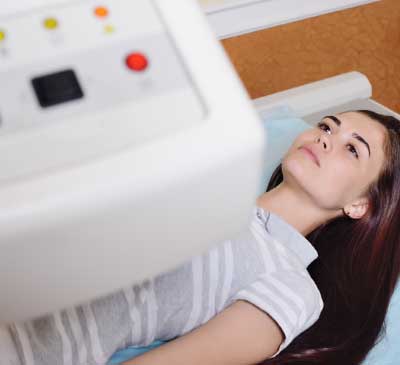
At DEXA London, our Harley Street clinic provides clinical-grade bone density and body composition DEXA scans with same-day results reviewed by Dr Emil Gadimali. Whether you are recovering from a stress fracture or want a baseline before your next training block, a scan takes less than 15 minutes and provides data that can shape your approach to bone health for years to come.
Book your DEXA scan at our Harley Street clinic or call 0207 637 8227.