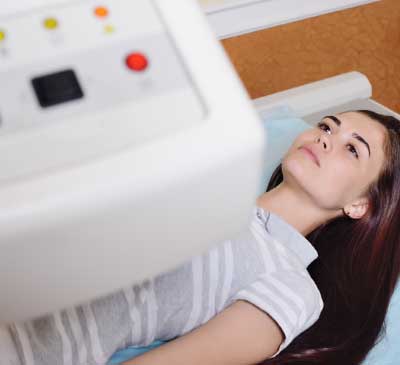




Bed Rest and Immobilisation: What Your DEXA Scan Reveals About How Inactivity Rapidly Affects Muscle and Bone
You fractured your ankle six weeks ago. The bone is healing well, the surgeon is pleased, but something else has changed. Your injured leg looks visibly thinner than the other one. Your trousers fit differently. You feel weaker climbing stairs than you did before the injury. This is not your imagination. Prolonged immobilisation triggers a cascade of physiological changes that affect both muscle mass and bone density far more rapidly than most people realise.
Whether you have been on bed rest after surgery, immobilised in a cast following a fracture, or confined to limited movement during a serious illness, the effects on your body composition are measurable, significant, and clinically important. A body composition DEXA scan is the most precise way to quantify exactly what has changed and to track your recovery over the weeks and months that follow.
Quick answer: Research shows that bed rest and immobilisation can cause muscle loss of approximately 0.5 to 0.7 percent per day in the affected limbs, with measurable bone density decline beginning within just five weeks. DEXA scanning provides the clinical precision needed to track these losses and guide rehabilitation decisions.
How Quickly You Lose Muscle During Bed Rest
The speed of muscle loss during immobilisation is genuinely alarming. A study published in the Journal of Rehabilitation Medicine found that leg muscle mass declines by roughly 0.5 to 0.7 percent per day during complete immobilisation. Over a single week, that adds up to around four to five percent of your total leg muscle volume. A separate NASA-linked bed rest study observed steady, linear muscle decline across most lower limb muscles over 70 days, with the soleus (the deep calf muscle critical for walking and standing) losing mass at 0.33 percent per day.
What makes this particularly concerning is that strength declines even faster than size. A systematic review in Frontiers in Physiology found that during the first two weeks of bed rest, muscle strength drops at roughly twice the rate of visible atrophy. You become functionally weaker before the muscle shrinkage is visually obvious. By the time you notice your leg looks thinner, you may have already lost significant functional capacity.
The NHS estimates it spends approximately £2.5 billion per year managing age-related muscle weakness, and the average hospital stay of around 4.5 days is enough to trigger the early stages of disuse atrophy in older patients. For younger, otherwise healthy individuals recovering from fractures or surgery, the immobilisation period is often longer, and the cumulative muscle loss is proportionally greater.
What Happens to Your Bones When You Stop Moving
Bone responds to mechanical loading. When you walk, run, lift, or simply stand against gravity, the forces transmitted through your skeleton stimulate osteoblasts (the cells that build new bone) and suppress osteoclasts (the cells that break bone down). Remove those forces through bed rest or immobilisation, and the balance tips sharply toward bone resorption.
A study using quantitative CT found measurable bone density decline at the proximal tibia after just five weeks of unloaded bed rest. Hip bone density decreased by 4.59 percent in bed rest studies of 60 to 90 days, with the lower limbs bearing the greatest losses. In children immobilised after surgery, average bone density losses of 11.5 percent were documented, with some cases losing up to a third of their bone mineral density.
Perhaps most concerning, research following hip fracture patients found accelerated bone loss not only at the fracture site, but also on the uninjured side. This systemic effect of immobility increases the risk of a second fracture, particularly in older adults. A prospective study measuring lumbar spine and contralateral femoral neck density by DEXA over the first year after hip fracture confirmed this pattern, and suggested bisphosphonate therapy as a potential way to limit the damage.
A bone density DEXA scan is the gold standard for measuring these changes accurately, and it provides the baseline data your clinician needs to make informed decisions about your recovery.
Why Muscle Loss and Bone Loss Reinforce Each Other
Muscle and bone are not independent systems. They share mechanical, hormonal, and biochemical connections that mean losing one accelerates the loss of the other. When muscle contracts against bone during movement, it generates mechanical strain that stimulates bone formation. Remove the muscle contractions, and the bone loses both the direct mechanical signal and the hormonal cross-talk that supports mineralisation.
This coupled decline creates a vicious cycle during immobilisation. Weaker muscles generate less force, which reduces the mechanical stimulus to bone, which causes bone density to fall, which increases fracture risk, which may lead to further immobilisation. Breaking this cycle requires understanding exactly where you stand, and that is where DEXA scanning becomes essential. A single scan quantifies both your lean mass (muscle) and your bone mineral density in the same appointment, giving your rehabilitation team a complete picture rather than two separate snapshots.
Who Is Most at Risk from Immobilisation-Related Losses
While anyone can lose muscle and bone during periods of immobility, certain groups face disproportionate risk. Postmenopausal women already have accelerated bone turnover due to declining oestrogen levels, so even a few weeks of bed rest can push bone density from a borderline range into clinical concern. Older adults over 65 tend to have lower baseline muscle mass (a condition known as age-related muscle loss or sarcopenia), which means the same percentage loss translates into a greater functional deficit.
People recovering from major surgery, particularly orthopaedic procedures such as hip or knee replacement, spinal fusion, or complex fracture fixation, often face weeks of restricted weight-bearing. ICU patients who survive critical illness frequently experience profound muscle wasting that can take months or years to reverse. And athletes who sustain injuries requiring prolonged non-weight-bearing treatment may find that their injured limb has lost significant muscle mass and bone density by the time they are cleared to train again.
People with pre-existing conditions that affect bone metabolism, such as coeliac disease, inflammatory bowel disease, thyroid disorders, or those taking corticosteroids, are at compounded risk. Their bones may already be under stress before immobilisation adds another layer of mineral loss.
How a DEXA Scan Tracks Recovery After Immobilisation
One of the most valuable aspects of DEXA technology is its ability to measure side-to-side differences. If you have had one leg immobilised following a fracture, DEXA can compare the lean mass and bone density of your injured leg against your uninjured leg, giving you a precise measurement of how much you have lost. This is more clinically useful than relying on overall body weight, which may not change at all, or on visual assessment, which is subjective.
To learn more about how DEXA scanning works, a typical monitoring schedule after significant immobilisation might include a baseline scan as soon as you are mobile enough to attend, a follow-up at 3 months, and a further scan at 6 to 12 months. Each scan takes approximately 7 to 12 minutes and involves minimal radiation exposure, comparable to a day of natural background radiation.
The data from serial DEXA scans allows your physiotherapist and doctor to see whether your rehabilitation programme is actually working. If lean mass in the affected limb is recovering as expected, you can continue with your current programme. If muscle recovery has stalled despite consistent effort, the scan data provides objective grounds for adjusting your approach, whether that means increasing resistance load, modifying exercise selection, reviewing nutritional intake, or investigating underlying causes such as hormonal imbalance or chronic inflammation.
Frequently Asked Questions
How long does it take to regain muscle lost during bed rest?
Recovery typically takes two to three times longer than the period of immobilisation. If you were immobilised for four weeks, expect eight to twelve weeks of progressive rehabilitation before lean mass returns to pre-injury levels. Older adults may take longer. A follow-up DEXA scan is the most reliable way to confirm that recovery is complete rather than relying on how you feel.
Does bone density come back after bed rest?
In most cases, bone density does recover once weight-bearing activity resumes, but it is slower than muscle recovery. Research following tibial fracture patients found that trochanteric bone density showed no sign of recovery at one year. Younger patients generally recover more completely than older ones. Serial DEXA scans are the clinical standard for monitoring bone density recovery over time.
Can I prevent muscle loss while I am immobilised?
Research suggests that even modest interventions help. Isometric exercises (contracting muscles without joint movement) performed during immobilisation have been shown to prevent some bone density loss at the femoral neck. Adequate protein intake (1.2 to 1.6 grams per kilogram of body weight per day) supports muscle protein synthesis even during disuse. Electrical muscle stimulation may also help maintain muscle mass in severely immobilised patients, though the evidence is still evolving.
When should I get a DEXA scan after injury or surgery?
As soon as you are mobile enough to attend the appointment. A scan taken shortly after immobilisation provides a baseline against which future recovery can be measured. If you had a DEXA scan before your injury or surgery, even better: your clinician can compare directly to your pre-injury values.
Is the muscle loss on one side dangerous?
Significant asymmetry in lean mass between limbs affects gait, balance, and joint loading. A leg with substantially less muscle provides less shock absorption and less stability, increasing the risk of falls and re-injury. DEXA scanning quantifies this asymmetry precisely, which helps your physiotherapist design a targeted programme to correct it.
What This Means for You
If you have recently been through a period of bed rest, immobilisation, or reduced mobility following injury, surgery, or illness, the changes to your muscle mass and bone density are real and measurable. They are not something you need to accept without data. A DEXA scan gives you and your healthcare team the precise information needed to guide your recovery, set realistic targets, and track progress objectively.
The earlier you establish a baseline, the more useful your follow-up scans become. Understanding exactly how much lean mass and bone density you have lost removes guesswork from rehabilitation and ensures your recovery programme is working, not just hoped to be working.
To book your DEXA body composition or bone density scan at our Harley Street clinic, call 0207 637 8227 or book online. Our clinical team can advise on the right scan for your situation and help you understand what your results mean for your recovery plan.