
Body Recomposition: Can You Build Muscle and Lose Fat at the Same Time? What Your DEXA Scan Shows
Quick Answer
Yes, body recomposition is real. Research confirms that you can lose fat and gain muscle at the same time, particularly if you combine resistance training with adequate protein intake. But the scale will not show it. A DEXA scan is the only accessible clinical tool that tracks fat mass and lean mass independently, so you can see recomposition happening even when your weight stays the same.
Body recomposition challenges a widespread assumption in fitness: that you must either “bulk” (gain muscle by eating in a calorie surplus, accepting some fat gain) or “cut” (lose fat in a deficit, accepting some muscle loss). For decades, these were treated as separate, alternating phases. But a growing body of peer-reviewed evidence suggests that for many people, simultaneous fat loss and muscle gain is not only possible but measurable, provided the right conditions are in place.
The problem is measurement. If you lose 3 kg of fat and gain 2 kg of muscle in the same period, the scale shows only a 1 kg drop. That single number tells you nothing about what actually changed inside your body. This is where a body composition DEXA scan becomes essential. DEXA measures fat mass, lean mass, and bone mineral content separately, and it reports these by body region, giving you the clearest possible picture of whether recomposition is genuinely occurring.
What Is Body Recomposition?
Body recomposition refers to the process of reducing body fat while simultaneously increasing or maintaining lean muscle mass. Unlike conventional weight loss, which focuses on reducing total body weight regardless of what is lost, recomposition focuses on improving the ratio of muscle to fat.
A 2024 review published in the Journal of Education, Health and Sport, integrating studies from 2019 to 2024 sourced from PubMed, concluded that with appropriate dietary and training strategies, achieving body recomposition is a realistic physiological outcome, not a marketing claim. The review highlighted resistance training and sufficient protein intake as the two most consistent predictors of success.
This distinction matters because many people who begin an exercise programme see minimal change on the scale and assume nothing is working. In reality, their body may be undergoing a meaningful shift in composition that only becomes visible when fat and muscle are measured independently.
Who Can Achieve Body Recomposition?
Body recomposition is most readily achieved by people who are relatively new to structured resistance training, sometimes called “newbie gains.” When you place a novel stimulus on untrained muscles while eating enough protein, the body responds by building muscle tissue even in a modest calorie deficit. This window is most pronounced in the first six to twelve months of consistent training.
People returning to training after a break also tend to recompose effectively. Muscle memory, driven by retained myonuclei within muscle fibres, allows previously trained individuals to rebuild lost muscle faster than they built it the first time, even while in a calorie deficit.
Individuals carrying higher levels of body fat have a larger energy reserve that the body can draw on to fuel muscle protein synthesis without requiring a calorie surplus. Research consistently shows that recomposition outcomes are more pronounced in this group compared to already-lean individuals.
For experienced, lean athletes, true recomposition becomes significantly harder. At lower body fat levels and higher training ages, the body resists losing fat and building muscle simultaneously. These individuals typically benefit more from structured bulk-and-cut cycles. A DEXA scan can clarify which category you fall into by providing precise baseline measurements of both fat mass and lean mass.
The Science Behind Simultaneous Fat Loss and Muscle Gain
Fat loss requires a net energy deficit: your body must burn more calories than it consumes. Muscle gain requires muscle protein synthesis to exceed muscle protein breakdown, which is most effectively stimulated by resistance training and supported by dietary protein. These two processes operate through different metabolic pathways, which is why they can, under the right conditions, occur in parallel.
A landmark 2018 meta-analysis by Morton and colleagues, published in the British Journal of Sports Medicine and involving 49 studies with 1,863 participants, found that protein supplementation during resistance training significantly increased gains in fat-free mass. The analysis identified 1.6 g of protein per kilogram of body weight per day as the threshold above which additional gains became marginal, though more recent evidence suggests benefits may extend up to 2.2 g/kg in trained individuals.
The hormonal environment also plays a role. Resistance training triggers acute elevations in testosterone, growth hormone, and insulin-like growth factor 1, all of which support muscle protein synthesis. Meanwhile, the energy deficit drives lipolysis (the breakdown of stored fat for fuel). As long as the deficit is moderate and protein intake is adequate, these processes can coexist without one undermining the other.
What trips most people up is impatience. Recomposition is slower than aggressive fat loss or dedicated muscle building. You may not see dramatic scale changes for weeks or months. Without objective measurement, it is easy to conclude that nothing is happening and abandon a programme that is, in fact, working.
Why the Scale Cannot Track Recomposition
A bathroom scale measures one thing: your total body weight. It cannot distinguish between fat, muscle, bone, water, or the contents of your digestive tract. During body recomposition, fat mass decreases while lean mass increases, and these opposing changes can cancel each other out on the scale.
Consider a realistic scenario: over eight weeks of structured training and good nutrition, you lose 2.5 kg of fat and gain 1.5 kg of muscle. The scale shows a 1 kg loss. That number is technically correct but profoundly misleading. It hides a net improvement of 4 kg in body composition (2.5 kg fat lost plus 1.5 kg muscle gained), which would translate into visible changes in how your clothes fit, how you look, and how you perform in the gym.
The British Heart Foundation notes that BMI and scale weight alone do not give a reliable picture of health risk, because they fail to account for fat distribution or the ratio of lean tissue to fat tissue. Two people at identical weights can have vastly different health profiles depending on their body composition.
This is precisely why clinicians and researchers use DEXA scanning as the reference standard for body composition assessment. DEXA does not guess or estimate. It directly measures fat mass, lean mass, and bone mineral content across every region of the body.
How a DEXA Scan Tracks Body Recomposition
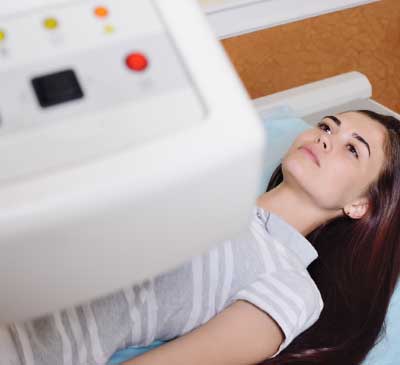
A body composition DEXA scan uses low-dose X-ray technology to differentiate between three tissue types: fat mass, lean mass (which includes muscle, organs, and water), and bone mineral content. The scan takes approximately ten minutes and produces a detailed report broken down by body region: arms, legs, trunk, and the android (abdominal) and gynoid (hip) zones.
For someone pursuing recomposition, this regional detail is particularly valuable. You can see whether you are losing fat specifically from the abdominal region (the most metabolically dangerous depot) and whether your lean mass gains are distributed evenly or concentrated in certain limbs. If your left arm shows less lean mass than your right, you can adjust your training to correct the imbalance.
Repeat scans at eight to twelve week intervals allow you to track the trajectory of both fat and muscle independently. Rather than relying on subjective impressions or unreliable consumer devices, you get a clinically validated measurement that shows exactly what is changing and by how much.
This is especially important for people taking GLP-1 receptor agonists such as Mounjaro (tirzepatide) or semaglutide for weight management. These medications produce significant fat loss, but research has raised concerns about concurrent muscle loss. A DEXA scan allows patients and their clinicians to monitor lean mass throughout treatment and intervene with resistance training or dietary adjustments if muscle is being lost alongside fat.
Practical Steps to Support Body Recomposition
Resistance training is non-negotiable. The 2024 JEHS review found that groups performing higher-load resistance exercise achieved significantly greater recomposition outcomes than those doing lower-load work. Aim for three to four sessions per week, focusing on compound movements such as squats, deadlifts, bench presses, and rows that recruit large muscle groups and produce a strong stimulus for muscle protein synthesis.
Protein intake matters more than total calorie counting during recomposition. The Morton et al. meta-analysis supports a target of at least 1.6 g of protein per kilogram of body weight per day. For a 75 kg individual, that translates to 120 g of protein daily, spread across three to four meals. Good sources include lean meat, fish, eggs, Greek yoghurt, legumes, and tofu. We covered this topic in detail in our guide to how much protein you really need to preserve muscle and lose fat.
A moderate calorie deficit of 300 to 500 calories per day supports fat loss without starving the muscle-building process. Severe calorie restriction suppresses muscle protein synthesis and increases the proportion of weight lost as lean tissue rather than fat.
Sleep is frequently overlooked but critically important. Research published in the Annals of Internal Medicine showed that participants who slept 5.5 hours per night lost 60% more lean mass than those sleeping 8.5 hours, even when calorie intake was identical. Prioritise seven to nine hours of quality sleep per night.
Finally, track your progress objectively. A baseline DEXA scan before you begin, followed by a repeat scan at 8 to 12 weeks, provides hard data on whether your programme is producing the compositional changes you are aiming for.
Frequently Asked Questions
How long does body recomposition take to show on a DEXA scan?
Most people see measurable changes in both fat mass and lean mass within 8 to 12 weeks of consistent resistance training and adequate protein intake. This is the recommended minimum interval between DEXA scans, as it allows enough physiological change to exceed the scan’s measurement precision.
Can you recompose without losing weight?
Yes. In many cases, body weight stays the same or changes only slightly during recomposition because fat loss and muscle gain offset each other on the scale. This is exactly why a DEXA scan is valuable: it reveals changes that the scale hides.
Is body recomposition possible for older adults?
Yes. Research shows that older adults, including postmenopausal women, can achieve measurable recomposition through resistance training and higher protein diets, though the rate of muscle gain may be slower than in younger individuals. DEXA scanning is particularly useful in this group because it also monitors bone density alongside body composition.
Is a DEXA scan more accurate than bioimpedance scales?
Yes. DEXA is considered the clinical gold standard for body composition measurement. Bioimpedance scales estimate body fat using electrical resistance, which is significantly affected by hydration status, recent meals, and exercise. DEXA measures tissue density directly and provides regional breakdowns that bioimpedance devices cannot.
How much does a body composition DEXA scan cost?
At DEXA London on Harley Street, a body composition scan is competitively priced and provides a detailed clinical report. Contact us on 0207 637 8227 to book or ask about repeat scan packages for tracking your recomposition journey.
Book Your Body Composition DEXA Scan
If you are pursuing body recomposition and want to know whether your programme is genuinely changing your body composition, a DEXA scan provides the clinical data you need. At DEXA London, our Harley Street clinic offers fast, accurate body composition scans with a detailed report you can use to guide your training and nutrition decisions.
Call us on 0207 637 8227 or book online to schedule your scan. Whether you are just starting a recomposition programme or want to check your progress after several months of training, DEXA gives you the clearest picture of what is happening beneath the surface.
Weight management next step
If your DEXA results show elevated body fat or you are finding it difficult to lose fat through diet and exercise alone, a supervised weight-loss programme may help accelerate your recomposition. CutKilo, the sister service to DEXA London, offers doctor-led Mounjaro treatment from Dr. Emil Gadimali. Start the CutKilo questionnaire to see if you are suitable.