
Age-Related Muscle Loss (Sarcopenia): What Your DEXA Scan Reveals After 40
Quick answer: Sarcopenia is the gradual loss of skeletal muscle mass and strength that begins around age 30 and accelerates after 40. A body composition DEXA scan is the clinical gold standard for diagnosing sarcopenia because it measures appendicular lean mass (ALM) with precision that no scale, calliper, or bioimpedance device can match.
Most people associate ageing with weight gain, joint pain, or slower recovery. Fewer realise that muscle itself is quietly disappearing. By the time grip strength noticeably declines or climbing stairs feels harder than it used to, years of muscle tissue may already be gone. A DEXA scan captures this loss in hard numbers before symptoms become obvious, giving you a window to intervene while the condition is still reversible.
This guide explains what sarcopenia is, how it develops, who is most at risk, and exactly what a DEXA scan reveals about your muscle health after 40.
What Is Sarcopenia?
Sarcopenia is the progressive, age-related decline in skeletal muscle mass, strength, and physical function. The term comes from the Greek words sarx (flesh) and penia (poverty). It was formally recognised as a disease with its own ICD-10 code (M62.84) in 2016, reflecting a shift in how medicine views muscle loss: not as an inevitable part of getting older, but as a diagnosable and treatable condition.
According to the European Working Group on Sarcopenia in Older People (EWGSOP2), sarcopenia is now diagnosed using a combination of low muscle strength (often measured by grip strength), confirmed low muscle mass (measured by DEXA), and reduced physical performance such as slower walking speed (Cruz-Jentoft et al., 2019, Age and Ageing).
Prevalence estimates vary by population and diagnostic criteria, but research suggests that sarcopenia affects roughly 10 to 16 percent of adults over 60 worldwide (Mayhew et al., 2019, Journal of Cachexia, Sarcopenia and Muscle). In the UK, where the population is ageing rapidly, the condition is increasingly recognised as a public health priority by the NHS and professional bodies such as the British Geriatrics Society.
How Sarcopenia Develops After 40
Muscle mass typically peaks between the ages of 25 and 30. From around age 30, adults lose approximately 3 to 8 percent of their muscle mass per decade. After 60, the rate of decline accelerates sharply, with some studies reporting losses of up to 15 percent per decade in sedentary individuals (Volpi et al., 2004, Current Opinion in Clinical Nutrition and Metabolic Care).
Several biological processes drive this decline. Anabolic hormones such as testosterone, growth hormone, and IGF-1 decrease with age, reducing the body’s capacity to synthesise new muscle protein. Motor neurone loss causes entire muscle fibres to atrophy and disappear. Chronic low-grade inflammation, sometimes called “inflammaging,” further impairs muscle repair. Mitochondrial dysfunction reduces the energy available for muscle contraction and regeneration.
Lifestyle factors compound the biological decline. Physical inactivity is the single strongest accelerator of sarcopenia. Inadequate protein intake, particularly common in older adults who eat less overall, limits the raw material available for muscle maintenance. Chronic illness, prolonged bed rest, and certain medications (including corticosteroids) can also speed up muscle wasting.
The critical point is that sarcopenia does not announce itself with a sudden event. It is a slow, silent process. Most people do not notice the loss until functional consequences appear: difficulty rising from a chair, reduced balance, unexplained fatigue during activities that once felt easy. By that stage, significant muscle tissue has already been lost.
How a DEXA Scan Diagnoses Sarcopenia
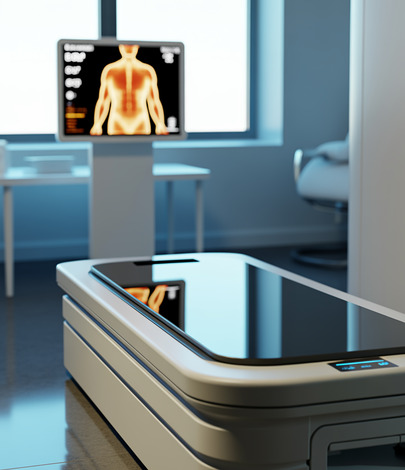
DEXA (dual-energy X-ray absorptiometry) is recognised as the reference standard for measuring body composition in clinical practice. A full-body DEXA scan separates your tissue into three compartments: fat mass, lean mass (primarily muscle), and bone mineral content. It does this for every region of the body, including arms, legs, trunk, and the android and gynoid zones.
For sarcopenia diagnosis, the key measurement is appendicular lean mass (ALM), which is the total lean tissue in your arms and legs combined. This is then adjusted for body size to produce the appendicular lean mass index (ALMI), calculated as ALM divided by height squared (kg/m²). To learn more about how DEXA scanning works, our dedicated guide covers the technology in detail.
The EWGSOP2 diagnostic thresholds for low muscle mass are an ALMI below 7.0 kg/m² for men and below 5.5 kg/m² for women. Values below these cut-offs, combined with reduced grip strength or slow gait speed, confirm a diagnosis of sarcopenia.
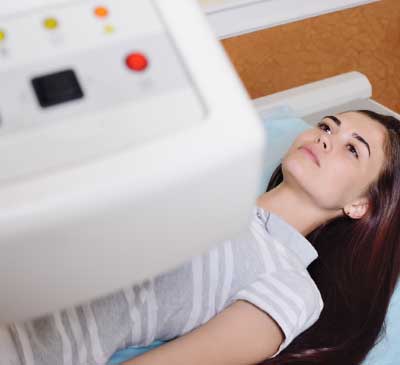
Unlike bioimpedance scales or skinfold callipers, DEXA is not affected by hydration status, recent meals, or exercise. It uses a very low dose of radiation (less than a day’s natural background exposure) and the scan itself takes approximately 7 to 12 minutes. The precision of DEXA means it can detect changes in lean mass as small as 200 to 300 grams between scans, making it ideal for tracking whether your muscle is stable, declining, or responding to intervention.
Who Should Get a DEXA Scan for Sarcopenia?
Sarcopenia screening is not yet part of routine NHS health checks, but clinical guidelines increasingly recommend assessment for adults who fall into specific risk categories. You should consider a DEXA body composition scan if you are over 40 and recognise any of the following patterns.
Age over 50 with a sedentary lifestyle. If you spend most of your day sitting and do not engage in regular resistance exercise, you are at significantly higher risk of accelerated muscle loss. A DEXA scan provides a baseline measurement of your lean mass before functional decline becomes apparent.
Unexplained weight loss or weakness. Losing weight without trying, especially if accompanied by reduced strength or endurance, may indicate that you are losing muscle rather than fat. DEXA distinguishes between the two with clinical-grade accuracy.
Chronic conditions that accelerate muscle loss. Type 2 diabetes, chronic kidney disease, heart failure, COPD, rheumatoid arthritis, and cancer are all associated with accelerated sarcopenia. If you have one of these conditions, monitoring your lean mass helps your clinical team adjust treatment and rehabilitation plans.
Post-menopausal women. The hormonal changes of menopause affect not only bone density but also muscle mass. Women who have already had a bone density DEXA scan can benefit from a body composition scan to assess both compartments simultaneously.
Adults using GLP-1 medications for weight loss. Drugs such as Mounjaro (tirzepatide), Ozempic, and Wegovy cause significant weight reduction, but a proportion of that weight loss comes from lean tissue rather than fat. A DEXA scan before, during, and after treatment helps ensure that muscle preservation strategies (such as increased protein intake and resistance training) are working.
What Your DEXA Results Mean for Muscle Mass
Your DEXA report will include several measurements relevant to sarcopenia assessment. Understanding what they mean helps you interpret your results with your clinician.
Total lean mass is the sum of all non-fat, non-bone tissue in your body. This includes skeletal muscle, organ tissue, and water. While useful as an overall indicator, it is less specific than appendicular lean mass for sarcopenia diagnosis.
Appendicular lean mass (ALM) isolates the lean tissue in your arms and legs, which is almost entirely skeletal muscle. This is the measurement that matters most for sarcopenia. Your ALMI (ALM/height²) is compared against the EWGSOP2 thresholds: below 7.0 kg/m² for men or below 5.5 kg/m² for women indicates low muscle mass.
Regional lean mass shows whether muscle loss is symmetrical or concentrated in specific limbs. Asymmetric loss can indicate localised nerve or joint problems rather than generalised sarcopenia.
Lean mass trend over time is where DEXA’s precision becomes most valuable. A single scan tells you where you stand. Serial scans, taken 6 to 12 months apart, reveal the trajectory. A stable or increasing lean mass trend in someone over 50 who is actively training is a strong positive signal. A declining trend, even if current values are above the sarcopenia threshold, is a warning that intervention is needed before the condition becomes established.
How to Prevent and Reverse Age-Related Muscle Loss
The most encouraging aspect of sarcopenia is that it responds to intervention at every stage. Even in adults over 80, structured resistance training and nutritional optimisation can increase muscle mass and improve strength (Liu and Latham, 2009, Cochrane Database of Systematic Reviews).
Progressive resistance training is the single most effective intervention. The NHS recommends that adults do strengthening activities that work all major muscle groups on at least two days per week. For sarcopenia prevention and reversal, clinical evidence supports training two to three times per week with progressively increasing loads, targeting all major muscle groups through compound movements such as squats, deadlifts, presses, and rows.
Protein intake is the nutritional cornerstone. The current UK Reference Nutrient Intake for protein (0.75 g per kg body weight per day) is increasingly viewed as insufficient for older adults. The PROT-AGE study group recommends 1.0 to 1.2 g per kg per day for healthy older adults, and 1.2 to 1.5 g per kg per day for those with acute or chronic illness (Bauer et al., 2013, Journal of the American Medical Directors Association). Distributing protein evenly across meals, with 25 to 30 grams per meal, optimises muscle protein synthesis throughout the day.
Vitamin D plays a role in muscle function as well as bone health. Deficiency is common in the UK, particularly during winter months, and has been linked to reduced muscle strength and increased fall risk. The NHS recommends 10 micrograms (400 IU) daily for adults in autumn and winter, though higher doses may be appropriate for those with confirmed deficiency.
We covered the relationship between resistance exercise and body composition in detail in our guide to strength training and body composition on a DEXA scan, which includes practical recommendations for training frequency and load progression.
Frequently Asked Questions
At what age does sarcopenia start?
Muscle mass begins to decline gradually from around age 30, but the rate of loss accelerates significantly after 50. Most people do not notice functional effects until their 60s or 70s unless they are specifically monitoring their body composition.
Can a DEXA scan detect sarcopenia early?
Yes. DEXA measures appendicular lean mass with enough precision to identify low muscle mass years before symptoms appear. This is why a baseline scan in your 40s or 50s is valuable: it gives you a reference point against which future scans can be compared.
Is sarcopenia the same as sarcopenic obesity?
No. Sarcopenia refers to low muscle mass and strength, regardless of fat levels. Sarcopenic obesity is a specific condition where low muscle mass coexists with excess body fat, which carries additional metabolic risks. A DEXA scan can identify both conditions because it measures fat and lean tissue independently.
Can sarcopenia be reversed?
In most cases, yes. Progressive resistance training combined with adequate protein intake has been shown to increase muscle mass and strength even in adults over 80. The earlier you begin intervention, the more effective it tends to be.
How often should I get a DEXA scan to track muscle mass?
For most adults monitoring sarcopenia risk, a scan every 6 to 12 months provides a meaningful interval for detecting changes. If you are actively intervening with resistance training and dietary changes, a follow-up scan at 6 months can confirm whether your programme is producing measurable results.
Book Your DEXA Body Composition Scan
If you are over 40 and want to know where your muscle mass stands, a DEXA body composition scan at our Harley Street clinic provides the clinical-grade data you need. Our scans measure total and regional lean mass, appendicular lean mass index, body fat percentage, visceral fat, and bone mineral density in a single 12-minute appointment.
To book your scan or ask a question about sarcopenia screening, call us on 0207 637 8227 or use the booking button on this page. Our clinic is located at 86 Harley Street, London W1G 7HP.
Written by Dr Emil Gadimali
Weight management next step
If your DEXA results show declining lean mass alongside elevated body fat, a supervised weight-loss programme that prioritises muscle preservation may be worth considering. CutKilo, the sister service to DEXA London, offers doctor-led Mounjaro treatment from Dr. Emil Gadimali, with protocols specifically designed to protect muscle tissue during weight loss. Start the CutKilo questionnaire to see if you are suitable.