

DEXA Scan After Bariatric Surgery: How to Monitor Body Composition, Muscle Loss, and Bone Density Changes
Quick answer: Bariatric surgery produces rapid, significant weight loss, but not all of that weight comes from fat. Up to 30% of the weight lost after surgery can be fat-free mass, including muscle and bone. A body composition DEXA scan is the gold standard for distinguishing fat loss from muscle and bone loss after surgery, helping you and your clinical team monitor what matters most for long-term health.
Bariatric surgery is one of the most effective treatments for severe obesity, delivering sustained weight loss that diet and exercise alone rarely achieve. In the UK, procedures such as gastric sleeve and Roux-en-Y gastric bypass have become increasingly common, with thousands of NHS-funded and private procedures performed each year.
However, the rapid weight loss that follows surgery brings significant changes to body composition that a standard bathroom scale cannot detect. Research published in Frontiers in Endocrinology shows that bone mineral density at the hip can fall by 0.12 g/cm² within the first year after surgery, while a systematic review in Obesity Reviews found that significant muscle loss begins within the first month. These changes carry real clinical consequences, from increased fracture risk to reduced metabolic rate and functional strength.
A DEXA scan provides the precise, segmental data needed to track these shifts. It separates total weight loss into its three key components: fat mass, lean mass, and bone mineral density. This article explains what happens to your body after bariatric surgery, how DEXA monitoring helps, and what you can do to protect muscle and bone as you lose weight.
Why Body Composition Monitoring Matters After Bariatric Surgery
When you step on a scale after bariatric surgery, the number drops quickly. Most patients lose 60% to 70% of their excess body weight within the first 12 to 18 months. That figure is encouraging, but it tells you nothing about what you are actually losing.
Weight loss after surgery is never entirely fat. A proportion always comes from lean tissue, including skeletal muscle and bone mineral content. According to a 2025 study published in PubMed Central, excessive fat-free mass loss is a recognised complication of bariatric surgery, with the magnitude, timing, and determinants varying by procedure type and individual patient factors.
This matters for several reasons. Muscle mass is the primary driver of resting metabolic rate. Losing too much muscle slows your metabolism, making further weight loss harder and weight regain more likely. Bone mineral density loss increases fracture risk, particularly at the hip. And reduced functional muscle mass can affect mobility, balance, and quality of life in the years after surgery.
A body composition DEXA scan is the only widely available clinical tool that measures all three components (fat, lean tissue, and bone) in a single, quick appointment. It gives you and your surgeon the data needed to adjust nutrition, exercise, and supplementation before problems develop.
What Happens to Your Body After Weight Loss Surgery
In the first three months after bariatric surgery, the body undergoes its most dramatic compositional changes. Caloric intake drops sharply, often to 600 to 800 calories per day, and the body begins drawing on stored energy from both fat and lean tissue.
Fat mass reduction is the largest component of weight loss, and this is the intended outcome. Visceral fat, the metabolically active fat stored around internal organs, tends to decrease substantially, which is associated with improvements in insulin sensitivity, blood pressure, and lipid profiles.
Muscle mass decline begins within the first month. A 2023 systematic review and meta-analysis published in Obesity Reviews found that absolute muscle quantity declined at all timepoints after surgery, with over half of the annual muscle loss occurring within the first three months. The standardised mean difference at one year was -0.80, indicating a large effect size.
Bone mineral density changes are slower to develop but persistent. Research in Frontiers in Endocrinology using high-resolution imaging showed lower cortical density, higher cortical porosity, and lower trabecular density for up to five years after surgery. The mechanisms include reduced mechanical loading on bones as body weight falls, malabsorption of calcium and vitamin D (particularly after Roux-en-Y bypass), and changes in hormones that regulate bone turnover.
These three processes happen simultaneously but at different rates, which is precisely why a single body weight measurement is insufficient. A DEXA scan captures all three at once.
How a DEXA Scan Tracks Changes After Bariatric Surgery
DEXA (dual-energy X-ray absorptiometry) works by passing two low-dose X-ray beams through the body at different energy levels. The way each tissue type absorbs these beams allows the scanner to distinguish fat from lean tissue from bone with high precision. To learn more about how DEXA scanning works, visit our detailed explainer page.
For bariatric surgery patients, a DEXA scan provides several specific measurements that matter.
Total and regional body fat percentage: This tells you how much of your remaining weight is fat and where it is distributed. Visceral adipose tissue (VAT) estimation on modern DEXA scanners is particularly valuable, as visceral fat reduction is one of the primary metabolic benefits of surgery.
Lean mass by body region: DEXA measures lean tissue in the arms, legs, and trunk separately. This segmental data reveals whether you are losing muscle symmetrically or disproportionately in certain areas, and whether appendicular skeletal muscle mass (a key marker of sarcopenia risk) is being preserved.
Bone mineral density (BMD): The same scan produces T-scores and Z-scores for the lumbar spine and hip. A bone density DEXA scan can detect early bone loss long before a fracture occurs, giving your clinical team time to intervene with calcium, vitamin D, or medication if needed.
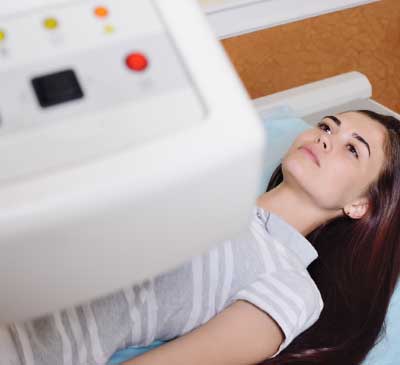
The scan takes approximately 10 to 15 minutes, involves minimal radiation (less than a day of natural background exposure), and requires no special preparation. For post-bariatric patients, it is the single most informative test available for tracking the quality of weight loss over time.
Muscle Loss After Bariatric Surgery: What the Evidence Shows
Losing some lean mass during rapid weight loss is physiologically normal. The concern after bariatric surgery is the magnitude and speed of that loss, and whether it can be mitigated.
A comprehensive systematic review published in Obesity Reviews (2025) analysed muscle outcomes across multiple bariatric procedures. The findings showed that significant postoperative loss of muscle mass is apparent within one month of surgery, with the rate of loss highest in the first three months. Importantly, while absolute muscle mass declines, muscle strength appears to be relatively preserved in many patients, suggesting that the functional impact depends on individual factors including pre-operative fitness and post-operative exercise habits.
The proportion of weight lost as fat-free mass varies by procedure. Roux-en-Y gastric bypass tends to produce greater total weight loss but also greater lean mass loss compared to sleeve gastrectomy. Patient age, starting body composition, protein intake, and physical activity levels all influence the ratio of fat to lean tissue loss.
The challenge of lean mass preservation is not unique to surgical weight loss. Patients using GLP-1 and GIP receptor agonists such as tirzepatide and semaglutide face similar concerns, as we explored in our guide to muscle loss with GLP-1 and GIP agonists. In both cases, a DEXA scan is the clinical standard for quantifying lean mass changes over time.
By comparing sequential scans at 3, 6, and 12 months post-surgery, your clinical team can calculate exactly how much of the weight you have lost is fat versus lean tissue, and intervene early if lean mass loss is excessive.
Bone Density Changes After Weight Loss Surgery
Bone health after bariatric surgery is an area of growing clinical concern. Research published in Frontiers in Endocrinology has shown that bone deterioration after surgery is not a short-term phenomenon. It continues for years, and fracture risk appears to increase over time rather than resolving once weight stabilises.
A study of 675 bariatric surgery patients found that the prevalence of osteoporosis more than tripled after surgery, rising from 0.9% pre-operatively to 3.6% post-operatively. BMD reductions were most pronounced at the hip, with mixed surgical procedures showing a mean loss of 0.12 g/cm² at the hip within the first year.
Several mechanisms contribute to this. Reduced mechanical loading is perhaps the most intuitive: when you weigh significantly less, your bones experience less stress, and bone density adapts accordingly. After malabsorptive procedures such as Roux-en-Y bypass, calcium and vitamin D absorption is impaired, directly affecting bone mineralisation. Changes in adipokines, gut hormones, and parathyroid hormone levels also play a role.
The British Obesity and Metabolic Surgery Society (BOMSS) recommends calcium and vitamin D supplementation (1,000 mg calcium and 800 IU vitamin D daily) for all bariatric surgery patients. However, supplementation alone may not fully prevent bone loss. Regular bone density DEXA scans are essential for detecting early bone mineral density changes and adjusting treatment before fracture risk becomes clinically significant.
How to Protect Muscle and Bone After Bariatric Surgery
The evidence points to several strategies that can help preserve lean mass and bone density during post-surgical weight loss.
Adequate protein intake: The PROMISE trial and related research have shown that higher protein intake is associated with better fat-free mass preservation after bariatric surgery. A protein-enriched diet (approximately 2.0 g per kg of ideal body weight per day) led to greater fat mass reduction and less lean mass loss compared to standard protein intake. Whey protein supplementation has shown particular promise, with a 2025 study confirming its role in supporting fat-free mass preservation during the post-operative phase.
Resistance exercise: Progressive resistance training is the most effective non-nutritional intervention for preserving muscle mass during weight loss. Multiple ongoing clinical trials are investigating the combination of protein supplementation with resistance exercise, and early findings support this combined approach. Starting a supervised programme as soon as your surgical team clears you for exercise is advisable.
Calcium and vitamin D supplementation: Following BOMSS guidelines, supplementation with 1,000 mg calcium and 800 IU vitamin D daily is recommended for all post-bariatric patients. Your clinical team may increase these doses based on blood test results, particularly after malabsorptive procedures.
Regular DEXA monitoring: A baseline DEXA scan before surgery, followed by scans at 3 to 6 months, 12 months, and annually thereafter, provides the objective data needed to assess whether your protective strategies are working. If lean mass is declining faster than expected, or if bone density is dropping below safe thresholds, your team can adjust your programme early.
How Often Should You Get a DEXA Scan After Bariatric Surgery
The optimal scanning schedule depends on your procedure type, rate of weight loss, and individual risk factors. As a general guide, the following timeline is clinically appropriate for most bariatric surgery patients.
Before surgery (baseline): A pre-operative DEXA scan establishes your starting body composition and bone density. This is the reference point against which all post-operative changes are measured. Without a baseline, it is difficult to quantify whether post-surgical changes are within normal limits or require intervention.
3 to 6 months post-surgery: The first follow-up scan captures the period of most rapid change. Since over half of annual muscle loss occurs in the first three months, an early scan can identify patients who are losing lean mass disproportionately quickly and may benefit from nutritional or exercise adjustments.
12 months post-surgery: By this point, most patients have achieved the majority of their total weight loss. A one-year scan provides a comprehensive picture of where body composition has settled, and whether bone density has been adequately maintained.
Annually thereafter: Ongoing annual scans are recommended for at least the first five years, as bone density changes can continue well beyond the initial weight-loss phase. Patients on medications known to affect bone metabolism, or those with pre-existing osteopenia, may benefit from more frequent monitoring.
Frequently Asked Questions
Is a DEXA scan safe after bariatric surgery?
Yes. A DEXA scan uses extremely low radiation, equivalent to less than one day of natural background exposure. There are no contraindications related to bariatric surgery, and the scan requires no contrast agents or injections.
Will my bariatric surgery affect DEXA scan accuracy?
Bariatric surgery itself does not affect the technical accuracy of a DEXA scan. However, very rapid weight changes can occasionally produce small measurement artefacts related to hydration shifts. This is one reason why consistent scanning conditions (same time of day, similar hydration) are recommended for serial comparisons.
Do I need a GP referral for a DEXA scan?
No. At DEXA London, you can book a body composition or bone density scan directly without a referral. Many patients choose to share their results with their bariatric surgeon or GP for integrated care.
Can a DEXA scan tell me if I am losing too much muscle?
Yes. DEXA measures lean mass in each body region separately. By comparing sequential scans, your clinician can calculate the percentage of weight lost as lean tissue versus fat. If the lean mass loss exceeds expected thresholds, dietary and exercise adjustments can be made.
What is the difference between a body composition DEXA scan and a bone density DEXA scan?
A body composition scan measures fat, lean tissue, and bone across the whole body. A bone density scan focuses specifically on the lumbar spine and hip, producing T-scores used to diagnose osteopenia or osteoporosis. Many bariatric surgery patients benefit from both, and at DEXA London both can be performed in a single appointment.
How much muscle loss after bariatric surgery is normal?
Some lean mass loss is expected during any significant weight loss. Research suggests that 20% to 30% of total weight lost may come from fat-free mass, though this varies by procedure type and individual factors. Adequate protein intake and resistance exercise can reduce this proportion.
Book Your Post-Bariatric Surgery DEXA Scan at Our Harley Street Clinic
Considering your weight loss options?
If you are exploring non-surgical alternatives to bariatric surgery, or if your DEXA results suggest that a supervised weight-loss programme could help reduce visceral fat and metabolic risk, CutKilo, the sister service to DEXA London, offers doctor-led Mounjaro (tirzepatide) treatment under the supervision of Dr Emil Gadimali. Start the CutKilo questionnaire to find out if you are suitable.
At DEXA London, we provide precise body composition and bone density scanning for patients at every stage of their bariatric surgery journey, from pre-operative baseline through to long-term monitoring. Our clinic at 86 Harley Street uses medical-grade DEXA technology to deliver the detailed, segmental data that helps you and your clinical team make informed decisions about nutrition, exercise, and supplementation.
Whether you are preparing for surgery, in the early months of post-operative recovery, or years into your weight management journey, a DEXA scan provides the clarity that scale weight alone cannot offer.
To book your scan or discuss which assessment is right for you, call us on 0207 637 8227 or visit our body composition DEXA scan page to learn more and reserve your appointment.
Dr Emil Gadimali