
Inflammatory Bowel Disease and Bone Density: Why a DEXA Scan Is Essential If You Have Crohn’s or Colitis
If you live with Crohn’s disease or ulcerative colitis, you already know how much these conditions can affect your daily life. What many people do not realise is that inflammatory bowel disease (IBD) also poses a serious threat to your bones. Research published in the journal Gut shows that up to 40% of people with IBD develop osteopenia (reduced bone density) and a further 15% develop osteoporosis, placing them at significantly higher risk of fractures.
A bone density DEXA scan is the gold standard method for measuring bone mineral density and detecting early bone loss before a fracture occurs. For anyone with IBD, understanding your bone health is not optional. It is a critical part of managing your condition safely.
Quick answer: Inflammatory bowel disease increases your risk of osteoporosis through chronic inflammation, nutrient malabsorption, and steroid medication use. The British Society of Gastroenterology (BSG) recommends DEXA bone density scanning for IBD patients with risk factors such as steroid use exceeding three months, low body weight, or a history of low-trauma fractures. Early detection through a DEXA scan allows treatment to begin before fractures occur.
Why Inflammatory Bowel Disease Affects Your Bones
Bone loss in IBD is driven by several overlapping mechanisms, each of which can weaken your skeleton independently. When they combine, the effect on bone mineral density can be substantial.
Chronic inflammation. Active IBD produces elevated levels of pro-inflammatory cytokines, including tumour necrosis factor alpha (TNF-α) and interleukin-6 (IL-6). These molecules directly stimulate osteoclasts, the cells responsible for breaking down bone tissue. A 2023 review in Inflammatory Bowel Diseases confirmed that systemic inflammation is the single largest driver of bone loss in IBD, independent of steroid use.
Nutrient malabsorption. Crohn’s disease in particular can damage the sections of the small intestine where calcium and vitamin D absorption takes place. Without adequate calcium, your body draws from its only reserve: your bones. Vitamin D deficiency, which is common in IBD patients in the UK, further impairs calcium absorption and bone mineralisation. A similar malabsorption mechanism drives bone loss in coeliac disease, another condition where DEXA bone density scanning is essential.
Corticosteroid medication. Prednisolone and other corticosteroids remain a cornerstone of acute IBD management. However, even short courses reduce calcium absorption from the gut, increase calcium loss through the kidneys, and suppress new bone formation. The Royal Osteoporosis Society notes that bone loss from steroids is most rapid in the first three to six months of use.
Reduced physical activity. Flare periods often limit exercise, and weight-bearing activity is one of the most effective stimuli for maintaining bone density. Prolonged inactivity during severe flares accelerates the rate of bone mineral loss.
How Common Is Bone Loss in Crohn's and Colitis?
Bone loss in IBD is far more common than most patients expect. A large meta-analysis published in the World Journal of Gastroenterology found that the prevalence of osteoporosis in IBD patients ranges from 18% to 42%, depending on the population studied. Osteopenia rates are even higher, with some studies reporting that more than half of all IBD patients have measurably reduced bone density.
The risk of fracture is equally concerning. A population-based study in Denmark found that IBD patients had a 32% increased risk of any fracture and a 60% higher risk of vertebral fracture compared to matched controls. Vertebral fractures are particularly insidious because they often occur without obvious symptoms and are only detected when height loss or spinal curvature becomes apparent, or when a DEXA scan identifies the underlying bone density loss.
Despite these statistics, screening rates remain low. A 2024 study in BMC Gastroenterology found that fewer than 30% of eligible IBD patients had received a DEXA scan within the recommended timeframe. This means many people are living with undetected bone loss that could be treated before a fracture occurs.
Crohn's Disease vs Ulcerative Colitis: Bone Density Differences
Both forms of IBD increase the risk of bone loss, but the mechanisms differ in important ways.
Crohn’s disease tends to carry a higher risk of bone density loss for several reasons. It can affect any part of the gastrointestinal tract, including the jejunum and ileum where calcium and vitamin D absorption takes place. Patients with ileal disease or those who have undergone bowel resection are at particular risk of malabsorption. Crohn’s disease also tends to require more frequent or prolonged steroid courses, and the disease itself often causes more systemic inflammation than ulcerative colitis.
Ulcerative colitis is limited to the colon, so direct nutrient malabsorption is less of a concern. However, the inflammatory burden is still significant, and many UC patients receive corticosteroids during flares. Studies show that UC patients who have received cumulative steroid exposure exceeding three months have bone density profiles comparable to those seen in Crohn’s disease.
Regardless of which form of IBD you have, a DEXA scan provides an accurate, objective measurement of your bone mineral density at the hip and lumbar spine, the two sites most vulnerable to osteoporotic fracture.
When Should You Get a DEXA Scan If You Have IBD?
The British Society of Gastroenterology (BSG) recommends DEXA bone density scanning for IBD patients who have one or more of the following risk factors:
- Cumulative corticosteroid use exceeding three months
- Age over 50 years
- Postmenopausal status
- Low body mass index (BMI below 20)
- A previous low-trauma fracture (a fracture from a fall at standing height or less)
- Symptoms of hypogonadism (low sex hormones)
- Active smoking
If you have been diagnosed with IBD recently and have any of these risk factors, a baseline DEXA scan establishes your starting bone density. This allows your gastroenterologist and GP to track changes over time and intervene early if bone loss is progressing.
Even without these specific risk factors, some gastroenterologists recommend a DEXA scan at diagnosis for patients with extensive small bowel Crohn’s disease, given the high prevalence of malabsorption-related bone loss in this group. If your scan shows normal bone density and you have no ongoing risk factors, repeat scanning every three to five years is usually sufficient. If osteopenia or osteoporosis is detected, more frequent monitoring is appropriate.
What Your DEXA Bone Density Results Mean If You Have IBD
A body composition DEXA scan measures bone mineral density (BMD) at two key sites: the lumbar spine (lower back) and the femoral neck (top of the thigh bone). Your results are reported as T-scores, which compare your bone density to that of a healthy 30-year-old adult of the same sex.
T-score of -1.0 or above: Normal bone density. Continue monitoring as recommended by your gastroenterologist.
T-score between -1.0 and -2.5: Osteopenia. Your bone density is below the healthy range but has not yet reached osteoporosis levels. Lifestyle interventions, calcium and vitamin D supplementation, and a review of your IBD medications may be recommended. Repeat scanning is typically advised within two years to check for progression.
T-score of -2.5 or below: Osteoporosis. Your bone density is significantly reduced and your fracture risk is elevated. Your doctor will likely recommend pharmacological treatment such as bisphosphonates (alendronic acid is the most commonly prescribed in the UK) alongside lifestyle and nutritional interventions. If you are still taking corticosteroids, your gastroenterologist may explore alternative IBD therapies to reduce ongoing bone damage.
For IBD patients under 50, Z-scores (which compare your bone density to age-matched peers) may be more clinically useful than T-scores. A Z-score below -2.0 is considered below the expected range for age and warrants further investigation. You can read more about the difference in our guide to DEXA T-scores and Z-scores.
Protecting Your Bones While Managing IBD
Bone loss in IBD is not inevitable. Several evidence-based strategies can help preserve or even improve your bone density while you manage your bowel condition.
Optimise calcium and vitamin D intake. The NHS recommends 700mg of calcium daily for most adults, but IBD patients with malabsorption may need more. Your doctor can check your vitamin D levels with a simple blood test. The Royal Osteoporosis Society advises maintaining a vitamin D level above 50 nmol/L, and many IBD patients require supplementation of 1,000 to 4,000 IU daily to achieve this, particularly during winter months in the UK.
Discuss steroid-sparing therapies with your gastroenterologist. Biologic medications such as infliximab and adalimumab, and newer targeted therapies like vedolizumab and ustekinumab, can control IBD inflammation without the bone-damaging effects of corticosteroids. Achieving and maintaining remission with these agents reduces the inflammatory cytokines that drive bone loss.
Prioritise weight-bearing exercise. Walking, jogging, resistance training, and even stair climbing stimulate bone formation. The Royal Osteoporosis Society recommends at least 20 minutes of weight-bearing exercise on most days. During flare periods, do what you can safely manage, and increase activity as your symptoms improve.
Avoid smoking and limit alcohol. Both smoking and excessive alcohol intake independently reduce bone density. If you have IBD, these lifestyle factors compound an already elevated risk.
Monitor regularly with DEXA scanning. Bone loss is silent until a fracture occurs. Regular DEXA scans allow your medical team to track your bone density objectively and adjust your treatment plan before problems develop. If you have been on steroids or have other risk factors, discuss a monitoring schedule with your gastroenterologist.
Frequently Asked Questions
Does everyone with IBD need a DEXA scan?
Not necessarily, but the BSG recommends DEXA scanning for IBD patients with risk factors including steroid use exceeding three months, low BMI, previous fractures, postmenopausal status, or age over 50. If you are unsure whether you qualify, ask your gastroenterologist or book a scan privately for peace of mind.
Can bone loss from IBD be reversed?
In many cases, yes. Achieving remission from IBD, correcting calcium and vitamin D deficiency, starting weight-bearing exercise, and using bone-protective medications such as bisphosphonates can stabilise or improve bone density over time. Early detection through DEXA scanning gives you the best chance of successful treatment.
How often should I have a DEXA scan if I have IBD?
If your first scan is normal and you have no ongoing risk factors, repeating every three to five years is typically sufficient. If osteopenia or osteoporosis is found, or if you are starting a new course of steroids, more frequent scanning (every one to two years) helps track your response to treatment. Our guide on how often you should get a DEXA scan covers this in detail.
Is a DEXA scan safe if I am having an IBD flare?
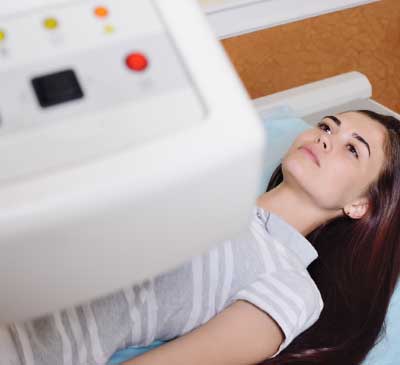
Yes. A DEXA scan uses an extremely low dose of radiation, comparable to a day of natural background exposure. The scan takes approximately 10 to 15 minutes and requires you to lie still on a padded table. It is non-invasive, painless, and safe during a flare.
Will my IBD medications affect my DEXA results?
Corticosteroids reduce bone density and will be reflected in your DEXA results. Biologic therapies and immunomodulators (such as azathioprine) do not directly affect bone density, and by controlling inflammation they may indirectly help preserve it. Your doctor will interpret your results in the context of your full medication history.
Can children with IBD develop bone problems?
Yes. Children and adolescents with IBD are at risk of reduced bone mineral accrual during their critical growth years. Paediatric guidelines recommend bone density assessment for young patients with significant steroid exposure or growth delay. Early intervention is essential to optimise peak bone mass.
Book Your DEXA Bone Density Scan
If you have inflammatory bowel disease and have not had a bone density assessment, a DEXA scan is one of the most important health checks you can book. Early detection of osteopenia or osteoporosis allows treatment to begin before a fracture changes your quality of life.
At DEXA London, we offer consultant-reported bone density DEXA scans at our Harley Street clinic. Your scan is performed by experienced radiographers and reported by a specialist radiologist, with results available promptly. We welcome self-referrals and do not require a GP letter.
To book your DEXA bone density scan, call us on 0207 637 8227 or book online through our website. Bring your scan results to your next gastroenterology appointment to help your IBD team make informed decisions about your bone health management.
Dr Emil Gadimali