


Collagen Supplements and Bone Density: What Your DEXA Scan Reveals About Whether Collagen Really Helps Your Bones
Collagen supplements are one of the most widely marketed products in the wellness industry. Walk into any pharmacy or health shop in the UK and you will find shelves of collagen powders, capsules, and drinks promising benefits for skin, joints, and bones. The bone health claims are particularly bold, with some brands implying that a daily scoop of hydrolysed collagen can slow or even reverse bone loss.
For anyone with osteopenia, osteoporosis, or simply a family history of fragility fractures, these claims raise a critical question: does collagen supplementation genuinely improve bone mineral density, or is this another case of marketing outpacing the science?
The answer is more nuanced than the packaging suggests. There is credible clinical evidence behind specific collagen peptides and bone health, but it comes with important caveats around study size, supplement quality, and the role of collagen alongside established treatments. A bone density DEXA scan remains the only reliable way to measure whether any intervention, collagen included, is genuinely changing your bone mineral density over time.
Quick Answer
Collagen makes up roughly 90 per cent of the organic matrix of bone. Early clinical trials using specific bioactive collagen peptides (5 grams daily for 12 months) have shown statistically significant increases in bone mineral density at the spine and femoral neck in postmenopausal women. However, the evidence base is still small, and collagen supplements should not replace proven treatments such as bisphosphonates or denosumab. A DEXA scan is the gold standard for measuring bone density and tracking whether supplementation is making a measurable difference.
Why Collagen Matters to Your Bones
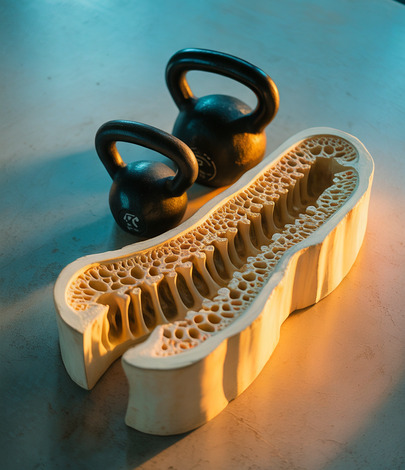
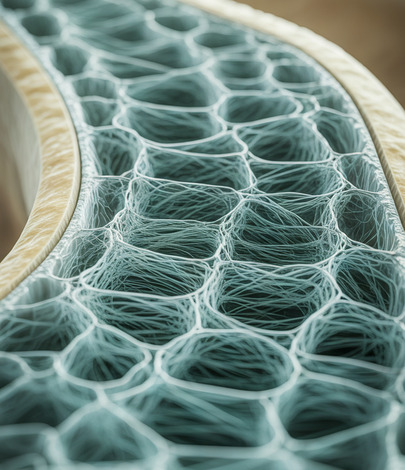
Bone is not a solid, inert structure. It is a living composite tissue made up of two main components: an organic matrix (primarily type I collagen fibres) and an inorganic mineral phase (hydroxyapatite crystals of calcium and phosphate). The collagen fibres act as a flexible scaffold, while the mineral crystals provide rigidity and compressive strength. Together, they give bone its unique combination of toughness and resistance to fracture.
Type I collagen accounts for approximately 90 per cent of the organic component of bone. It is synthesised by osteoblasts, the cells responsible for building new bone tissue. As we age, collagen production declines at a rate of roughly 1 to 1.5 per cent per year from the mid-twenties onward. In women, the decline accelerates after menopause as oestrogen levels fall, because oestrogen plays a protective role in both collagen synthesis and bone remodelling.
When the collagen scaffold deteriorates, the mineral crystals have less structure to anchor to. Think of it like concrete reinforced with steel rods: if the steel corrodes, the concrete becomes brittle even if its mineral content remains unchanged. This is one reason why bone mineral density alone, while clinically useful, does not capture the full picture of bone quality. Two patients with the same T-score on a DEXA scan may have different fracture risks depending on the integrity of their collagen matrix.
How Collagen Supplements Are Thought to Support Bone Health
The collagen in supplements is not the same as the collagen in your bones. Supplemental collagen is hydrolysed, meaning the large protein chains have been broken down into smaller peptides (typically 2 to 5 kilodaltons in molecular weight) that can be absorbed through the gut and enter the bloodstream.
The proposed mechanism of action centres on cell signalling rather than direct incorporation. When collagen peptides are absorbed, they circulate in the blood and are thought to stimulate osteoblast activity. In vitro studies have shown that specific collagen peptides can increase osteoblast differentiation and promote the expression of bone matrix proteins, including type I collagen itself. At the same time, some peptides appear to reduce osteoclast activity, the process by which old bone is broken down.
The net effect, if confirmed in larger trials, would be a shift in the bone remodelling balance toward formation rather than resorption. This is conceptually similar to the mechanism of some pharmaceutical treatments for osteoporosis, though the magnitude of effect from collagen peptides is likely to be smaller.
It is worth noting that the peptide composition varies significantly between products. Not all collagen supplements contain the same peptide sequences, and the manufacturing process affects which fragments are produced. Research showing bone density benefits has used specific bioactive peptide formulations, and those results may not apply to generic collagen powders.
What the Clinical Evidence Shows
The most cited study on collagen peptides and bone density is a randomised controlled trial published in the journal Nutrients in 2018 by König and colleagues at the University of Freiburg. The trial enrolled 131 postmenopausal women with reduced bone mineral density (T-score of minus 1 or lower at the femoral neck or lumbar spine) and randomised them to receive either 5 grams of specific bioactive collagen peptides or a maltodextrin placebo daily for 12 months.
The results were statistically significant. Women in the collagen group showed increases in bone mineral density at both the spine and femoral neck, while the placebo group showed continued decline. At the spine, T-scores improved from minus 2.54 to minus 2.47 in the collagen group (a roughly 3 per cent relative gain), compared to a decline from minus 2.25 to minus 2.28 in the placebo group. At the femoral neck, the difference was even more pronounced, with a 6.7 per cent relative increase in the collagen group versus a 1 per cent decline in the placebo group.
Bone turnover markers supported these findings. P1NP, a marker of new bone formation, increased significantly in the collagen group. CTX-1, a marker of bone resorption, remained stable in the collagen group but increased in the placebo group, suggesting that collagen supplementation may help slow the breakdown of existing bone while encouraging the formation of new tissue.
A follow-up study published in 2021, which tracked a subset of 31 participants from the original trial over four years, reported that the bone density gains were maintained with continued supplementation. No osteoporotic fractures occurred during the entire follow-up period.
These findings are encouraging, but context matters. The original trial involved 131 participants, which is small by pharmaceutical standards. The follow-up had only 31 participants and lacked a placebo control. The research was partly funded by the manufacturer of the specific collagen peptide product used. While the trial design was rigorous (double-blind, randomised, GCP-compliant), independent replication in a larger cohort is needed before collagen supplementation can be considered a proven treatment for bone loss.
What a DEXA Scan Reveals About Bone Density Changes
A DEXA (dual-energy X-ray absorptiometry) scan measures bone mineral density at the lumbar spine and femoral neck, the two sites most vulnerable to osteoporotic fracture. It expresses results as a T-score, which compares your bone density to that of a healthy young adult, and a Z-score, which compares it to the average for your age and sex.
For anyone considering collagen supplementation specifically to improve bone health, a DEXA scan serves two critical purposes. First, it establishes a baseline. Without knowing your starting bone density, you have no way to assess whether any supplement, medication, or lifestyle change is making a difference. Second, a follow-up scan after 12 to 24 months of supplementation provides objective evidence of whether bone density has improved, remained stable, or declined.
The precision of a DEXA scan at our Harley Street clinic is approximately 1 to 2 per cent. This means that a clinically meaningful change in bone density, typically defined as a change greater than the least significant change (LSC), can be reliably detected on repeat scanning. The 3 to 7 per cent improvements reported in the König trial would be clearly visible on a follow-up DEXA scan.
It is important to note that DEXA measures mineral density, not collagen content or bone quality directly. Two bones with the same BMD may have different fracture resistance depending on the quality of their collagen matrix. However, DEXA remains the clinical standard for monitoring bone health over time, and changes in BMD are one of the strongest predictors of fracture risk.
Who Should Consider Collagen Supplementation for Bone Health
Collagen supplements are not a substitute for established osteoporosis treatments. If you have been diagnosed with osteoporosis (T-score of minus 2.5 or lower) or have had a fragility fracture, your first conversation should be with your GP or specialist about evidence-based medications such as alendronate, risedronate, or denosumab. The fracture reduction evidence for these treatments is far more robust than for any nutritional supplement.
Collagen supplementation may be worth considering as a complementary approach in several situations: you have osteopenia (T-score between minus 1 and minus 2.5), where the risk does not yet warrant pharmaceutical treatment but you want to take proactive steps; you are postmenopausal and want to support bone health alongside adequate calcium, vitamin D, and weight-bearing exercise; you are already on osteoporosis medication and looking for additional nutritional support; or you have a strong family history of osteoporosis and want to optimise bone health early.
In all of these scenarios, the decision should be guided by your DEXA results. If your bone density is normal and you have no risk factors, collagen supplementation for bone health specifically is unlikely to offer meaningful benefit beyond what a balanced diet already provides.
How to Choose a Collagen Supplement: What to Look For
If you decide to try collagen supplementation for bone health, the choice of product matters more than most brands suggest. The clinical trial evidence uses specific bioactive collagen peptides with a defined molecular weight profile (around 5 kilodaltons), not generic collagen powder. When choosing a supplement, look for products that specify the type and source of collagen (bovine type I collagen is what the bone density studies used), state the molecular weight or confirm the product contains bioactive peptides rather than gelatin, provide a dose of at least 5 grams per day (the dose used in the clinical trials), and are manufactured under quality-controlled conditions with third-party testing.
Marine collagen is popular for skin health, but the bone density evidence is primarily based on bovine-derived peptides. This does not mean marine collagen is ineffective for bones, but it has not been tested in the same way.
A collagen supplement should be taken alongside, not instead of, adequate calcium (700 to 1200 milligrams per day from diet and supplements combined), vitamin D (at least 10 micrograms per day, as recommended by Public Health England), and regular weight-bearing exercise. These remain the foundations of bone health and are supported by decades of population-level evidence. You may also want to consider vitamin K2, which plays a complementary role in directing calcium into bone tissue rather than allowing it to accumulate in blood vessels.
Frequently Asked Questions
Can collagen supplements reverse osteoporosis?
No supplement has been shown to reverse established osteoporosis on its own. The clinical trial data suggests that specific collagen peptides can modestly improve bone mineral density in postmenopausal women with low BMD, but the evidence is preliminary. Osteoporosis treatment should be discussed with your GP or specialist and typically involves prescription medications alongside nutritional and lifestyle measures.
How long does it take for collagen to affect bone density?
The primary clinical trial measured changes after 12 months of daily supplementation at 5 grams per day. Bone remodelling is a slow process, and meaningful changes in bone mineral density are unlikely to appear on a DEXA scan in less than 12 months. A follow-up DEXA scan after 12 to 24 months of supplementation is the most reliable way to assess progress.
Is collagen safe to take alongside osteoporosis medication?
Collagen peptides are generally well tolerated and no adverse interactions with common osteoporosis medications (such as bisphosphonates) have been reported in the published trials. However, you should always inform your prescribing doctor before adding a new supplement to your routine.
Does the type of collagen matter for bone health?
Yes. Bone is primarily composed of type I collagen, and the clinical trials showing bone density benefits used hydrolysed bovine type I collagen peptides. Marine collagen and plant-based collagen alternatives have not been tested in the same bone density trials. If bone health is your primary concern, a bovine type I collagen peptide product is the closest match to the evidence.
Can a DEXA scan tell me if collagen supplements are working?
A DEXA scan measures bone mineral density, which is the clinical outcome that collagen peptide trials have shown improvements in. A baseline scan before starting supplementation and a follow-up scan after 12 to 24 months will show whether your bone density has improved, remained stable, or declined. This is the most objective way to assess whether any bone health intervention is working for you.
What This Means for You
Collagen is not a fringe ingredient in bone biology. It is the structural foundation that mineral crystals build upon, and the emerging clinical evidence suggests that specific collagen peptide supplements may support bone mineral density in postmenopausal women. The science is promising, but it is not yet at the stage where collagen can be recommended as a primary treatment for bone loss.
What is clear is that any decision about bone health should start with objective data. A DEXA scan provides a precise measurement of your bone mineral density at the spine and hip, the two sites most vulnerable to fracture. It gives you a baseline against which future changes can be measured, whether those changes come from medication, supplementation, exercise, or the natural course of ageing.
If you are considering collagen supplementation for your bones, a DEXA scan before you start and a follow-up scan after 12 to 24 months is the only way to know whether it is making a real difference for you, rather than relying on how you feel or what a product label promises.
To book a DEXA body composition or bone density scan at DEXA London, visit our Harley Street clinic or call 0207 637 8227. All scans are reported by a UK consultant radiologist, and results are available on the same day.