
Osteopenia Explained: What Your DEXA Scan T-Score Means and When to Start Treatment
If you have recently had a bone density DEXA scan and your results show a T-score between -1.0 and -2.5, you have been diagnosed with osteopenia. This is one of the most common findings on a DEXA scan, particularly for women over 50 and men over 60. It means your bone density is lower than peak levels but has not yet reached the threshold for osteoporosis.
Hearing that your bones are thinning can feel alarming, but osteopenia is not a disease in itself. It is a clinical marker that tells you and your doctor where you sit on the bone density spectrum, and whether action is needed now or whether careful monitoring is the right approach.
This guide explains what osteopenia means on your DEXA scan, how it differs from osteoporosis, who is most at risk, when treatment is recommended, and what you can do to protect your bone health going forward.
Quick answer: Osteopenia means your bone mineral density is lower than normal for a healthy young adult but not low enough to be classified as osteoporosis. A T-score between -1.0 and -2.5 on a DEXA scan confirms the diagnosis. Whether you need treatment depends on your overall fracture risk, which your doctor can assess using the FRAX tool alongside your DEXA results.
What Is Osteopenia?
Osteopenia is a condition where bone mineral density (BMD) is lower than normal but not low enough to meet the diagnostic criteria for osteoporosis. The World Health Organization defines osteopenia as a T-score between -1.0 and -2.5 standard deviations below the mean for a healthy young adult of the same sex.
Bones naturally lose density as you age. Peak bone mass is typically reached in your late twenties to early thirties. After this point, bone resorption gradually begins to outpace bone formation, and density decreases over time. For women, this process accelerates significantly during and after menopause due to falling oestrogen levels, which play a protective role in bone turnover.
Osteopenia sits in the middle of the bone density spectrum. A T-score of -1.0 or above is considered normal. A T-score of -2.5 or below indicates osteoporosis. Everything between those two values falls under the clinical label of osteopenia.
It is important to understand that osteopenia does not automatically mean you will develop osteoporosis or fracture a bone. Many people with osteopenia never progress to osteoporosis, especially if they take steps to support their bone health. However, it is a signal that your bones deserve attention and, in some cases, proactive intervention.
How Is Osteopenia Diagnosed on a DEXA Scan?
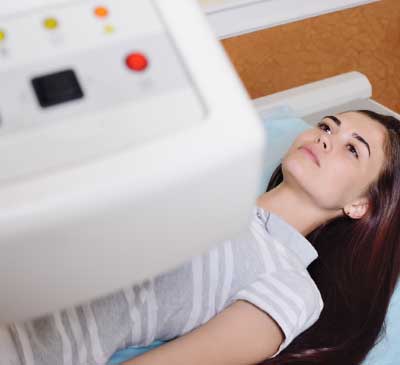
A bone density DEXA scan is the gold standard for diagnosing osteopenia and osteoporosis. DEXA (dual-energy X-ray absorptiometry) uses two low-dose X-ray beams at different energy levels to measure the mineral content of your bones, typically at the lumbar spine (lower back) and the proximal femur (hip). These are the sites most vulnerable to osteoporotic fractures.
Your scan results are reported as a T-score, which compares your bone mineral density to the average peak bone mass of a healthy 30-year-old adult. The classification system, established by the World Health Organization, works as follows:
- Normal: T-score of -1.0 or above
- Osteopenia: T-score between -1.0 and -2.5
- Osteoporosis: T-score of -2.5 or below
You may also receive a Z-score on your DEXA report. While the T-score compares you to a young adult reference, the Z-score compares your bone density to people of the same age and sex. A Z-score below -2.0 may suggest that something other than normal ageing is contributing to bone loss, such as a medication side effect or an underlying medical condition. For a detailed breakdown of how these scores work, see our guide to DEXA T-scores and Z-scores and what they mean for your bone health.
The scan itself takes around 10 to 15 minutes, involves no injections or preparation, and uses a very low radiation dose, roughly equivalent to a day of natural background exposure. At DEXA London, your results are reviewed by a reporting radiologist and returned with a clear clinical summary.
Who Is at Risk of Osteopenia?
Several factors increase the likelihood of developing osteopenia. Some are modifiable, meaning you can take action to reduce your risk. Others, such as age and genetics, are not within your control but are still important to be aware of.
Non-modifiable risk factors:
- Being female (women lose bone density faster than men, particularly after menopause)
- Advancing age, especially over 50
- Family history of osteoporosis or hip fracture
- Early menopause (before age 45) or surgical removal of the ovaries
- Small body frame or naturally low body weight
- Certain ethnicities (Caucasian and East Asian women are at higher risk according to the Royal Osteoporosis Society)
Modifiable risk factors:
- Low calcium or vitamin D intake
- Sedentary lifestyle with limited weight-bearing exercise
- Smoking, which accelerates bone loss
- Excessive alcohol consumption (more than 14 units per week)
- Low body weight or a history of eating disorders
Medical risk factors:
- Long-term corticosteroid use (such as prednisolone for asthma, arthritis, or inflammatory bowel disease)
- Thyroid disorders, particularly hyperthyroidism or overtreatment with thyroxine
- Coeliac disease or other conditions that impair nutrient absorption
- Rheumatoid arthritis and other chronic inflammatory conditions
- Hormonal conditions such as hypogonadism or premature ovarian insufficiency
If you recognise several of these risk factors in your own health history, a bone density DEXA scan can provide a clear, objective measurement of where your bone health stands today.
Osteopenia vs Osteoporosis: What Is the Difference?
Although the two conditions exist on the same spectrum, there are important clinical differences between osteopenia and osteoporosis that affect how your doctor manages your care.
Osteopenia describes a moderate reduction in bone mineral density. Your bones are thinner than ideal, but they retain enough structural integrity that fracture risk, while elevated compared to someone with normal density, remains relatively low for most people. Treatment is not always necessary, and the focus is often on lifestyle measures and monitoring.
Osteoporosis, by contrast, represents a more significant loss of bone density and deterioration of bone microarchitecture. The bones become porous and fragile, substantially increasing the risk of fractures from relatively minor impacts or even everyday activities such as bending, lifting, or coughing. The National Osteoporosis Guideline Group (NOGG) 2024 guidelines confirm that osteoporosis, defined as a T-score of -2.5 or below, typically warrants pharmacological treatment alongside lifestyle changes.
The key distinction is not just the T-score number but the overall fracture risk. A person with osteopenia and multiple additional risk factors (such as a previous fracture, long-term steroid use, or a strong family history) may have a higher absolute fracture risk than someone with borderline osteoporosis and no other risk factors. This is why clinicians use the FRAX fracture risk assessment tool in combination with DEXA results to determine who needs treatment.
When Does Osteopenia Need Treatment?
Not everyone with osteopenia requires medication. The decision to treat depends on your overall 10-year fracture probability, which your doctor can calculate using the FRAX tool developed by the University of Sheffield. FRAX combines your DEXA T-score with clinical risk factors including age, sex, BMI, smoking status, alcohol intake, previous fractures, parental hip fracture history, corticosteroid use, and the presence of conditions such as rheumatoid arthritis.
According to the NOGG 2024 clinical guideline for the prevention and treatment of osteoporosis, treatment is recommended when a patient’s fracture risk exceeds the age-specific intervention threshold. For many patients with osteopenia alone and no additional risk factors, monitoring with lifestyle measures is appropriate. However, if FRAX identifies you as high risk, your doctor may recommend starting treatment even though your T-score has not crossed the -2.5 osteoporosis threshold.
When pharmacological treatment is recommended, first-line options in the UK typically include oral bisphosphonates such as alendronic acid (alendronate), which is available on NHS prescription. Bisphosphonates work by slowing the rate at which bone is broken down, allowing new bone formation to keep pace. Other treatments may include denosumab (a six-monthly injection), raloxifene, or in some cases anabolic therapies such as teriparatide for patients at very high fracture risk.
If your DEXA scan shows osteopenia and you are unsure whether treatment is appropriate, discuss your results with your GP or a specialist. Bringing your DEXA report to the consultation allows your doctor to run a FRAX assessment and give you a personalised recommendation. You can learn more about how fracture risk scoring works in our guide to the FRAX score in the UK and how a DEXA scan improves its accuracy.
How to Strengthen Bones and Slow Bone Loss
Whether or not medication is part of your plan, lifestyle changes play a significant role in protecting bone density. The following evidence-based strategies can help slow bone loss and, in some cases, modestly improve bone mineral density over time.
Weight-bearing and resistance exercise. Activities that force your body to work against gravity stimulate bone-forming cells (osteoblasts). Walking, jogging, dancing, stair climbing, and tennis are all effective. Resistance training with weights or resistance bands is particularly beneficial because it applies direct mechanical stress to the bones at the attachment points of muscles and tendons. The Royal Osteoporosis Society recommends aiming for at least 150 minutes of moderate-intensity weight-bearing activity per week, combined with two or more sessions of muscle-strengthening exercise.
Calcium intake. Adults need approximately 700 mg of calcium per day according to NHS guidelines, though some guidelines suggest higher intakes for postmenopausal women (up to 1,200 mg). Good dietary sources include dairy products, fortified plant milks, tinned sardines and salmon (with bones), tofu, broccoli, kale, and almonds. If your dietary intake is insufficient, your doctor may recommend a calcium supplement.
Vitamin D. Vitamin D is essential for calcium absorption. In the UK, Public Health England recommends that all adults take a daily supplement of 10 micrograms (400 IU) of vitamin D during autumn and winter. People who spend limited time outdoors, cover their skin, or have darker skin may need supplementation year-round. Your GP can check your vitamin D levels with a simple blood test.
Lifestyle modifications. Stopping smoking is one of the most impactful changes you can make for bone health. Reducing alcohol to within the recommended limit of 14 units per week also reduces bone loss. Maintaining a healthy body weight is important because being underweight is associated with lower bone density and increased fracture risk.
Fall prevention. While not directly related to bone density, reducing your risk of falling is critical for preventing fractures. Balance and coordination exercises such as tai chi, yoga, and single-leg stands are effective. Ensuring good lighting at home, removing trip hazards, and having regular eyesight checks also help.
How Often Should You Repeat Your DEXA Scan?
If your DEXA scan shows osteopenia, a follow-up scan is the only reliable way to track whether your bone density is stable, improving, or declining. The appropriate interval depends on your individual risk profile and whether you have started treatment.
For most patients with osteopenia and no additional high-risk factors, a repeat DEXA scan every two to three years is typically sufficient. This allows enough time for measurable changes in bone density to occur while catching any significant decline before it reaches osteoporosis levels.
If you have started bisphosphonate treatment or another bone-protective medication, your doctor may recommend a follow-up scan after two years to assess the treatment response. If you have borderline osteopenia (T-score close to -2.5) or multiple risk factors, more frequent monitoring may be appropriate.
For patients with mild osteopenia (T-score close to -1.0) and no additional risk factors, some guidelines suggest that intervals of up to five years between scans may be reasonable. Your clinician will advise on the best schedule for your situation.
At DEXA London, we recommend keeping a copy of your baseline scan results so that future scans can be compared directly. Tracking your T-score over time provides far more useful clinical information than a single snapshot. You can read more about scan timing in our guide to how often you should get a DEXA scan.
Frequently Asked Questions
Is osteopenia serious?
Osteopenia is not a disease, and it does not mean your bones are about to break. It is a clinical finding that indicates your bone density is lower than the young adult average. Whether it is a cause for concern depends on your overall fracture risk, which your doctor can assess using your DEXA results alongside other factors such as age, medical history, and lifestyle.
Can osteopenia be reversed?
In some cases, yes. Weight-bearing exercise, adequate calcium and vitamin D intake, and lifestyle changes can help stabilise or modestly improve bone density. If medication is prescribed, bisphosphonates and other treatments can increase bone density and reduce fracture risk over time. A follow-up DEXA scan is the best way to measure progress.
What T-score means I have osteopenia?
A T-score between -1.0 and -2.5 at the hip or spine on a DEXA scan indicates osteopenia. A score of -1.0 or above is considered normal, and a score of -2.5 or below indicates osteoporosis.
Do I need medication for osteopenia?
Not necessarily. Medication is typically recommended only if your overall fracture risk is above the intervention threshold, as calculated by the FRAX tool. Many patients with osteopenia manage their bone health effectively through exercise, diet, and lifestyle changes alone. Your GP can help you decide.
Does osteopenia always progress to osteoporosis?
No. Many people with osteopenia never develop osteoporosis, particularly if they adopt bone-protective lifestyle measures. However, without intervention, bone density tends to decline gradually with age, so monitoring is important.
What is the difference between a T-score and a Z-score?
A T-score compares your bone density to a healthy young adult reference population and is used to diagnose osteopenia and osteoporosis. A Z-score compares your bone density to people of the same age and sex. A low Z-score may suggest secondary causes of bone loss that warrant further investigation.
Can men get osteopenia?
Yes. While osteopenia and osteoporosis are more common in women, men are also affected, particularly after age 60 or if they have risk factors such as long-term corticosteroid use, low testosterone, excessive alcohol consumption, or a sedentary lifestyle. A DEXA scan can assess bone density in men just as effectively as in women.
Book Your Bone Density DEXA Scan at DEXA London
If you are concerned about your bone health, have been told you may be at risk of osteopenia or osteoporosis, or simply want a clear baseline measurement of your bone density, a DEXA scan at DEXA London provides the clinical-grade data you need.
Our clinic at 86 Harley Street, London, offers bone density DEXA scans with same-day or next-day availability. Every scan is reviewed by a reporting radiologist, and your results include a full T-score and Z-score analysis of the hip and spine. No GP referral is required.
To book your scan or ask any questions, call us on 0207 637 8227 or book online. You can also learn more about how DEXA scanning works before your appointment.
Dr Emil Gadimali, Medical Director, DEXA London