
Vitamin B12 and Bone Density: What Your DEXA Scan Reveals About How B12 Deficiency Affects Your Bones
Quick answer: Vitamin B12 plays a larger role in bone health than most people realise. Research from the Framingham Osteoporosis Study found that men and women with low plasma B12 had significantly lower bone mineral density, particularly at the hip. The mechanism centres on homocysteine: when B12 is low, homocysteine accumulates, and elevated homocysteine interferes with collagen cross-linking in bone and stimulates osteoclast activity, the cells responsible for breaking bone down. A meta-analysis of observational studies confirmed a consistent association between low B12 status and reduced bone mineral density in older adults. Because B12 deficiency is common and often goes undetected, a bone density DEXA scan can reveal whether your bones are already showing signs of loss before a fracture occurs.
This article explains how vitamin B12 supports your skeleton, what the clinical evidence shows, who is most at risk, and why a DEXA scan is a valuable tool if B12 deficiency is part of your health picture.
How Vitamin B12 Supports Bone Health
Vitamin B12 (cobalamin) is best known for its role in red blood cell production and neurological function. What receives far less attention is its involvement in bone metabolism. B12 is essential for one-carbon metabolism, a biochemical pathway that regulates homocysteine levels, DNA synthesis, and methylation reactions throughout the body. When this pathway functions properly, homocysteine is converted into methionine with the help of B12 and folate. When B12 is deficient, homocysteine accumulates in the blood.
Elevated homocysteine affects bone through at least two distinct mechanisms. First, it disrupts collagen cross-linking. Bone is roughly 90% type I collagen by organic mass, and the structural integrity of that collagen depends on stable cross-links between its fibres. Homocysteine interferes with the enzymatic process that forms these cross-links, producing bone that is architecturally weaker even if its mineral content appears adequate on some measures. We explored the broader role of collagen in bone health in our article on collagen supplements and bone density (Frontiers in Endocrinology, 2024).
Second, B12 deficiency stimulates osteoclastogenesis. A study published in Calcified Tissue International found that both homocysteine and methylmalonic acid (another metabolite that rises when B12 is low) increased the number and activity of osteoclasts, the cells that resorb bone. At the same time, evidence suggests that B12 supports osteoblast function, the cells responsible for building new bone. The net effect of deficiency is a shift in the balance of bone remodelling: more breakdown, less formation (Calcified Tissue International, 2009).
What the Clinical Evidence Shows
The most cited study on B12 and bone density comes from the Framingham Osteoporosis Study, which measured plasma B12 in over 2,500 men and women. Those with B12 levels below 148 pmol/L had significantly lower bone mineral density at the hip compared to participants with adequate B12 status. The association held after adjusting for age, sex, BMI, smoking, and other confounders, and was more pronounced in men than in women (Tucker et al., Journal of Bone and Mineral Research, 2005).
A systematic review with meta-analyses published in the Journal of Nutrition and Metabolism examined 14 cross-sectional studies and found that low B12 status was associated with lower bone mineral density across multiple skeletal sites. The same review noted that elevated homocysteine, a direct consequence of B12 deficiency, was associated with an increased risk of fracture (van Wijngaarden et al., 2013).
More recently, a 2021 meta-analysis of cohort studies involving over 10,000 older adults confirmed that elevated homocysteine was independently associated with higher fracture incidence. While homocysteine can rise from deficiency of several B vitamins, B12 is the single most common nutritional cause of hyperhomocysteinaemia in clinical practice (He et al., Annals of Translational Medicine, 2021).
A 2024 Frontiers in Endocrinology review summarised the current state of knowledge, concluding that B12 plays a “significant role in bone metabolism” through its effects on osteoblast differentiation, osteoclast activity, and collagen integrity. The authors noted that routine screening for B12 deficiency in osteoporosis assessment is not yet standard practice but may be warranted given the strength and consistency of the observational evidence.
Who Is at Risk of Vitamin B12 Deficiency
B12 deficiency is far more common than many people assume. The NHS estimates that it affects around 1 in 10 adults over 75 in the UK, and subclinical deficiency (low-normal B12 with elevated homocysteine) is likely more prevalent still. NICE published updated guidelines in 2024 (NG239) recognising that B12 deficiency is under-diagnosed and can present with a wide range of symptoms beyond the classic anaemia.
Several groups face a higher risk of deficiency, and notably, many of these groups are already at increased risk of bone loss:
Older adults: Gastric acid production declines with age, reducing the body’s ability to absorb B12 from food. This is why age-related B12 deficiency can develop even in people who eat a balanced diet.
People taking metformin: Long-term metformin use, commonly prescribed for type 2 diabetes, is well-established as a cause of B12 depletion. If you are taking metformin and tracking your body composition with a DEXA scan, checking your B12 status is a sensible complementary step. We covered the broader effects of metformin on body composition in our guide to metformin and body composition.
People taking proton pump inhibitors (PPIs): Medications such as omeprazole reduce stomach acid, which impairs B12 absorption over time. We discussed the bone density implications of PPIs in detail in our article on proton pump inhibitors and bone density.
Vegans and vegetarians: B12 occurs naturally only in animal-derived foods. Without supplementation, plant-based diets carry a significant risk of deficiency. Our article on plant-based diets and bone density covers the broader nutritional picture for bone health on a vegan or vegetarian diet.
People with gastrointestinal conditions: Coeliac disease, Crohn’s disease, and other conditions that damage the gut lining reduce B12 absorption. These conditions are independently associated with lower bone density, so B12 deficiency compounds an already elevated risk.
People who have had bariatric surgery: Procedures that bypass sections of the stomach or small intestine significantly reduce B12 absorption capacity. Regular monitoring is essential after surgery.
What This Means for Your DEXA Scan Results
If you have one or more risk factors for B12 deficiency, your bone density results on a DEXA scan may be reflecting a nutritional shortfall that is both detectable and treatable. Unlike many contributors to bone loss, B12 deficiency can be identified with a simple blood test and corrected with supplementation or dietary changes.
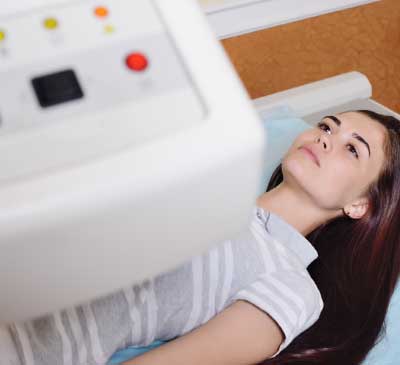
A DEXA scan measures bone mineral density at the spine and hip, the two sites most vulnerable to osteoporotic fracture. If your T-score or Z-score is lower than expected for your age and risk profile, B12 deficiency is worth investigating alongside the more commonly checked markers such as vitamin D and calcium.
It is also worth noting that B12 deficiency does not act in isolation. Its effect on bone is amplified when combined with other risk factors: low vitamin D, inadequate calcium, sedentary lifestyle, smoking, or medications that independently reduce bone density. A DEXA scan gives you an objective baseline from which to assess whether interventions are working. If you correct a B12 deficiency and repeat the scan 12 to 18 months later, you can measure whether bone mineral density has stabilised or improved.
Frequently Asked Questions About Vitamin B12 and Bone Density
Can vitamin B12 supplements reverse bone loss?
Correcting a B12 deficiency removes one contributor to accelerated bone turnover, which may help stabilise bone mineral density over time. However, B12 supplementation alone is unlikely to fully reverse established osteoporosis. It is most effective as part of a comprehensive approach that includes adequate vitamin D, calcium, weight-bearing exercise, and medical treatment where indicated.
What B12 level should I aim for to protect my bones?
The Framingham study found that bone mineral density was lower in those with plasma B12 below 148 pmol/L. Most clinicians consider levels below 200 pmol/L as potentially insufficient. If your levels are in the low-normal range and you have risk factors for bone loss, it is worth discussing supplementation with your GP.
Should I test my B12 before or after a DEXA scan?
Either approach works. If you already know your B12 status is low, a DEXA scan helps establish whether your bones have been affected. If your DEXA scan reveals unexpectedly low bone density, testing B12 (along with vitamin D, calcium, and other markers) can help identify correctable causes.
Does B12 deficiency affect body composition beyond bones?
Yes. Severe B12 deficiency causes fatigue, neurological symptoms, and muscle weakness, all of which can reduce physical activity and contribute to changes in fat and lean tissue over time. A body composition DEXA scan measures these compartments separately, giving you a complete picture of how deficiency may be affecting your body.
Book Your Bone Density DEXA Scan at DEXA London
If you are concerned about your bone health, particularly if you have risk factors for vitamin B12 deficiency, a DEXA scan provides the clinical-grade data you need to make informed decisions. At DEXA London, our scans are carried out at our Harley Street clinic by experienced clinicians and interpreted by Dr Emil Gadimali.
To book a bone density or body composition DEXA scan, visit dexa.london or call us on 0207 637 8227. We are located at Harley Street, in the heart of London’s medical district.