
Sarcopenic Obesity Explained: Why Low Muscle With High Body Fat Is More Dangerous, and How a DEXA Scan Diagnoses It
Two body composition problems often hide in the same person: too little muscle, and too much fat. When they coexist, the medical name is sarcopenic obesity, and the combination is more dangerous to long-term health than either condition on its own. Most people who have it are never told.
BMI and bathroom scales cannot detect sarcopenic obesity. Someone can carry a normal weight and an apparently healthy waist and still have dangerously low muscle mass hidden behind a layer of fat. The only reliable way to see this combination is to look inside the body, which is what a DEXA scan does.
Quick answer: Sarcopenic obesity is the simultaneous presence of low skeletal muscle mass and excess body fat in the same person. It carries a higher risk of frailty, falls, type 2 diabetes, cardiovascular disease and earlier mortality than either condition on its own. A body composition DEXA scan is the gold-standard way to diagnose it, because it measures muscle and fat separately and accurately.
By Dr Emil Gadimali, DEXA London, Harley Street.
What Is Sarcopenic Obesity?
Sarcopenic obesity is defined by the simultaneous presence of two underlying conditions. The first is sarcopenia, which is the age-related or disease-related loss of skeletal muscle mass, strength and function. The second is obesity, which is excess body fat that increases the risk of metabolic disease.
In 2022, the European Society for Clinical Nutrition and Metabolism (ESPEN) and the European Association for the Study of Obesity (EASO) published the first international consensus statement on how to define and diagnose sarcopenic obesity (Donini LM et al., Obesity Facts, 2022). Their framework asks clinicians to confirm both reduced muscle function, such as poor grip strength or slow chair-rise time, and altered body composition, meaning low skeletal muscle mass relative to body size combined with high adiposity, measured directly using DEXA or a comparable imaging method.
Crucially, sarcopenic obesity is not the same as being overweight. It can be present in people who appear lean. The defining feature is the imbalance between functional muscle tissue and metabolically active fat tissue, not the number on the scale.
Why Low Muscle and High Fat Together Are More Dangerous Than Either Alone
Skeletal muscle is not only what moves the body. It is also a glucose sink, an insulin-sensitive endocrine organ and a reserve of amino acids during illness. When muscle mass falls and visceral fat rises, these protective metabolic functions weaken at the same time as inflammatory and insulin-resistant signals from fat tissue increase.
The clinical consequences are well documented. Adults with sarcopenic obesity show higher all-cause mortality than those with sarcopenia alone or obesity alone, according to large prospective cohort analyses including the UK Biobank (Atkins JL et al., Journal of the American Geriatrics Society, 2014). They also experience faster physical decline, more frequent falls and fractures, higher rates of cardiovascular events, more aggressive cancer outcomes after diagnosis, and longer hospital stays.
Inflammation explains much of this risk. Excess adipose tissue, particularly visceral fat around the abdominal organs, releases cytokines that promote muscle breakdown. The result is a self-reinforcing cycle: fat drives muscle loss, and muscle loss reduces resting metabolic rate, which makes further fat gain more likely. Without intervention, the cycle accelerates with age.
Who Is Most At Risk
Older adults are the classic group. Age-related muscle loss begins in the fourth decade and accelerates after 60. By age 80, the average person has lost around 30 percent of the peak muscle mass they had in their twenties. If body fat has risen during the same period, the conditions for sarcopenic obesity are in place.
Postmenopausal women are also affected by hormonal shifts that reduce muscle protein synthesis and redistribute fat to the abdomen. We cover the bone and body composition changes that accompany menopause in our guide to menopause and bone density at our Harley Street clinic.
A newer at-risk group is people who lose weight quickly without preserving muscle. This includes anyone who has dieted aggressively, had bariatric surgery, recovered from a long illness or hospital stay, or used a GLP-1 weight loss medication such as Mounjaro, Ozempic or Wegovy without resistance training and adequate protein. We have written separately on muscle loss with GLP-1 and GIP agonists and how a DEXA scan reveals it, which is closely related to the sarcopenic obesity phenotype described here.
Other groups to watch include people with chronic kidney disease, cancer, COPD or type 2 diabetes, and anyone who is sedentary for long periods regardless of their body weight.
Why BMI and Bathroom Scales Miss Sarcopenic Obesity
BMI is simply a ratio of weight to height. It cannot tell you what proportion of your body is muscle and what proportion is fat. Two people of identical BMI can have very different body compositions, and a person with a normal BMI can still meet criteria for both sarcopenia and obesity. Researchers call this hidden phenotype normal-weight obesity, and it is more common than most people realise.
Bathroom scales that use bioelectrical impedance attempt to estimate body fat percentage, but their accuracy depends heavily on hydration, recent meals and skin contact. In sarcopenic obesity specifically, impedance-based scales tend to overestimate muscle mass and underestimate fat mass, which is the opposite of what the user needs to know.
Tape measures and waist circumference are useful for tracking central adiposity but say nothing about muscle quality or limb lean mass. They flag part of the problem and miss the rest. To make a clinical diagnosis, an imaging method that measures muscle and fat separately is required.
How a DEXA Scan Diagnoses Sarcopenic Obesity
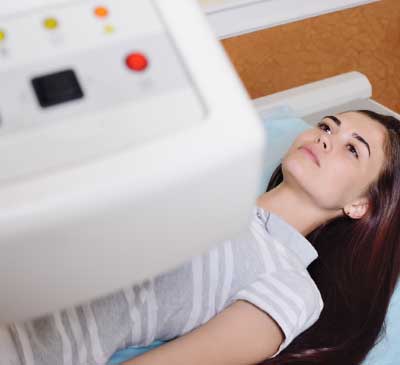
A DEXA scan, short for dual-energy X-ray absorptiometry, uses two low-dose X-ray beams of different energies to differentiate between bone, lean soft tissue (mostly muscle and organ) and fat. The result is a precise three-compartment breakdown of body composition by region as well as for the whole body. You can learn more about how DEXA scanning works on our service page.
For the sarcopenia component, clinicians look at the appendicular lean mass index (ALMI), which is the muscle mass of the arms and legs divided by height squared. ESPEN and EASO recommend an ALMI cut-off below 7.0 kg/m² for men and 5.5 kg/m² for women as suggestive of low muscle mass. Combined with poor grip strength or slow walking speed, this confirms sarcopenia.
For the obesity component, the same scan reports total body fat percentage and, importantly, visceral adipose tissue. A body fat percentage above approximately 25 percent in men and 35 percent in women is generally considered to indicate obesity by composition criteria, though thresholds vary by age. Elevated visceral fat independently raises cardiometabolic risk.
Because both measurements come from the same scan, a single 10-minute DEXA appointment can confirm or rule out sarcopenic obesity with clinical-grade accuracy. If you have never had one, our body composition DEXA scan is the test that produces all of these numbers in one clinical report.
Treating Sarcopenic Obesity: Resistance Training, Protein and Medical Weight Management
Sarcopenic obesity is treatable, but the strategy has to address both halves of the condition at the same time. Cutting calories alone almost always worsens muscle loss and accelerates the cycle.
Resistance training is the most evidence-based intervention. Two to three structured sessions per week, focused on compound movements such as squats, presses, rows and deadlifts, reliably build muscle mass and improve insulin sensitivity even in older adults. The NHS supports muscle-strengthening activity at least twice a week as part of its physical activity guidelines for adults.
Protein intake of around 1.2 to 1.6 grams per kilogram of body weight per day, distributed across meals, supports the muscle protein synthesis response to training. Adequate vitamin D and calcium support both bone and muscle function, which matters because the same patients are often at risk of low bone density on a DEXA scan.
When excess fat is the more urgent risk and lifestyle measures alone are not enough, a doctor-supervised medical weight loss programme can be considered. Modern GLP-1 and GIP medications are highly effective at reducing fat mass, but they must be paired with resistance training and a high-protein diet to avoid worsening the sarcopenia component. This is why sarcopenic obesity is one of the situations where supervised medical weight loss with regular DEXA monitoring is preferable to self-directed dieting.
Repeat DEXA scans every three to six months allow you to see whether the intervention is working: muscle should hold or rise, total fat should fall, and visceral fat should drop in particular. Without these measurements you are guessing.
When to Book a DEXA Body Composition Scan
Consider a DEXA body composition scan if any of the following apply to you:
- You are over 50 and your weight has changed significantly in either direction.
- You are in or past the menopause and want to know what has happened to your muscle and bone.
- You are starting, taking or finishing a GLP-1 medication and want to track muscle loss as well as fat loss.
- You have lost weight through illness, surgery or aggressive dieting and want to confirm what came off.
- You train seriously and want an objective measure of progress.
- You have a family history of osteoporosis or want a combined body composition and bone density DEXA scan.
At DEXA London, scans are performed at our Harley Street clinic and reported by a physician. To book, call 0207 637 8227 or arrange an appointment online.
Frequently Asked Questions
How is sarcopenic obesity different from being overweight?
Being overweight describes your weight relative to your height (BMI). Sarcopenic obesity describes the underlying composition of that weight. A person can be overweight without being sarcopenic, and a person can be sarcopenic and obese while still sitting in the normal BMI range. The two terms are not interchangeable.
Can a younger person have sarcopenic obesity?
Yes. Although the condition is most common after age 50, it is increasingly seen in younger adults who are sedentary, have lost weight rapidly through dieting or medication, or have a chronic illness. A DEXA body composition scan is the only practical way to confirm it at any age.
How long does a DEXA body composition scan take and is it safe?
A standard scan at DEXA London takes about 10 minutes, requires no injections, and uses a radiation dose lower than that of a long-haul flight. There is no special preparation other than wearing comfortable clothing without metal.
How quickly can sarcopenic obesity be reversed?
Muscle gain is slower than fat loss. With consistent resistance training and adequate protein, measurable improvements in lean mass usually appear within 12 to 16 weeks, and meaningful changes in visceral fat can be seen in three to six months. Repeat DEXA scans help track progress objectively.
Will my GP refer me for a DEXA body composition scan?
GP referral is possible but uptake varies, and most NHS DEXA referrals are for bone density rather than body composition. Most patients book privately for a body composition DEXA scan, particularly when the goal is to monitor the response to a weight loss programme or training plan. A clinical report is included so you can share the results with your GP or specialist.
Final Thoughts
Sarcopenic obesity is one of the most important body composition findings that bathroom scales and BMI charts will never reveal. Identifying it early opens the door to a precise treatment plan: build muscle, lose fat, and re-test to confirm both are moving in the right direction. A DEXA scan turns guesswork into measurement.
If your scan shows elevated visceral fat or significant excess body fat alongside the low muscle mass, a supervised medical weight loss programme may be appropriate alongside training and protein. CutKilo, the sister service to DEXA London, offers doctor-led Mounjaro treatment from Dr Emil Gadimali designed to be paired with body composition monitoring. Start the CutKilo questionnaire to see if you might be suitable. To book a body composition DEXA scan at our Harley Street clinic, call 0207 637 8227.