
InBody vs DEXA vs BODPOD: Which Body Composition Scan Is Actually Accurate?
Bathroom scales tell you what you weigh. A body composition scan tells you what that weight is made of. But not all body composition scans deliver the same level of accuracy, and if you are investing time and money in understanding your body, the method you choose matters. This InBody vs DEXA vs BODPOD comparison breaks down the science, accuracy, and clinical value of each technology so you can make an informed decision before booking a scan.
At DEXA London at 3Beam Diagnostic Imaging Centre on Harley Street, we use medical-grade DEXA (dual-energy X-ray absorptiometry) because it remains the gold standard for body composition analysis. Here is why, and how the alternatives compare.
QUICK ANSWER: DEXA scanning is the most accurate and detailed method for measuring body composition, with a 1-2% margin of error for body fat percentage. InBody (bioelectrical impedance) has a 5-8% margin of error and is highly sensitive to hydration, food intake, and exercise timing. BODPOD (air displacement) falls between the two at approximately 2-3% but provides no regional data. Only DEXA measures visceral fat, bone mineral density, and lean mass distribution by body region.
What Are InBody, DEXA, and BODPOD?
Each of these three technologies takes a fundamentally different approach to measuring body composition.
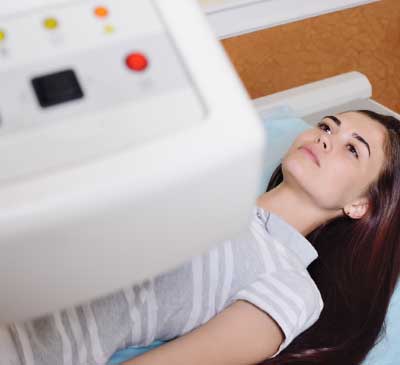
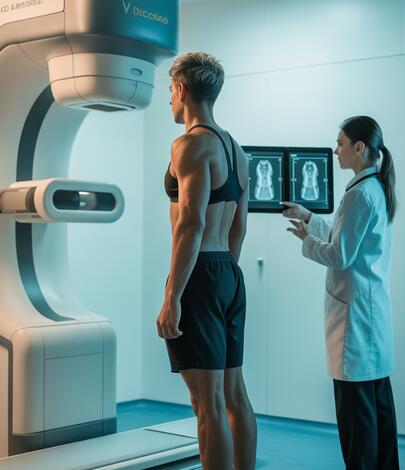
DEXA (Dual-Energy X-Ray Absorptiometry). A body composition DEXA scan uses two low-dose X-ray beams at different energy levels to distinguish between three tissue types: fat, lean muscle, and bone. You lie on a padded table for approximately four minutes while the scanner arm passes over your body. The result is a full-body map showing exactly where fat and muscle are distributed, region by region.
InBody (Bioelectrical Impedance Analysis). InBody devices send a weak electrical current through your body via hand and foot electrodes. The current travels faster through water-rich tissue (muscle) than through fat, and the device estimates your body composition based on the resistance it encounters. The process takes under 60 seconds and requires no lying down.
BODPOD (Air Displacement Plethysmography). The BODPOD is an egg-shaped chamber that measures your body volume by calculating how much air you displace when seated inside it. Combined with your body weight, it uses density equations to estimate your fat and fat-free mass. A session takes around five minutes.
Accuracy: How Do They Compare?
Accuracy is the single most important factor when choosing a body composition scan. If your baseline measurement is unreliable, every follow-up scan built on that data becomes meaningless.
Clinical Note: Published research in the Journal of Exercise and Nutrition found that both the BODPOD and InBody 770 consistently overestimated fat-free mass and underestimated body fat percentage compared to DEXA. DEXA is widely accepted in clinical research as the reference standard against which other methods are validated.
DEXA accuracy: 1-2% margin of error for body fat percentage. DEXA results are highly reproducible, meaning if you scan twice on the same day under similar conditions, the readings will be virtually identical. This makes it the most reliable tool for tracking changes over time.
InBody accuracy: 5-8% margin of error in real-world conditions. InBody readings are highly sensitive to variables that have nothing to do with your actual body composition. Hydration status can shift your reading by several percentage points. Recent exercise, food intake, caffeine, and even the temperature of the room can all alter results.
BODPOD accuracy: Approximately 2-3% margin of error under controlled laboratory conditions. However, the BODPOD is affected by clothing, hair volume, body temperature, and breathing patterns. It also provides only a total body fat percentage with no regional breakdown.
What Each Scan Actually Tells You
Accuracy is one thing. The depth and clinical usefulness of the data is another.
DEXA provides:
- Total body fat percentage
- Fat mass and lean mass for each body region (arms, legs, trunk)
- Visceral adipose tissue (VAT) area in cm²
- Android-to-gynoid fat ratio (abdominal vs hip fat distribution)
- Bone mineral density and bone mineral content
- Left-to-right muscle symmetry (useful for athletes and physiotherapy)
InBody provides:
- Total body fat percentage (estimated)
- Segmental lean mass estimates (arms, legs, trunk)
- Total body water and intracellular/extracellular water ratio
- No visceral fat measurement, no bone density data
BODPOD provides:
- Total body fat percentage
- Fat mass vs fat-free mass (total only)
- No regional data, no visceral fat, no bone density
Clinical Note: Only DEXA scanning measures visceral fat and bone mineral density alongside body composition. Visceral fat is one of the strongest predictors of metabolic disease, and bone density assessment can identify early signs of osteopenia or osteoporosis. Neither InBody nor BODPOD provides these clinically important measurements.
Reproducibility: Can You Trust Your Progress Scans?
If you are tracking body composition over weeks or months, the scan needs to produce consistent results under similar conditions. This is called reproducibility, and it determines whether changes in your report reflect real changes in your body or just measurement noise.
DEXA has the highest reproducibility of any non-invasive body composition method. The technology is not meaningfully affected by hydration, recent meals, or exercise timing, which means your 3-month progress scan is directly comparable to your baseline.
InBody reproducibility is poor in real-world use. If you drink 500ml of water before your scan, your body fat reading can drop by 1-2 percentage points, not because you lost fat but because the additional water changed how the electrical current travelled through your tissues. This makes InBody unreliable for tracking genuine progress.
BODPOD sits between the two. It is reasonably reproducible in controlled settings, but sensitive enough to clothing and breathing patterns that small inconsistencies between sessions can introduce error.
Who Is Each Scan Best For?
Choose DEXA if: You want the most accurate, detailed, and clinically useful body composition data available. DEXA is the right choice for anyone serious about tracking fat loss, muscle gain, or metabolic health. It is particularly valuable if you are on a GLP-1 medication such as Mounjaro or Ozempic and need to confirm you are losing fat rather than muscle. Read more about tracking body composition on Mounjaro and Ozempic.
Choose InBody if: You want a quick, low-cost estimate and understand that the reading may not be clinically precise. InBody machines are widely available in gyms and health clubs. They can give you a general indication, but the results should not be treated as a medical-grade measurement.
Choose BODPOD if: You need a non-radiation method and only require total body fat percentage without regional detail. BODPOD can be useful in specific research settings but is rarely the best choice for individual health monitoring.
Cost and Accessibility in London
A body composition DEXA scan at DEXA London costs £150 and includes your full report with visceral fat, regional lean mass, bone mineral content, and fat distribution. The scan takes four minutes with results available promptly. No GP referral is required.
InBody scans are often available at gyms and wellness clinics for £20-£50, which reflects the lower clinical value and accuracy of the measurement. Some gyms include InBody scans as part of a membership package.
BODPOD scans in London typically cost £40-£80. Availability is limited as fewer clinics operate BODPOD chambers compared to DEXA scanners or InBody devices.
Side-by-Side Comparison
Here is a direct comparison of all three methods across the factors that matter most.
| Factor | DEXA | InBody | BODPOD |
|---|---|---|---|
| Accuracy (body fat %) | 1-2% margin | 5-8% margin | 2-3% margin |
| Visceral fat measurement | Yes (VAT in cm²) | No | No |
| Regional body data | Yes (arms, legs, trunk) | Estimated | No |
| Bone density | Yes | No | No |
| Affected by hydration | Minimal | Significantly | Somewhat |
| Scan duration | 4 minutes | Under 60 seconds | 5 minutes |
| Reproducibility | Excellent | Poor in real-world use | Moderate |
| Radiation | Very low dose | None | None |
| Typical cost (London) | £150 | £20-£50 | £40-£80 |
What Happens at a DEXA Scan at 86 Harley Street
If you decide a DEXA scan is the right option, here is what to expect at DEXA London.
- Arrival: You arrive at 86 Harley Street, London W1G 7HP. Wear comfortable clothing without metal fastenings. No fasting or special preparation is required.
- The scan: A trained radiographer positions you on the DEXA scanner bed. The scan arm makes three passes over your body in approximately four minutes. The radiation dose is extremely low, comparable to a few hours of natural background exposure.
- Your results: Your full body composition report is available promptly, covering body fat percentage by region, lean mass distribution, visceral adipose tissue, bone mineral content, and android-to-gynoid ratio.
To learn more about how DEXA scanning works, visit the DEXA London information page.
Clinical Note: DEXA London is CQC regulated and operated by 3Beam Diagnostic Imaging Centre. All scans are performed by trained radiographers using medical-grade DEXA equipment at 86 Harley Street. No GP referral is needed to book.
Key Takeaways
- DEXA is the gold standard for body composition analysis with 1-2% accuracy, far exceeding InBody (5-8%) and BODPOD (2-3%)
- Only DEXA measures visceral fat, bone mineral density, and regional lean mass distribution in a single scan
- InBody results are heavily influenced by hydration, food intake, and exercise timing, making progress tracking unreliable
- BODPOD provides total body fat only, with no regional breakdown or visceral fat data
- For patients on GLP-1 medications, DEXA is the only method that can reliably distinguish fat loss from muscle loss
- A DEXA body composition scan at DEXA London costs £150 with no GP referral required
- DEXA has the highest reproducibility, meaning your progress scans reflect genuine changes in your body
Frequently Asked Questions
Is InBody as accurate as a DEXA scan?
No. InBody uses bioelectrical impedance, which has a 5-8% margin of error for body fat percentage compared to 1-2% for DEXA. InBody readings are also significantly affected by hydration, recent meals, exercise, and room temperature. Published research has found that InBody consistently underestimates body fat percentage when compared to DEXA as the reference standard.
Is BODPOD more accurate than DEXA?
No. BODPOD has an approximate 2-3% margin of error compared to 1-2% for DEXA. BODPOD also provides only total body fat percentage with no regional breakdown, no visceral fat measurement, and no bone density data. DEXA delivers significantly more clinical detail in a comparable scan time.
Why is DEXA considered the gold standard for body composition?
DEXA is considered the gold standard because it directly differentiates between fat tissue, lean muscle, and bone using dual-energy X-ray technology. It provides the highest accuracy (1-2%), excellent reproducibility, and the most detailed regional data of any non-invasive body composition method. Clinical research studies routinely use DEXA as the reference against which other methods are validated.
How much does a DEXA body composition scan cost in London?
A body composition DEXA scan at DEXA London costs £150, which includes your full report with body fat percentage by region, lean mass, visceral fat (VAT), bone mineral content, and android-to-gynoid ratio. No GP referral is required and you can book your scan at Harley Street directly online.
Can InBody track my progress on Mounjaro or Ozempic?
InBody is not reliable enough to track body composition changes during GLP-1 treatment. Because InBody readings fluctuate with hydration and other daily variables, it cannot accurately distinguish between fat loss and muscle loss. A DEXA scan is recommended for patients on Mounjaro, Ozempic, or Wegovy, as it provides the precision needed to confirm that weight loss is coming from fat rather than lean tissue.
Do I need a GP referral for a DEXA scan in London?
No. DEXA London is a self-referral clinic at 86 Harley Street. You can book a body composition DEXA scan directly online without a GP referral. The clinic is CQC regulated and operated by 3Beam Diagnostic Imaging Centre.
Book Your DEXA Scan at 86 Harley Street
DEXA London at 3Beam Diagnostic Imaging Centre, 86 Harley Street, London W1G 7HP.
Call: 0207 637 8227 | Email: scan@dexa.london
Book your scan online. No GP referral needed.