
Menopause and Bone Density: Why a Harley Street DEXA Scan Could Be the Most Important Health Check You Book This Year
Menopause is a profound biological transition — and while most women are well-informed about hot flushes, sleep disruption, and mood changes, far fewer know about one of its most serious long-term consequences: rapid, significant bone loss.
In the five to seven years following the final menstrual period, the average woman loses between 10% and 20% of her bone density. This is not a gradual drift. It is a steep decline — one that happens largely without symptoms, and one that dramatically increases the lifetime risk of osteoporosis and fragility fractures.
A DEXA bone density scan is the only way to know exactly where your bones stand. At DEXA London, located at 86 Harley Street, we provide clinical-grade bone density scanning for women who want precise answers and the ability to act on them.
The Biology: Why Menopause Attacks Your Bones
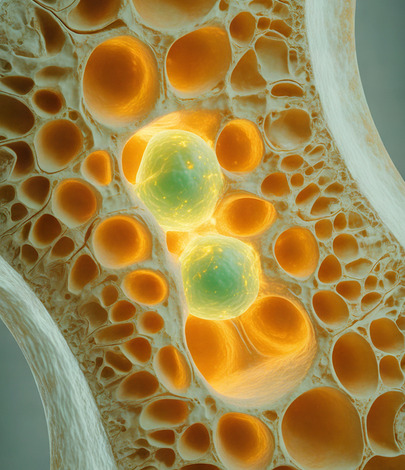
To understand the connection between menopause and bone density, it helps to understand how bone tissue works. Bone is not static. It is living tissue, continuously broken down by cells called osteoclasts and rebuilt by cells called osteoblasts. In healthy pre-menopausal women, this process — called bone remodelling — is roughly balanced.
Oestrogen is the key regulator. It suppresses osteoclast activity, effectively putting a brake on bone breakdown. When oestrogen levels decline during perimenopause and menopause, that brake is released. Osteoclasts become significantly more active, breaking down bone faster than osteoblasts can replace it. The result is a net loss of bone mineral density (BMD) that accumulates year on year.
This process begins in perimenopause — often years before the final period. Women in their mid-to-late 40s with irregular cycles may already be experiencing accelerated bone loss without any awareness of it.
By the time a woman reaches her mid-50s, if bone density has not been measured and addressed, the cumulative loss can be substantial.
How Much Bone Do Women Actually Lose During Menopause?
The figures are striking and worth stating clearly:
- Women lose bone at a rate of approximately 1–3% per year in the first five years after menopause
- Total bone loss in the decade following menopause can reach 25–30% in some women
- Women account for 80% of all osteoporosis diagnoses in the UK
- 1 in 2 women over 50 will experience an osteoporosis-related fracture in their lifetime
- Hip fractures carry a 20–30% one-year mortality rate in older women
- The UK has one of the highest osteoporosis fracture rates in Europe, with approximately 500,000 fragility fractures occurring annually
These are not abstract statistics. They describe a condition that is common, serious, and — when caught early — highly manageable.
Who Is at Highest Risk?
While all women face increased bone loss risk after menopause, some face substantially greater risk. Understanding your personal risk profile is the starting point for informed action.
Higher-risk groups include women who:
- Experienced early menopause (before age 45) or premature menopause (before age 40)
- Have a family history of osteoporosis or hip fracture — particularly a parent
- Have a slim build or low body weight (BMI under 19)
- Have a history of eating disorders or extended periods of low dietary calcium
- Have taken corticosteroids (such as prednisolone) for three or more months
- Smoke or consume more than 14 units of alcohol per week
- Have a history of amenorrhoea (absence of periods) for reasons other than pregnancy
- Have conditions linked to bone loss, including rheumatoid arthritis, coeliac disease, Crohn’s disease, or type 1 diabetes
- Are taking aromatase inhibitors for breast cancer treatment
Women without any of these risk factors are not exempt from bone loss — but those with one or more should treat a DEXA scan as a clinical priority, not an optional extra.
The Symptoms That Are Easy to Miss — and the Ones That Are Invisible
Osteoporosis is asymptomatic in its early stages. There is no pain, no visible change, no warning that bone mineral density is declining. This is what makes it so dangerous — and why so many women are diagnosed only after a fracture occurs.
By that point, the disease is already advanced.
There are some signs that can, in retrospect, point to bone loss — though none of them are reliable indicators on their own:
Gradual loss of height — losing more than 1.5–2cm over years is associated with vertebral compression fractures, which can occur silently in weakened spinal bone.
Increasing curvature of the upper back — known informally as a dowager’s hump, this reflects cumulative changes in spinal vertebrae.
A fracture from a minor fall or impact — a fracture sustained from a fall from standing height or below is classified as a fragility fracture and is a significant clinical red flag.
Persistent back pain — especially in the mid to lower back, without a clear musculoskeletal cause.
The absence of these symptoms does not mean bones are healthy. The only way to know bone density is to
measure it.
DEXA Scanning: The Gold Standard for Bone Density Measurement
DEXA — Dual-Energy X-ray Absorptiometry — is the internationally recognised gold standard for measuring bone mineral density. It works by directing two low-energy X-ray beams at the body; bone, muscle, and fat each absorb these beams differently, allowing precise quantification of bone mineral content at key sites including the lumbar spine, hip, and femoral neck.
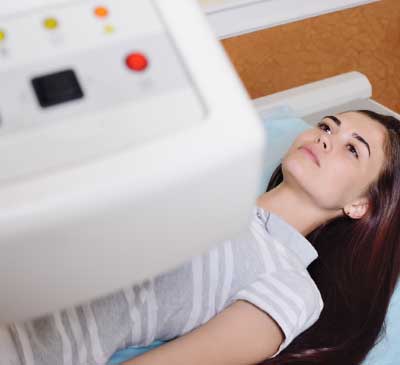
The scan is safe, non-invasive, and takes approximately 10–20 minutes. Radiation exposure is exceptionally low — around 0.001 mSv, compared to 0.1 mSv for a chest X-ray.
Results are expressed as two scores:
T-score — compares your bone density against the average peak bone mass of a healthy young adult woman. This is the primary diagnostic tool for osteoporosis.
- T-score of -1.0 or above: Normal
- Between -1.0 and -2.5: Osteopenia (low bone density — a warning stage)
- -2.5 or below: Osteoporosis
Z-score — compares your bone density against other women of the same age, weight, and ethnicity. A Z-score significantly below average may indicate secondary causes of bone loss that warrant further investigation.
Bone Density Scanning at DEXA London, Harley Street
DEXA London is operated by 3Beam, a Diagnostic Imaging Centre on Harley Street, London’s most distinguished medical address. The clinic is registered with the Care Quality Commission (CQC) and staffed by HCPC-registered radiographers.
Bone density scans are £150. Results are reported by UK consultant rheumatologists through Medica, one of the UK’s leading teleradiology providers, and delivered as a clear, structured PDF report with your T-score, Z-score, and clinical interpretation.
An internal referral from Dr Emil Gadimali is required for bone density scans — this is easily arranged when you contact the clinic. No GP referral is needed.
DEXA London
86 Harley Street, Marylebone, London W1G 7HP
T: 0207 637 8227
E: scan@dexa.london
W: dexa.london
What Happens After Your Scan Results?
A DEXA scan does not just tell you whether there is a problem — it gives you the information to act on. Depending on your results, the appropriate response may involve one or more of the following.
For normal bone density: Establish this result as a baseline. Repeat scanning every two to five years, particularly through the menopause transition, to monitor any changes.
For osteopenia: This is a call to action, not a crisis. Targeted lifestyle intervention — resistance and weight-bearing exercise, optimised calcium and vitamin D intake, reduced alcohol and smoking — can meaningfully slow the rate of bone loss. Discuss HRT options with your GP or menopause specialist if you have not already.
For osteoporosis: A formal management plan is warranted. Your consultant rheumatologist’s report will guide next steps, which may include prescription medication (bisphosphonates are the most commonly used), review of HRT suitability, and falls-prevention strategies.
Can Hormone Replacement Therapy (HRT) Protect Bone Density?
Yes — and the evidence is robust. HRT has been shown in multiple large-scale studies to preserve and, in some women, improve bone mineral density. It works by replacing the oestrogen that menopause removes, directly addressing the hormonal mechanism behind bone loss.
The 2019 NICE guidelines on menopause explicitly acknowledge the skeletal benefits of HRT. For women who begin HRT at or around menopause, the reduction in fracture risk is clinically meaningful.
HRT is not appropriate for every woman — individual risk factors for breast cancer, cardiovascular disease, and other conditions must be considered. But for many women in the menopause transition, the protective effect on bone health is one of several compelling reasons to discuss it with a specialist.
A DEXA scan can usefully inform that conversation, giving both patient and clinician objective data about current bone density status before decisions are made.
The Case for Scanning in Perimenopause — Not Just After
One of the most important messages in contemporary bone health medicine is this: do not wait until after menopause to assess your bones.
Bone loss begins during perimenopause, which can start as early as the early 40s. The hormonal fluctuations of this transitional phase are already affecting bone remodelling. By the time periods have stopped, bone density may already be measurably lower than it was five years ago.
Scanning in perimenopause — ideally in the mid-to-late 40s for women with risk factors, and by 50 for all women — allows a baseline to be established when intervention can have the greatest impact. It also allows the rate of change to be tracked over subsequent scans, which is often more informative than any single measurement.
Proactive, evidence-based — and exactly the approach that DEXA London was designed to support.
Frequently Asked Questions
What is a normal bone density for a menopausal woman?
Bone density is measured using a T-score. A T-score of -1.0 or above is considered normal. Between -1.0 and -2.5 indicates osteopenia (low bone density). A score of -2.5 or below indicates osteoporosis. For a woman going through menopause, establishing your baseline T-score is the first step to understanding your personal risk.
How much does a bone density DEXA scan cost in London?
At DEXA London on Harley Street, a bone density scan costs £150. Results are reported by consultant rheumatologists and delivered as a detailed PDF report. No GP referral is required — contact the clinic to arrange an internal referral.
How often should menopausal women have a bone density scan?
For women with normal bone density, a repeat scan every two to five years through the menopause transition is generally appropriate. Women with osteopenia or additional risk factors may be advised to scan more frequently — typically every one to two years — to monitor the rate of change.
Does HRT prevent osteoporosis?
HRT does not prevent osteoporosis in every case, but it significantly reduces the rate of bone loss in menopausal women and has been shown in clinical studies to reduce fracture risk. Its protective effect on bone is strongest when started at or near menopause. Whether HRT is appropriate for you depends on your individual medical profile and should be discussed with a GP or menopause specialist.
Can you have a DEXA scan during perimenopause?
Yes — and it is advisable. Bone loss begins during perimenopause, not just after the final period. Scanning in the mid-to-late 40s allows an early baseline to be established and any concerning trends to be identified while there is maximum opportunity to intervene.
Is a bone density scan painful or risky?
A DEXA scan is entirely painless. You remain clothed throughout and simply lie still for 10–20 minutes while the scanner passes over you. The radiation dose is extremely low — far less than a standard chest X-ray — and the procedure carries no known risks.
What is the difference between osteopenia and osteoporosis?
Osteopenia describes bone density that is below the normal range but not yet low enough to be classified as osteoporosis. It is an intermediate stage and an important warning. Left unaddressed, osteopenia can progress to osteoporosis. A DEXA scan distinguishes clearly between the two.
To book a bone density scan at DEXA London, visit dexa.london. The clinic is located at 86 Harley Street, London W1G 7HP. Bone density scans cost £150 — no GP referral required.