

Normal Weight Obesity: When Your BMI Is Healthy But Your DEXA Scan Reveals Hidden Fat
Quick Answer: Normal weight obesity is a condition where your BMI falls within the healthy range (18.5 to 24.9) but your body fat percentage is too high. Research published in Scientific Reports suggests it affects up to 30% of adults who appear lean by standard measures. A body composition DEXA scan is the most accurate way to identify this hidden risk, measuring your exact fat, muscle, and bone distribution across your entire body.
You step on the scales, check your BMI, and the numbers look fine. Your GP tells you your weight is healthy. But underneath that reassuring number, something else may be going on entirely.
Normal weight obesity is one of the most underdiagnosed conditions in modern medicine. It describes people who carry excess body fat despite having a perfectly normal body mass index. Because BMI only accounts for total weight relative to height, it cannot distinguish between fat mass, muscle mass, and bone. Two people with identical BMI scores can have vastly different body fat percentages, and vastly different health risks as a result.
This article explains what normal weight obesity is, why it matters for your long-term health, and how a DEXA scan at our Harley Street clinic can identify it when standard measurements cannot.
What Is Normal Weight Obesity?
Normal weight obesity (NWO) is defined as having a BMI between 18.5 and 24.9 while carrying a body fat percentage above the healthy threshold. The World Health Organisation defines this threshold as above 25% body fat for men and above 35% for women, though a 2025 study in Scientific Reports identified an even more precise cutoff of 35.78% in young women for predicting cardiometabolic risk.
The condition is far more common than most people realise. A peer-reviewed study published in the journal Nutrients found that approximately 29% of young adults with a normal BMI met the criteria for normal weight obesity when their body fat was measured directly. These individuals looked healthy by every conventional measure, yet their metabolic profiles told a different story.
Unlike sarcopenic obesity, where the issue is specifically low muscle mass combined with high fat, normal weight obesity can occur even in people with adequate muscle tissue. The core problem is excess adipose tissue, particularly visceral fat stored around the organs, that standard clinical assessments miss entirely.
Why BMI Fails to Detect Normal Weight Obesity
BMI was developed in the 1830s by the Belgian mathematician Adolphe Quetelet as a population-level statistical tool. It was never designed to assess individual health. The formula divides weight in kilograms by height in metres squared, producing a single number that tells you nothing about what your body is actually made of.
A person with 18% body fat and significant muscle mass can have the same BMI as someone with 32% body fat and very little muscle. Both may register as “healthy weight” on the BMI chart, yet their cardiovascular and metabolic risk profiles are fundamentally different.
The NHS acknowledges the limitations of BMI, noting that it can be misleading in people with higher or lower than average muscle mass. But in routine clinical practice, BMI remains the primary screening tool for weight-related health risks. This means that millions of adults in the UK with normal weight obesity are never identified, never monitored, and never given the clinical attention their body composition warrants.
Waist circumference measurements offer a partial improvement by capturing central fat distribution, but they still cannot quantify visceral fat or differentiate between subcutaneous and organ-surrounding fat deposits. Only direct body composition analysis can do that.
The Health Risks of Normal Weight Obesity
Research consistently shows that people with normal weight obesity face significantly elevated health risks compared to those with a similar BMI but lower body fat. A study published in the European Journal of Clinical Nutrition found that adults with high body fat at a normal BMI had a 78% higher risk of all-cause mortality over a 15-year follow-up period.
The mechanisms behind this increased risk are well understood. Excess adipose tissue, particularly visceral fat, produces chronic low-grade inflammation through the release of pro-inflammatory cytokines including TNF-alpha, IL-6, and IL-1 beta. According to research published in Circulation Research by the American Heart Association, these inflammatory mediators disrupt insulin signalling and contribute to systemic insulin resistance, even in individuals who appear metabolically normal on the surface.
The specific risks associated with normal weight obesity include cardiovascular disease (including elevated LDL cholesterol, reduced HDL cholesterol, and increased arterial stiffness), insulin resistance and progression to type 2 diabetes, metabolic syndrome, non-alcoholic fatty liver disease, and increased cancer risk. A 2025 systematic review and meta-analysis covering over 18 million individuals, published in PMC, found that normal-weight subjects with metabolic syndrome components had significantly elevated cancer risk compared to metabolically healthy peers.
What makes normal weight obesity particularly dangerous is that it typically goes undetected. People at a healthy BMI rarely receive the metabolic screening, blood lipid panels, or body composition analysis that would reveal the problem. By the time symptoms appear, the underlying damage to cardiovascular and metabolic systems may already be well established.
How a DEXA Scan Diagnoses Normal Weight Obesity
A DEXA (dual-energy X-ray absorptiometry) scan is the clinical gold standard for measuring body composition. Unlike BMI, bioelectrical impedance scales, or skinfold callipers, DEXA directly measures three distinct tissue compartments: fat mass, lean mass (muscle and organs), and bone mineral content. It does this for your whole body and for individual regions, including your arms, legs, trunk, and the critical android (abdominal) zone.
For diagnosing normal weight obesity, DEXA provides several measurements that BMI cannot. Total body fat percentage tells you exactly how much of your weight is fat tissue, removing the guesswork of BMI. Regional fat distribution shows where your fat is concentrated, since abdominal and trunk fat carry greater metabolic risk than fat stored in the limbs. Visceral adipose tissue (VAT) estimation quantifies the deep organ-surrounding fat that drives inflammation and insulin resistance. Your android-to-gynoid ratio compares fat stored around your abdomen to fat stored around your hips and thighs, providing a direct indicator of cardiovascular risk.
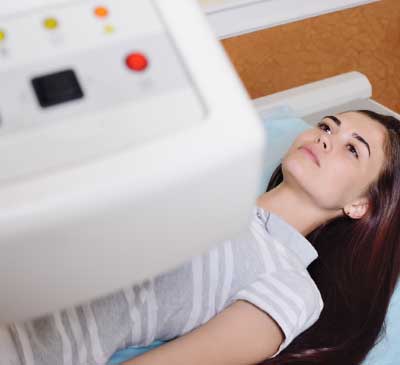
A DEXA scan at DEXA London takes approximately 12 minutes and uses a very low radiation dose, comparable to a few hours of natural background exposure. The results are available immediately and reviewed by Dr Emil Gadimali, who can explain exactly what your body composition means for your health and what, if anything, needs to change.
We covered the nuances of body fat ranges and what they mean clinically in our detailed guide to understanding body fat percentage from a DEXA scan.
Who Should Be Screened for Normal Weight Obesity?
While anyone can benefit from knowing their true body composition, certain groups are at higher risk of normal weight obesity and should consider a body composition DEXA scan as part of their health assessment.
Adults with a family history of type 2 diabetes, cardiovascular disease, or metabolic syndrome should be particularly attentive. If your parents or siblings developed these conditions at a normal weight, your own body composition may carry similar hidden risks. Sedentary professionals who maintain a healthy weight through calorie restriction rather than physical activity are another high-risk group. Without regular resistance exercise, muscle mass declines gradually while fat mass may increase, shifting your body composition even as the scales stay stable.
People who have recently lost weight through dieting alone, without incorporating strength training, may have preserved their BMI while losing muscle and retaining proportionally more fat. Post-menopausal women experience hormonal changes that promote visceral fat accumulation even at a stable weight, and the same applies to men experiencing age-related testosterone decline after 40.
Anyone with unexplained metabolic markers, such as elevated fasting glucose, abnormal cholesterol panels, or raised inflammatory markers, despite being at a “healthy” weight, should seriously consider a DEXA scan. The results may explain what blood tests alone cannot.
What to Do If Your DEXA Scan Reveals Normal Weight Obesity
If your DEXA results show excess body fat at a normal BMI, the goal is not necessarily to lose weight on the scales. Instead, the focus shifts to improving your body composition: reducing fat mass, particularly visceral fat, while preserving or building lean muscle tissue. This is a fundamentally different approach from conventional dieting.
Resistance training is the single most effective intervention for normal weight obesity. The NHS recommends at least two sessions of muscle-strengthening activity per week, and research consistently shows that progressive resistance exercise reduces visceral fat, improves insulin sensitivity, and shifts body composition favourably even without significant changes in total body weight.
Dietary adjustments should prioritise adequate protein intake (1.2 to 1.6 grams per kilogram of body weight daily, based on current evidence from the British Dietetic Association) to support muscle maintenance and repair. Reducing ultra-processed food intake and increasing consumption of whole foods, particularly vegetables, lean proteins, and healthy fats, can reduce systemic inflammation and improve metabolic markers.
Follow-up DEXA scans at 6 to 12 month intervals allow you to track changes objectively. Unlike the scales, which might show no change at all during successful body recomposition, a DEXA scan will reveal whether your fat mass is decreasing, your lean mass is increasing, and your visceral fat is improving.
Weight management next step
If your DEXA results reveal elevated body fat or visceral fat despite a normal BMI, a supervised medical weight management programme may be worth considering alongside lifestyle changes. CutKilo, the sister service to DEXA London, offers doctor-led Mounjaro treatment from Dr Emil Gadimali. Start the CutKilo questionnaire to see if you are suitable.
Frequently Asked Questions
What body fat percentage is considered normal weight obesity?
For men, a body fat percentage above 25% at a normal BMI is generally considered normal weight obesity. For women, the threshold is above 35%. A 2025 study in Scientific Reports identified a more precise diagnostic cutoff of 35.78% in young women for predicting cardiometabolic risk.
Can you be skinny and still have too much body fat?
Yes. This is exactly what normal weight obesity describes. A person can look lean, weigh a healthy amount, and still carry a disproportionate amount of body fat relative to muscle. This is sometimes called “skinny fat” in everyday language, though the clinical term is normal weight obesity.
Is normal weight obesity the same as sarcopenic obesity?
No. Sarcopenic obesity specifically involves low muscle mass combined with high body fat. Normal weight obesity is defined solely by excess body fat at a normal BMI. A person with adequate muscle mass can still have normal weight obesity if their fat mass is too high. The two conditions can overlap, but they are distinct diagnoses.
How common is normal weight obesity?
Studies estimate that approximately 29 to 46% of adults with a normal BMI have excess body fat, depending on the population studied and the diagnostic criteria used. It is significantly more prevalent than most clinicians and patients assume.
Can a DEXA scan tell me if I have normal weight obesity?
Yes. A DEXA body composition scan directly measures your total body fat percentage, regional fat distribution, and visceral fat estimation. These measurements are essential for diagnosing normal weight obesity, which cannot be identified through BMI, scales, or visual assessment alone.
How much does a DEXA scan cost at DEXA London?
Contact our Harley Street clinic directly on 0207 637 8227 for current pricing and availability. Scans take approximately 12 minutes, and results are reviewed with you on the same day by Dr Emil Gadimali.
Book Your DEXA Body Composition Scan
If your BMI says you are healthy but you suspect your body composition tells a different story, a DEXA scan is the most accurate and clinically validated way to find out. At DEXA London, we provide comprehensive body composition and bone density DEXA scans at our Harley Street clinic, with same-day results reviewed by Dr Emil Gadimali.
Normal weight obesity is a treatable condition when it is identified early. The first step is knowing exactly what your body is made of. Book your scan today by calling 0207 637 8227 or visiting our clinic at 86 Harley Street, London.