

Postpartum Body Composition: How Pregnancy and Breastfeeding Affect Your Fat, Muscle, and Bone
Pregnancy transforms your body in ways that go far beyond what the bathroom scales can show. While most new mothers focus on the number on the scale, the real story is happening beneath the surface: shifts in fat distribution, changes to lean muscle mass, and measurable decreases in bone mineral density that standard weighing simply cannot detect.
A body composition DEXA scan provides the clinical detail that helps you understand exactly what has changed during pregnancy and breastfeeding, and how your body is recovering. Rather than guessing whether postpartum weight is fat, fluid, or muscle, DEXA quantifies each component with precision.
Quick answer: Pregnancy typically increases fat mass by around 19% and lean tissue mass by approximately 5%. Bone mineral density decreases by 1.8% to 4.2% at key skeletal sites during pregnancy and may decline further during breastfeeding. The reassuring finding from controlled research is that bone density returns to pre-pregnancy levels by 19 months postpartum, regardless of breastfeeding duration (Moller et al., Osteoporosis International, 2012).
What Happens to Your Body Composition During Pregnancy
Your body undergoes a series of coordinated adaptations during pregnancy to support fetal growth and prepare for breastfeeding. These changes affect every compartment that a DEXA scan measures: fat, lean tissue, and bone.
Fat mass increases substantially, with research showing an average rise of around 19%. This fat is not distributed randomly. The body preferentially stores it in areas that support energy reserves for lactation, particularly around the hips, thighs, and trunk. Some of this fat redistribution is hormonally driven by rising oestrogen and progesterone levels throughout the trimesters.
Lean tissue mass also increases by approximately 5%, largely due to expanded blood volume, uterine growth, and breast tissue development. This is an important distinction because total weight gain during pregnancy is a mixture of fat, lean tissue, fluid, and the baby itself. Without a body composition measurement, it is impossible to know which compartment has changed and by how much.
Bone mineral density decreases during pregnancy as calcium is mobilised from the maternal skeleton to support fetal bone development. A controlled cohort study published in Osteoporosis International measured these changes precisely: BMD decreased by 1.8% at the lumbar spine, 3.2% at the total hip, 2.4% at the whole body, and 4.2% at the ultra distal forearm compared with non-pregnant controls.
How Breastfeeding Affects Bone Density and Fat Loss
Breastfeeding places additional demands on the maternal skeleton. The calcium content of breast milk must come from somewhere, and in the early months of lactation, a significant proportion is drawn directly from bone.
Research shows that women who breastfeed for longer than nine months experience continued bone density decreases at the lumbar spine and hip compared with women who stop breastfeeding earlier. However, this pattern has an important nuance: at trabecular bone sites (such as the spine), density begins to recover even while breastfeeding continues, whereas cortical bone sites (such as the forearm) continue to decline during prolonged lactation.
The critical finding for new mothers is that by 19 months postpartum, bone mineral density returns to pre-pregnancy baseline at all measured sites, regardless of how long breastfeeding lasted. This recovery happens naturally and does not appear to depend on calcium or vitamin D intake during the study period.
Fat mass follows a different trajectory during breastfeeding. Women who continue to breastfeed tend to retain fat mass for longer than those who stop earlier. This is a physiological adaptation rather than a failure of diet or exercise. The body maintains energy reserves while it is still producing milk. A DEXA scan taken during breastfeeding can provide reassurance that what feels like slow progress is actually the body prioritising its biological function.
Why Scales and BMI Miss the Full Picture After Pregnancy
Stepping on the scales after having a baby tells you one number: total weight. It cannot distinguish between the fat your body stored during pregnancy, the lean muscle mass you may have lost through reduced activity, or the fluid shifts that are still settling in the early postpartum weeks.
BMI is equally uninformative in this context. A woman who returns to her pre-pregnancy weight may have a very different body composition than before: less muscle, more fat, and temporarily reduced bone density. Conversely, a woman whose weight remains slightly above her pre-pregnancy number may have gained lean tissue through resumed exercise while still carrying some residual pregnancy fat.
A DEXA scan resolves this ambiguity by measuring fat mass, lean mass, and bone mineral density separately. It also provides regional breakdowns, showing exactly where fat has been deposited and whether muscle mass is symmetrical between limbs. For postpartum women, this level of detail transforms vague worry into specific, actionable information.
When to Book a Postpartum DEXA Scan
Timing matters when it comes to a postpartum body composition assessment. In the first six weeks after delivery, fluid shifts, uterine involution, and hormonal fluctuations make body composition measurements less reliable. Most clinical guidance suggests waiting until at least six to eight weeks postpartum before having a DEXA scan.
For women who want to track their recovery trajectory, a useful approach is to have a baseline scan at around three months postpartum, when the most dramatic early changes have settled, and then a follow-up scan at 12 months. This provides two data points that reveal the direction and pace of recovery across all three compartments: fat, muscle, and bone.
Women with specific risk factors may benefit from earlier or more frequent monitoring. These include women with a history of low bone density or osteoporosis in the family, those who had pre-eclampsia or gestational diabetes, women who experienced significant weight gain during pregnancy, and those who are breastfeeding exclusively for extended periods. A bone density DEXA scan can identify whether pregnancy-related bone loss warrants any clinical follow-up.
Postpartum Recovery: What the Evidence Says About Fat, Muscle, and Bone
The research on postpartum body composition recovery provides several reassuring findings alongside some areas that deserve attention.
Bone density recovers fully. The Moller et al. study (2012) followed 153 women from pre-pregnancy through to 19 months postpartum and confirmed that BMD returned to baseline at every measured site. This recovery occurred regardless of breastfeeding duration and without any specific calcium or vitamin D supplementation protocol. The Royal Osteoporosis Society notes that pregnancy-related bone loss is a normal physiological adaptation that resolves naturally in the vast majority of women.
Fat distribution takes time to normalise. While total fat mass begins to decrease after delivery, the rate and pattern depend on breastfeeding status, physical activity levels, and individual metabolic factors. Women who breastfeed may find that fat loss is slower in the first six to nine months but accelerates after weaning. A DEXA scan can show whether fat is being lost from the trunk (including visceral fat) or from peripheral stores, which has different health implications. For women approaching their late thirties or forties after pregnancy, these postpartum body composition changes can overlap with early perimenopausal shifts in body composition, making baseline DEXA data particularly valuable for tracking long-term trends.
Muscle mass requires active recovery. Unlike bone density, lean muscle mass does not automatically return to pre-pregnancy levels. If physical activity decreased during pregnancy and the early postpartum period, muscle loss may have occurred alongside fat gain. This is where a DEXA scan provides particular value: it identifies whether you need to prioritise resistance training to rebuild lean tissue, rather than focusing solely on fat loss through calorie restriction.
How to Use Your Postpartum DEXA Results
A postpartum DEXA scan gives you a clinical starting point rather than a vague sense of where you are. Here is how to interpret the key metrics in a postpartum context.
Total body fat percentage will likely be higher than your pre-pregnancy level, particularly if you are still breastfeeding. This is expected and does not require aggressive intervention. Compare it with your age-adjusted reference range rather than an idealised target.
Regional fat distribution matters more than the total number. Elevated trunk fat, particularly visceral fat measured by DEXA, is more metabolically significant than peripheral fat stored around the hips and thighs. If your scan shows disproportionately high trunk fat, this is worth discussing with your GP, especially if you had gestational diabetes.
Appendicular lean mass index (ALMI) tells you whether your muscle mass is adequate for your height. If ALMI is low, this suggests that muscle preservation should be a priority in your postpartum fitness approach, with an emphasis on progressive resistance training and adequate protein intake rather than calorie-deficit dieting alone.
Bone mineral density T-scores should be interpreted cautiously in the early postpartum period. A temporarily reduced T-score does not necessarily indicate osteoporosis. It reflects the normal calcium mobilisation of pregnancy and breastfeeding. A follow-up scan at 12 to 18 months will confirm whether recovery is on track.
Frequently Asked Questions
Is it safe to have a DEXA scan while breastfeeding?
Yes. The radiation dose from a DEXA scan is extremely low, comparable to a few hours of natural background radiation. It does not affect breast milk production or quality. There is no need to pump and discard milk after a DEXA scan.
Will pregnancy permanently damage my bones?
No. Controlled research consistently shows that bone mineral density returns to pre-pregnancy levels by approximately 19 months postpartum. This recovery occurs naturally and is independent of breastfeeding duration.
How soon after giving birth can I have a DEXA scan?
Most clinicians recommend waiting at least six to eight weeks after delivery. For the most informative baseline, a scan at around three months postpartum gives the clearest picture once early fluid shifts have resolved.
My weight is back to normal but I look different. Why?
This is one of the most common postpartum experiences and it has a straightforward explanation: your body composition has changed. You may have more fat and less muscle than before pregnancy, even at the same total weight. A DEXA scan quantifies this precisely.
Should I diet to lose the baby weight as quickly as possible?
Aggressive calorie restriction in the postpartum period can accelerate muscle loss, which is counterproductive. If you are breastfeeding, it can also reduce milk supply. A DEXA scan helps you set realistic, evidence-based targets by showing exactly what your body composition looks like, so you can focus on fat loss while preserving or rebuilding lean tissue.
Book Your Postpartum DEXA Scan at Harley Street
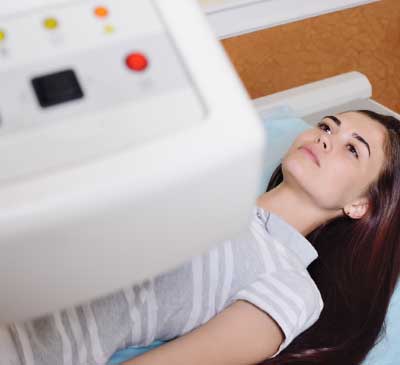
At DEXA London, we provide clinical-grade body composition and bone density scanning at our Harley Street clinic. A postpartum DEXA scan takes approximately 15 minutes and gives you a detailed breakdown of your fat mass, lean muscle mass, and bone mineral density, with regional analysis and age-adjusted reference ranges.
Your results are reviewed by Dr Emil Gadimali and returned with a clear clinical summary that explains what the numbers mean for your postpartum recovery. Whether you want to track your body composition as you return to exercise, check your bone density after a long period of breastfeeding, or simply understand what has changed since before pregnancy, a DEXA scan provides the answers that scales and BMI cannot.
To book your scan or ask any questions about postpartum body composition assessment, call us on 0207 637 8227 or book online through our website.
Considering weight management alongside your postpartum recovery? Our sister clinic CutKilo offers doctor-supervised Mounjaro (tirzepatide) weight loss programmes with regular DEXA body composition monitoring to ensure you lose fat while preserving lean muscle mass.