

DEXA Scan and Longevity: What Your Body Composition Reveals About Healthspan and Lifespan
A DEXA scan and longevity may not seem like an obvious pairing, but the metrics a dual-energy X-ray absorptiometry scan measures, including muscle mass, visceral fat, and bone mineral density, are now recognised as some of the strongest predictors of how long and how well you will live. At DEXA London, part of 3Beam Diagnostic Imaging Centre on Harley Street, these markers are measured with clinical precision in a single ten-minute appointment.
Longevity science has moved well beyond calorie counting and step tracking. Researchers and clinicians now focus on body composition: the ratio of fat to lean tissue, where that fat sits, and how your skeleton is holding up under the demands of ageing. A DEXA scan gives you hard numbers on all three, turning vague health goals into measurable targets.
QUICK ANSWER
A DEXA scan measures three pillars of longevity: skeletal muscle mass (low levels are linked to up to 57% higher mortality), visceral fat (elevated levels predict cardiovascular disease, type 2 diabetes, and certain cancers), and bone mineral density (osteoporotic fractures carry a 20% one-year mortality rate in older adults). Tracking these markers over time gives you and your doctor an evidence-based roadmap for extending both healthspan and lifespan.
Why Body Composition Matters More Than Body Weight for Longevity
Bathroom scales tell you one number. That number combines bone, muscle, water, organs, and fat into a single figure that reveals almost nothing about your health trajectory. Two people at identical weights can have radically different life expectancies depending on how that weight is distributed between metabolically active muscle and metabolically harmful visceral fat.
Body mass index (BMI), the metric most commonly used in NHS screening, divides weight by height squared. It cannot distinguish between a rugby player carrying 90 kilograms of lean tissue and a sedentary office worker at the same weight with significantly elevated body fat. A landmark review published in Annals of Internal Medicine found that up to 30% of individuals classified as “normal weight” by BMI had metabolic profiles associated with obesity when body composition was measured directly.
A body composition DEXA scan separates your weight into three compartments: fat mass, lean soft tissue mass, and bone mineral content. This three-compartment model is the clinical standard for evaluating metabolic risk, sarcopenia, and skeletal health. It is also the foundation of any serious longevity strategy, because each compartment independently predicts disease risk and mortality.
Muscle Mass and Mortality: What the Research Shows
Skeletal muscle is not just tissue that helps you lift bags of shopping. It is the largest organ of glucose metabolism, a reservoir of amino acids that support immune function, and a mechanical buffer that protects your joints and spine. Losing it accelerates almost every marker of biological ageing.
A 2014 study published in The American Journal of Medicine followed over 3,600 older Americans and found that those with the highest muscle mass index had significantly lower all-cause mortality, regardless of their BMI or cardiovascular risk factors. The relationship held even after adjusting for physical activity, chronic disease, and smoking status.
A systematic review and meta-analysis in PLOS ONE (2023) quantified the risk more precisely: individuals with low skeletal muscle mass had a 57% higher risk of dying from any cause compared to those with normal muscle mass. The effect was even more pronounced in people with a higher BMI, suggesting that carrying excess fat without adequate muscle is a particularly dangerous combination.
DEXA is the gold-standard method for measuring appendicular skeletal muscle mass (the muscle in your arms and legs), which is the clinical metric used to diagnose age-related muscle loss, known as sarcopenia. Muscle loss can begin as early as the mid-thirties and accelerates after 60, but it is modifiable with resistance training and adequate protein intake. The key is knowing where you stand before the decline becomes clinically significant.
Visceral Fat: The Hidden Longevity Risk a DEXA Scan Reveals
Not all body fat carries the same risk. Subcutaneous fat, the layer beneath your skin, is relatively benign from a metabolic standpoint. Visceral adipose tissue (VAT), the fat packed around your abdominal organs, is a different matter entirely. It behaves more like an endocrine organ, releasing inflammatory cytokines and free fatty acids that drive insulin resistance, arterial plaque formation, and cellular ageing.
The NHS identifies excess visceral fat as a risk factor for type 2 diabetes, cardiovascular disease, and certain cancers including bowel and breast cancer. A meta-analysis published in the British Medical Journal confirmed that waist circumference, a crude proxy for visceral fat, predicted cardiovascular mortality independently of BMI. DEXA goes further by quantifying visceral fat in grams, removing the guesswork of tape-measure estimates.
What makes visceral fat particularly relevant to longevity is its modifiability. Unlike subcutaneous fat, which can be stubborn to shift, visceral fat responds well to dietary changes, aerobic exercise, and, where clinically appropriate, pharmacological intervention. Knowing your precise visceral fat mass gives you a baseline and a target, and repeat DEXA scans at three to six-month intervals show whether your strategy is working.
Weight management next step: If your DEXA results reveal elevated visceral fat and your longevity goals include reducing metabolic risk, a supervised weight-loss programme may accelerate progress safely. CutKilo, the sister service to DEXA London, offers doctor-led Mounjaro (tirzepatide) treatment supervised by Dr Emil Gadimali. Start the CutKilo questionnaire to see if you are suitable.
Bone Density and Healthy Ageing: Why Falls Prevention Starts With a Scan
Bone health is the third pillar of longevity that a DEXA scan addresses. Osteoporotic fractures, particularly hip fractures in adults over 65, carry a one-year mortality rate of approximately 20%, according to data published by the National Hip Fracture Database and referenced by the Royal Osteoporosis Society. A fragility fracture is not just an inconvenience; it can be a life-altering or life-ending event.
NICE guidelines recommend a bone density DEXA scan for postmenopausal women with clinical risk factors, men over 50 with risk factors, and anyone on long-term corticosteroid therapy or other medications known to affect bone metabolism. Early detection of osteopenia or osteoporosis allows for lifestyle and pharmacological interventions that can halt or partially reverse bone loss before a fracture occurs.
At DEXA London, bone density results are reported as T-scores and Z-scores, with scans interpreted by consultant rheumatologists at Medica, a UK-based specialist reporting service. This level of clinical oversight ensures that borderline results receive the nuanced interpretation they require, rather than a binary “normal or abnormal” classification.
How a DEXA Scan Fits Into a Longevity Health Strategy
Longevity medicine is not about a single test or a one-off intervention. It is an ongoing process of measuring, adjusting, and re-measuring. A DEXA scan serves as the structural anchor of that process, providing objective data on the three tissue compartments most closely linked to disease risk and mortality.
A practical longevity scanning schedule might look like this. A baseline scan in your thirties or forties establishes your starting point for muscle mass, fat distribution, and bone density. Follow-up scans every 12 to 24 months track changes over time. If you make a significant lifestyle change, such as starting a resistance training programme, beginning a weight-loss intervention, or commencing HRT, a repeat scan at three to six months can confirm whether the change is producing the intended effect on body composition.
Your DEXA results integrate with other longevity markers. Blood biomarkers such as fasting insulin, HbA1c, lipid panels, and inflammatory markers (CRP, IL-6) provide the metabolic context. Grip strength and gait speed assessments add functional data. Together, these metrics give your GP or longevity clinician a comprehensive picture that scales, BMI, and standard blood tests alone simply cannot provide.
To learn more about how DEXA scanning works, including what to expect from the scan itself and how results are reported, visit our dedicated guide.
What Happens During a DEXA Scan at 86 Harley Street
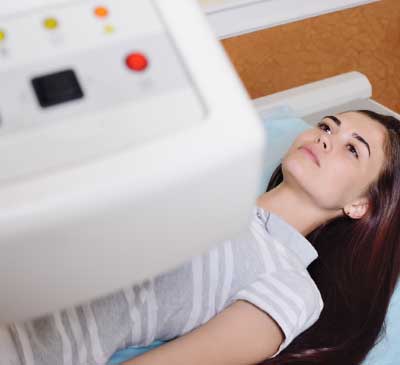
A DEXA scan at DEXA London, part of 3Beam Diagnostic Imaging Centre at 86 Harley Street, takes approximately ten minutes. You lie clothed on an open scanning bed while a low-dose X-ray arm passes over your body. The radiation exposure is minimal, roughly equivalent to a few hours of natural background radiation, and far less than a standard chest X-ray.
No GP referral is needed. You can book a body composition DEXA scan, a bone density DEXA scan, or both in a single visit. Results are typically available within a few working days. Body composition reports include regional fat and lean tissue breakdowns, visceral fat quantification, and appendicular skeletal muscle mass. Bone density reports include T-scores and Z-scores with specialist interpretation.
DEXA London is CQC regulated and operated by qualified radiographers. The clinic is located in the heart of London’s medical district, making it accessible for anyone seeking a credible, clinician-led alternative to consumer body-scanning services.
Frequently Asked Questions
Can a DEXA scan predict how long I will live?
A DEXA scan does not predict your lifespan directly, but it measures three variables, including muscle mass, visceral fat, and bone density, that are strongly and independently associated with all-cause mortality in large population studies. By tracking these markers over time, you can identify and address risks before they become clinically significant.
How often should I get a DEXA scan for longevity tracking?
For most adults, a baseline scan followed by annual or biennial repeat scans is sufficient. If you are making active changes to your training, diet, or medication, a scan every three to six months can help confirm that your body composition is moving in the right direction.
Is a DEXA scan safe to have regularly?
Yes. A whole-body DEXA scan uses an extremely low dose of radiation, approximately 1 to 5 microsieverts, which is less than a transatlantic flight. The European Commission and the Health Protection Agency consider this dose negligible for repeated clinical use.
Do I need a GP referral for a DEXA scan at Harley Street?
No. DEXA London accepts self-referrals. You can book directly online or by calling 0207 637 8227. Many patients book as part of a proactive health strategy rather than in response to a specific clinical concern.
What is the difference between a body composition DEXA scan and a bone density DEXA scan?
A body composition scan measures fat mass, lean tissue mass, and bone mineral content across your whole body and by region. A bone density scan focuses specifically on the lumbar spine and hip to assess osteoporosis risk using T-scores and Z-scores. Both scans use the same DEXA technology and can be performed in a single appointment at DEXA London.
Book Your DEXA Scan at 86 Harley Street
If you are serious about longevity, a DEXA scan gives you the data to make informed decisions about your training, nutrition, and medical care. Knowing your muscle mass, visceral fat, and bone density today means you can act before these markers cross a clinical threshold.
Book Your DEXA Scan at 86 Harley Street
DEXA London at 3Beam Diagnostic Imaging Centre, 86 Harley Street, London W1G 7HP.
Call: 0207 637 8227 | Email: scan@dexa.london
Book your scan online. No GP referral needed.