

Lean Body Mass Calculator: How Accurate Is It — and Is There a Better Way?
If you have just typed your height and weight into a lean body mass calculator online, you have done something millions of people do every week. The result appears instantly. It looks precise. But how accurate is it — and does it actually tell you anything useful about your health?
The answer is: it depends entirely on which formula the calculator uses, your individual body composition, and what you intend to do with the number. Online lean body mass calculators can be a reasonable starting point, but they come with limitations that most people do not realise — and for anyone serious about their health, fitness, or longevity, those limitations matter.
This article explains what lean body mass is, how the calculators work, where they fall short, and why a DEXA scan at DEXA London provides the clinical-grade measurement that no formula can replicate.
What Is Lean Body Mass?
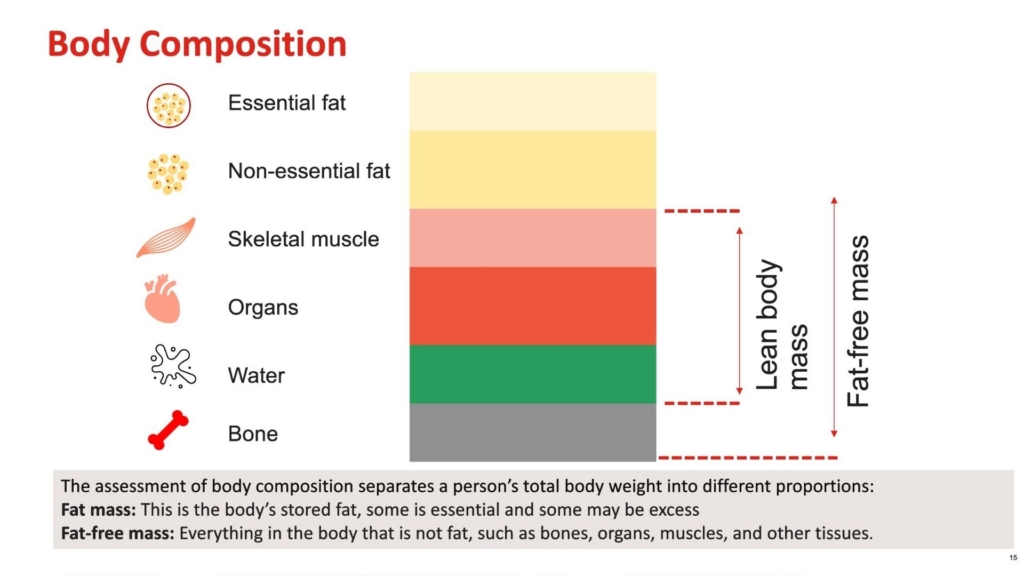
Lean body mass (LBM) is the total weight of everything in your body that is not storage fat. That includes skeletal muscle, bones, organs, blood, skin, and connective tissue — as well as essential fat, the small amount your body requires for basic cellular function (roughly 3% of body weight in men and 10–12% in women).
Lean body mass matters for several clinically significant reasons:
Metabolic rate. Muscle drives your resting metabolism. More lean mass means you burn more calories at rest, which directly affects weight management and metabolic health. Calculating calorie targets based on total body weight is less accurate than basing them on lean mass.
Protein requirements. Evidence-based nutrition guidelines express protein targets in grams per kilogram of lean mass, not total weight. If you do not know your actual lean mass, you cannot accurately calculate your protein needs.
Sarcopenia risk. Sarcopenia — the progressive loss of muscle mass and strength with age — begins earlier than most people expect. Research shows it can start in your 30s and accelerates significantly after 50. Low lean mass relative to your body size is a strong predictor of metabolic dysfunction, falls, fracture risk, and reduced cognitive performance in later life.
Cardiometabolic health. The ratio of fat to lean mass is a more reliable marker of metabolic risk than BMI. Two people can share an identical BMI but have entirely different body compositions — one with high muscle and low fat, one with low muscle and high fat. Only direct measurement reveals this.
How Do Lean Body Mass Calculators Work?
Online lean body mass calculators use one of several validated mathematical formulas, typically one of these four:
The Boer formula (derived from healthy adults) uses weight and height with sex-specific coefficients. It tends to be the most reliable for people of average build.
The James formula (originally developed for clinical drug dosing) provides slightly different estimates and performs well across a range of body types.
The Hume formula (derived from patients with kidney disease) applies specific coefficients and is most commonly encountered in clinical settings.
The Janmahasatian formula adjusts for body mass index and suits people at the heavier end of the weight spectrum more accurately than the other three.
Each formula estimates lean body mass from external measurements — primarily height and weight — without any direct information about what your body is actually made of. They assume that people of the same height, weight, and sex have similar body compositions, which is a significant assumption.
The Accuracy Problem: What the Research Shows
Here is the part that most lean body mass calculator pages do not tell you.
A 2022 analysis published in Nature found that lean body mass formula calculators can over- or underestimate true lean mass by between 3.5 and 8.6 kilograms compared with DEXA — the recognised clinical gold standard for body composition measurement. That is an error range of up to 19 pounds in either direction.
The reason for this error is structural. The formulas rely entirely on height and weight. They have no way to account for how that weight is distributed between muscle, bone, and fat. Two people who weigh 70kg and stand 170cm tall will receive identical calculator outputs — but one might carry 48kg of lean mass and the other 54kg. That 6kg difference changes their protein targets, their calorie requirements, their training prescriptions, and their metabolic risk profile entirely.
Other common measurement methods carry their own limitations:
Smart scales and bioelectrical impedance analysis (BIA) work by passing a small electrical current through the body and estimating lean mass from the resistance encountered. They carry a margin of error of ±3–5%, and results shift significantly depending on hydration levels, time since eating, skin temperature, and even what you consumed the day before. Research consistently shows that BIA devices produce results inconsistent enough to make accurate progress tracking difficult.
Skinfold callipers depend heavily on the skill of the technician, the sites measured, and the formula used to convert skin thickness into a lean mass estimate. Error rates of ±3–4% are common even in experienced hands.
Hydrostatic (underwater) weighing is more accurate but requires complete submersion and multiple attempts, making it impractical for most people.
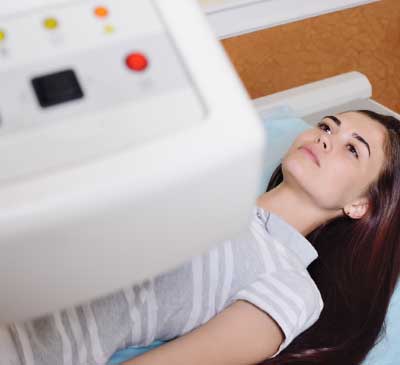
Against all of these, DEXA — Dual-Energy X-ray Absorptiometry — operates at a precision of ±1–2%. Conducted under standardised conditions with an experienced radiographer, DEXA does not estimate your lean mass. It measures it directly.
What DEXA Measures That a Calculator Cannot
A DEXA body composition scan does considerably more than produce a single lean body mass figure.
Regional lean mass breakdown. DEXA separates your body into segments — arms, legs, and trunk — and reports lean mass individually for each. This reveals muscle imbalances between your dominant and non-dominant sides, asymmetries between upper and lower body, and changes in regional composition over time. A calculator gives you one number. DEXA gives you a map.
Appendicular lean mass index (ALMI). This metric — lean mass in your limbs divided by your height squared — is the clinically validated measure for detecting early sarcopenia. The European Working Group on Sarcopenia in Older People (EWGSOP2) defines low muscle mass in women as an ALMI below 5.5 kg/m² and in men below 7.0 kg/m². Identifying this early, while intervention is most effective, requires direct measurement.
Visceral fat. DEXA quantifies the fat stored around your internal organs — visceral adipose tissue (VAT) — which is the metabolically active fat most strongly associated with cardiovascular disease, insulin resistance, and metabolic syndrome. No calculator or BIA device provides reliable visceral fat data.
Bone mineral density. At DEXA London, bone density scans run alongside body composition measurement. This provides a full picture of skeletal health — detecting osteopenia and osteoporosis at a stage when intervention makes the most difference — something that no body composition calculator approaches.
A reference population comparison. Your DEXA results compare against the NHANES national reference database, telling you not just what your lean mass is, but where it sits relative to people of your age and sex. This contextualises your results in a way that a raw kilogram figure cannot.
Who Should Consider Moving Beyond a Calculator?
Online lean body mass calculators serve a purpose as a rough orientation — particularly for people new to thinking about body composition who want a quick starting point for their protein targets or calorie estimates. As a free, instant tool, they have a place.
But for anyone who wants to use the data to make real decisions, the margin of error becomes a problem.
People training seriously need accurate lean mass data to set protein targets, periodise nutrition, and verify that their training is building muscle rather than simply changing scale weight.
People managing their weight benefit significantly from knowing their body composition rather than relying on weight alone. The scales do not distinguish between fat loss and muscle loss — DEXA does.
People over 40 face a declining lean mass trajectory that is invisible to a formula calculator. Establishing an accurate baseline now — and tracking it over time — creates the conditions for early intervention if sarcopenia begins.
Healthy Londoners who simply want to know their numbers accurately. You do not need to be an elite athlete or a patient with a medical condition to benefit from knowing precisely what your body is made of. Body composition is a fundamental health metric, and having clinical-grade data is increasingly accessible.
Getting a Lean Body Mass Scan in London
DEXA London operates at 86 Harley Street, one of London’s most established medical addresses. Body composition scans cost £150, take less than 20 minutes, and require no GP referral. You receive a detailed PDF report showing your total lean mass, fat mass, visceral fat, regional breakdown, and comparison against a national reference population.
The scan uses a low radiation dose comparable to a few hours of normal background radiation — well within established safety guidelines and appropriate for repeat scanning every three to six months if you are actively tracking progress.
DEXA London’s radiographers are HCPC-registered, and the clinic operates under 3Beam, a CQC-registered diagnostic imaging centre. This is the same standard of equipment and clinical oversight used in research institutions and hospital settings.
Frequently Asked Questions
How accurate are lean body mass calculators?
Lean body mass formula calculators can overestimate or underestimate true lean mass by 3.5 to 8.6 kilograms compared with DEXA scanning, according to a 2022 study published in Nature. They provide a useful estimate but not a clinical measurement.
What is the most accurate way to measure lean body mass?
DEXA — Dual-Energy X-ray Absorptiometry — is the gold standard for body composition measurement. It directly measures lean mass, fat mass, visceral fat, and bone density with a precision of ±1–2%, rather than estimating from height and weight.
What does lean body mass tell you about your health?
Lean body mass reflects your metabolic rate, your muscle health relative to your age, your risk of sarcopenia, and your accurate protein and calorie requirements. Low lean mass relative to total body weight is associated with elevated cardiometabolic risk independent of overall weight.
What is a good lean body mass percentage?
Lean body mass percentage varies by sex and age. As a general guide, women typically have a lean mass percentage between 65–85% of total body weight, and men between 75–90%. However, the clinical measure that matters most is your lean mass relative to your height squared (ALMI) and how it compares to a reference population — which a DEXA scan provides.
How often should you get a DEXA body composition scan?
For healthy adults actively tracking their body composition, a scan every three to six months gives enough time for meaningful changes to accumulate while providing regular feedback. A single baseline scan is valuable even without follow-up, as it establishes your precise starting point.
Do I need a GP referral for a DEXA body composition scan in London?
No. Body composition DEXA scans at DEXA London do not require a GP referral. You book directly at dexa.london or by calling 0207 637 8227.
To book a body composition DEXA scan at DEXA London, visit dexa.london, call 0207 637 8227, or email scan@dexa.london. The clinic is located at 86 Harley Street, London W1G 7HP. Scans cost £150 — no GP referral required.