

Creatine and Body Composition: What Your DEXA Scan Really Shows About Muscle, Water, and Fat
Understanding Creatine Effects
Creatine monohydrate is the most researched sports supplement in history. Millions of people take it to build muscle and improve performance. But if you have ever had a DEXA scan while supplementing with creatine, you may have noticed something unexpected: your lean mass reading jumped by a kilogram or more in just a few weeks, even before any visible change in muscle size.
That sudden rise is not necessarily new muscle tissue. Creatine draws water into skeletal muscle cells, and a DEXA scanner cannot tell the difference between water held inside muscle and actual contractile protein. Understanding how creatine interacts with your scan results matters if you are using DEXA to track genuine progress over time.
Quick answer: Creatine increases total body water held within muscle. This DEXA registers as additional lean mass. A typical loading phase adds 0.5 to 1.5 kg of water weight to your lean mass reading within the first week. Real muscle protein gains from creatine-supported training take 8 to 12 weeks to appear on a scan. For the most accurate tracking, keep your creatine dose consistent between scans and allow at least three months between measurements.
What Creatine Actually Does Inside Your Muscles
Understanding Creatine Effects
Creatine is a naturally occurring compound found in red meat, fish, and produced by the liver and kidneys. About 95% of the body’s creatine is stored in skeletal muscle, mostly as phosphocreatine. This regenerates adenosine triphosphate (ATP) during short, intense efforts such as sprinting or heavy lifting.
When you supplement with creatine monohydrate (typically 3 to 5 grams per day, or 20 grams per day during a loading phase), your muscle creatine stores increase by roughly 20 to 40 percent. This higher concentration draws additional water into muscle cells through osmosis. The International Society of Sports Nutrition (ISSN) position stand confirms that creatine supplementation reliably increases intramuscular water content alongside phosphocreatine stores.
This intracellular water shift is the mechanism behind the rapid weight gain most people notice in the first week of supplementation. It is not fat gain. The supplement is not yet muscle protein. Creatine is water redistributed into muscle tissue. This effect has direct implications for how a DEXA scanner reads your body.
How DEXA Measures Lean Mass and Why Water Matters
DEXA Scan Considerations
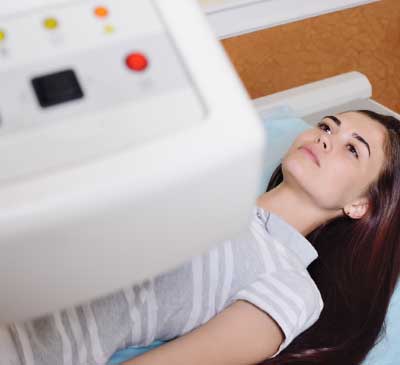
A DEXA (dual-energy X-ray absorptiometry) scan works by passing two low-dose X-ray beams through your body. The scanner differentiates tissue into three compartments: bone mineral, fat mass, and lean soft tissue. Lean soft tissue includes everything that is not bone or fat: muscle protein, organ tissue, connective tissue, and water.
This is where creatine creates a measurement challenge. Because DEXA classifies all non-fat, non-bone tissue as “lean mass,” any increase in intramuscular water registers as an increase in lean mass. A 2017 study published in Medicine and Science in Sports and Exercise found that creatine loading increased DEXA lean mass estimates by approximately 1.0 to 1.4 kg, with total body water rising by a corresponding amount. Glycogen loading produced similar effects.
A 2023 study on female collegiate dancers confirmed these findings, showing that creatine supplementation significantly increased both total body water and DEXA-derived lean mass estimates even in the absence of resistance training. The researchers noted that larger studies combining creatine with structured training are needed to separate water-driven changes from true muscle growth.
None of this means your DEXA scan is inaccurate. It means the scan is measuring exactly what it is designed to measure: the total amount of lean tissue. Examples include water. The key is knowing how to interpret that number when creatine is part of your routine.
Separating Water Weight from Real Muscle Gains
Understanding Creatine Effects
If you start taking creatine and then have a DEXA scan two weeks later, you will almost certainly see a lean mass increase that is largely water. If you compare that scan to one taken three months later while following a consistent training programme, the additional lean mass beyond the initial water gain is much more likely to reflect genuine muscle protein accretion.
Research published in the Journal of the International Society of Sports Nutrition shows that creatine combined with resistance training produces significantly greater increases in lean body mass over 8 to 12 weeks compared to training alone. A 2025 meta-analysis found that creatine supplementation during resistance training added approximately 1.4 kg more lean tissue mass than placebo over a typical training block, after accounting for the initial water retention phase.
The practical takeaway for anyone using a body composition DEXA scan to monitor progress is straightforward. If you are already taking creatine at a stable dose when you have your baseline scan, subsequent scans will show genuine tissue changes because the water component stays relatively constant. If you start or stop creatine between scans, the lean mass comparison becomes harder to interpret.
Does Creatine Change Your Fat Mass or Body Fat Percentage?
Understanding Creatine Effects
Creatine does not directly cause fat loss or fat gain. It does not raise your metabolic rate in a meaningful way. It does not contain significant calories. However, creatine indirectly affects your body fat percentage as displayed on a DEXA report.
Body fat percentage is calculated as fat mass divided by total mass. When creatine increases your lean mass (even if that increase is partly water), your total mass rises while fat mass stays the same. The result is a lower body fat percentage on paper, even though your actual fat tissue has not changed.
This effect is small, typically shifting body fat percentage by 0.5 to 1.5 percentage points. However, it can matter to someone tracking progress closely. If your body fat percentage dropped from 22% to 20.5% between scans and you started creatine in between, part of that drop may reflect water redistribution rather than fat loss. The absolute fat mass figure on your report (measured in kilograms) is the more reliable number to track in this scenario, since creatine does not alter how DEXA measures fat tissue.
How to Get the Most Accurate DEXA Results While Taking Creatine
Key Insights
Consistency is the single most important factor. If you want to track body composition changes over time with a DEXA scan, keep your creatine protocol the same for every scan. The following guidelines help minimise measurement noise.
Maintain a stable daily dose. Take the same amount of creatine (typically 3 to 5 grams per day) for at least four weeks before each scan. This allows intramuscular water levels to reach a plateau. So the water component of your lean mass stays constant between measurements.
Avoid loading phases close to a scan. A 20-gram-per-day loading protocol in the week before a DEXA scan will inflate your lean mass reading by the maximum water amount, making the comparison with previous scans unreliable. Either complete your loading phase at least three weeks before scanning, or skip the loading phase entirely and use the standard 3 to 5 gram maintenance dose from the start.
Do not stop creatine just before a scan. If you have been supplementing consistently and then stop a few days before your scan, your muscles will begin releasing stored water. Your lean mass reading will drop. However, the drop is water loss, not muscle loss.
Allow adequate time between scans. A minimum of 12 weeks between DEXA scans gives your body enough time to show detectable changes in actual muscle or fat tissue, rather than capturing short-term fluctuations in water and glycogen.
Stay hydrated normally. Drink water as you usually would on the morning of your scan. There is no need to dehydrate or overhydrate. Unusual hydration states affect all DEXA readings, not just those related to creatine.
Creatine Safety: What the Evidence Shows
Understanding Creatine Effects
Creatine monohydrate has been studied in clinical trials for over three decades. The ISSN position stand, the most comprehensive review of creatine research to date, concludes that creatine supplementation at recommended doses is safe for healthy adults. There is no credible evidence linking creatine to kidney damage, liver dysfunction, or dehydration in people with normal organ function.
A 2024 review in the Journal of the International Society of Sports Nutrition reaffirmed that creatine is safe across the lifespan, with emerging evidence suggesting benefits for bone health and cognitive function in older adults. A study presented at a major nutrition conference in 2025 found that 10 grams of daily creatine in elderly subjects improved muscle mass, reduced body fat by 3.5%, and enhanced cognition when combined with resistance training.
The main precaution applies to people with pre-existing kidney disease. If you have chronic kidney disease or take medications that affect kidney function, speak to your GP before supplementing. Pregnant and breastfeeding women should also avoid creatine, as there is insufficient safety data for these groups. For everyone else, plain creatine monohydrate from a reputable brand with third-party testing (such as Informed-Sport certification) is the recommended choice. More expensive formulations like creatine hydrochloride or buffered creatine have not proven to outperform monohydrate in clinical studies.
Who Benefits Most from Combining Creatine with DEXA Tracking
Understanding Creatine Effects
Creatine and DEXA scanning complement each other well for anyone serious about building or maintaining lean mass. The people who get the most value from this combination typically fall into a few groups.
Strength trainees and recreational lifters who want objective data on whether their training programme is producing real muscle gains, not just scale weight increases. A DEXA scan every three to six months while taking creatine consistently shows whether lean mass is genuinely rising, falling, or staying flat.
Adults over 40 who are supplementing with creatine to offset age-related muscle loss (sarcopenia). Research increasingly supports creatine use in older adults for preserving lean mass and strength, and periodic DEXA scans provide the data to confirm whether the strategy is working.
Women navigating perimenopause or menopause who face accelerated changes in body composition. Creatine may support lean mass retention during this period, and DEXA gives a precise, regional breakdown of where fat and muscle are shifting.
Anyone on a calorie deficit who wants to confirm they are losing fat rather than muscle. Creatine helps preserve lean mass during a deficit, and DEXA confirms whether the strategy is protecting muscle while fat decreases. Pairing creatine with adequate daily protein intake is essential here. We covered the research on optimal protein targets in our guide to protein and body composition from a DEXA scan.
Frequently Asked Questions
Understanding Creatine Effects
Will creatine make my DEXA scan inaccurate?
No. Your scan is accurate in measuring total lean tissue. This includes water. The reading is not wrong. it simply includes water held inside muscle cells. If you take creatine consistently at the same dose before every scan, the water component remains stable and genuine changes in muscle or fat are clearly visible.
How much lean mass does creatine add on a DEXA scan?
The initial water-driven increase is typically 0.5 to 1.5 kg during the first one to two weeks. Over 8 to 12 weeks of combined creatine use and resistance training, genuine muscle gains of approximately 1.4 kg above what training alone produces have been observed in clinical studies.
Should I stop taking creatine before my DEXA scan?
No. Stopping creatine causes your muscles to release stored water. This lowers your lean mass reading and makes it harder to compare with previous scans. Keep your dose the same.
Does creatine affect bone density results on a DEXA scan?
Creatine does not alter bone mineral content or how DEXA measures bone density. Emerging research suggests creatine may support bone health over the long term. However, the effect on a single bone density scan is negligible.
Is creatine safe for women?
Yes. The ISSN confirms that creatine is safe for healthy women at standard doses (3 to 5 grams per day). Women may experience slightly less water retention than men. However, the performance and lean mass benefits apply equally. The exception is during pregnancy and breastfeeding. There, insufficient safety data exists.
Book Your DEXA Scan at Our Harley Street Clinic
Understanding Creatine Effects
Whether you are starting creatine for the first time or have been supplementing for years, a DEXA scan gives you the precise baseline you need to measure real progress. Our clinic at 86 Harley Street, London, provides detailed body composition reports showing regional fat, lean mass, and bone density, with results reviewed by Dr Emil Gadimali.
Call 0207 637 8227 or visit our body composition scan page to book your appointment. If you are using creatine, our team can help you interpret your results in context and plan the best timing for follow-up scans.