
Caffeine and Bone Density: What Your DEXA Scan Reveals About How Coffee Affects Your Bones
If you start your morning with a cup of coffee, you are far from alone. The UK is a nation of coffee drinkers, and many of us rely on caffeine to get through the day. But if you have ever wondered whether your coffee habit could be weakening your bones, you are asking a question that researchers have spent decades trying to answer.
The relationship between caffeine and bone density is more nuanced than most headlines suggest. While excessive caffeine intake can interfere with calcium absorption, moderate coffee consumption may actually be associated with a lower risk of osteoporosis. A DEXA scan provides the most accurate way to measure your bone mineral density and determine whether your caffeine intake is having any measurable effect.
Quick Answer: Moderate coffee consumption (one to three cups per day) does not appear to harm bone density in most people. A large UK Biobank study of nearly 488,000 adults found that drinking one to two cups of coffee daily was associated with a 10% lower risk of osteoporosis. However, very high caffeine intake (more than four cups per day), particularly in people with low calcium intake, may increase fracture risk. A bone density DEXA scan gives you a definitive measurement of where you stand.
How Caffeine Interacts With Bone Metabolism
Caffeine influences bone health through several biological pathways. Understanding these mechanisms helps explain why the research on coffee and bones has produced such varied results.
The most commonly cited concern is that caffeine increases urinary calcium excretion. When you consume caffeine, your kidneys temporarily excrete slightly more calcium than usual. A landmark study by Heaney and Recker estimated that each cup of coffee causes a net loss of roughly 2 to 3 milligrams of calcium, a small amount that can be offset by just a tablespoon of milk (Creighton University Osteoporosis Research Centre).
Caffeine may also interfere with intestinal calcium absorption. Laboratory studies suggest that caffeine can temporarily reduce the efficiency with which your gut absorbs dietary calcium. However, the effect is modest and primarily relevant when overall calcium intake is already low.
On the other side, coffee contains hundreds of bioactive compounds beyond caffeine. Chlorogenic acids, polyphenols, and other antioxidants have been shown to reduce chronic inflammation, which is itself a driver of bone loss. Some researchers believe these protective compounds may offset or even outweigh caffeine’s negative effects on calcium balance.
What the Research Actually Shows
The evidence on caffeine and bone density has evolved significantly in recent years, with large-scale studies providing clearer answers than earlier, smaller investigations.
A 2024 prospective study from the UK Biobank followed 487,594 adults aged 38 to 73 for a median of 12.8 years. Among 15,211 new osteoporosis cases, coffee drinkers had a 7% lower risk of developing the condition compared with non-drinkers (hazard ratio 0.93). Participants who drank one to two cups daily showed the strongest association, with a 10% reduced risk (Zhang et al., Bone, 2024).
A 2025 meta-analysis published in Frontiers in Nutrition pooled data from 14 studies covering 562,838 participants aged 40 and above. The analysis found that coffee consumption was associated with a 21% lower odds of osteoporosis (OR 0.79, 95% CI 0.73 to 0.84). The protective association was statistically significant only at more than one cup per day (Li, Xie and Jiang, 2025).
However, the picture changes when looking at fracture risk specifically. A systematic review found that higher caffeine intake was associated with approximately a 2% increased fracture risk for each additional 100 milligrams consumed. For context, a standard cup of brewed coffee contains roughly 80 to 100 milligrams of caffeine. The fracture risk association was more pronounced in women than in men (Osteoporosis International, 2022).
A 2025 cross-sectional analysis of NHANES data found that caffeine intake above 166.5 milligrams per day was associated with a 60% lower osteoporosis risk compared with intake below 60 milligrams per day, further supporting the idea that moderate consumption is not harmful and may be protective.
How Much Coffee Is Too Much for Your Bones
Based on the current evidence, the dose-response relationship between coffee and bone health follows a U-shaped curve. Moderate intake appears protective, while very high intake may carry some risk.
The sweet spot appears to be one to three cups of brewed coffee per day, providing roughly 80 to 300 milligrams of caffeine. At this level, the antioxidant and anti-inflammatory benefits of coffee likely outweigh any minor effect on calcium balance.
Consuming more than four cups per day (above 400 milligrams of caffeine) is where the evidence starts to show potential concern, particularly for hip fracture risk. A 2018 meta-analysis of Asian cohort studies found that drinking more than four cups daily was associated with higher hip fracture risk. The European Food Safety Authority recommends a maximum of 400 milligrams of caffeine daily for healthy adults, which aligns with the bone health data.
It is worth noting that caffeine content varies widely by preparation method. A single espresso contains around 63 milligrams, a standard filter coffee around 95 milligrams, and some high-street large coffees can contain 200 milligrams or more in a single serving. If you regularly order large or extra-strong coffees, you may be consuming more caffeine than you realise.
Who Needs to Be More Careful
While moderate coffee consumption appears safe for most people’s bones, certain groups should pay closer attention to their caffeine intake and its potential interaction with bone density.
Postmenopausal women face the greatest bone density decline due to falling oestrogen levels. If caffeine intake is high and calcium intake is low, the combined effect could accelerate bone loss during a period when bones are already vulnerable. Learning more about how DEXA scanning works can help women in this group understand how to track changes over time.
People with low calcium intake are at higher risk because caffeine’s effect on urinary calcium excretion becomes more significant when overall calcium intake is insufficient. The NHS recommends adults consume 700 milligrams of calcium daily. If your diet is low in dairy, fortified foods, or leafy greens, even moderate caffeine could tip the balance.
People taking medications that affect bone density, such as corticosteroids, proton pump inhibitors, or certain anticonvulsants, may also want to be more cautious. Adding high caffeine intake to an already bone-unfriendly medication profile compounds the risk.
Older adults with existing osteopenia or osteoporosis should discuss caffeine intake with their doctor. While moderate coffee is unlikely to make a significant difference, very high intake alongside other risk factors could contribute to fracture risk.
What a DEXA Scan Can Tell You About Caffeine and Your Bones
Population studies provide averages and associations, but they cannot tell you what is happening inside your own skeleton. That is where a body composition DEXA scan becomes valuable.
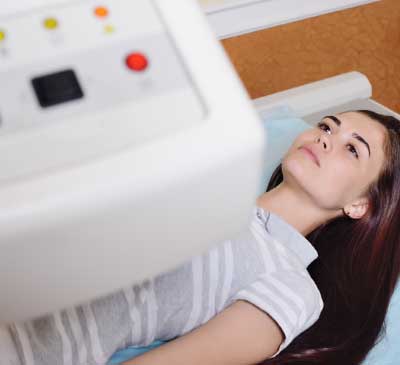
A DEXA bone density scan measures your bone mineral density at the hip and lumbar spine, the two sites most vulnerable to osteoporotic fractures. Your results are reported as a T-score, which compares your bone density to that of a healthy young adult. A T-score of -1.0 or above is normal, -1.0 to -2.5 indicates osteopenia (lower than normal bone density), and -2.5 or below is classified as osteoporosis.
If you are a heavy coffee drinker concerned about your bones, a baseline DEXA scan provides a definitive answer rather than guesswork. You might discover that your bone density is perfectly healthy despite your three-cup-a-day habit. Or you might find early osteopenia that warrants changes not just to caffeine intake but to exercise, nutrition, and possibly supplementation.
Serial DEXA scans taken 12 to 24 months apart can track whether lifestyle changes are having an effect. If you reduce caffeine intake, increase weight-bearing exercise, and improve calcium and vitamin D consumption, a follow-up scan can confirm whether your bone density has stabilised or improved.
Practical Steps to Protect Your Bone Density
You do not need to give up coffee to protect your bones. The evidence points to a few practical strategies that can help you enjoy your coffee habit while maintaining strong bone health.
Keep caffeine within moderate limits. Aim for no more than three to four cups of standard brewed coffee per day (roughly 300 to 400 milligrams of caffeine). Be mindful of high-caffeine drinks from coffee chains, energy drinks, and pre-workout supplements, which can push your daily total higher than you expect.
Ensure adequate calcium intake. The simplest way to offset caffeine’s minor effect on calcium balance is to consume enough calcium. The NHS recommends 700 milligrams daily for most adults. Good sources include dairy products, fortified plant milks, sardines, tofu, and leafy green vegetables like kale and broccoli. We covered the full picture of how calcium supports skeletal strength in our guide to calcium and bone density.
Maintain vitamin D levels. Vitamin D is essential for calcium absorption. Many people in the UK are deficient, particularly during autumn and winter. Public Health England recommends a daily supplement of 10 micrograms (400 IU) during these months.
Prioritise weight-bearing and resistance exercise. Physical activity remains the single most effective lifestyle intervention for bone density. Walking, jogging, dancing, and strength training all stimulate bone formation through mechanical loading.
Get a baseline DEXA scan. Rather than guessing, measure. A bone density DEXA scan provides objective data about your skeletal health and helps you make informed decisions about caffeine, nutrition, and exercise.
Frequently Asked Questions
Does coffee cause osteoporosis?
No. Moderate coffee consumption (one to three cups per day) has not been shown to cause osteoporosis. In fact, large studies including the UK Biobank (487,594 participants) found that moderate coffee drinking was associated with a lower risk of osteoporosis. However, very high caffeine intake combined with low calcium consumption may contribute to bone loss over time.
How many cups of coffee per day are safe for bone health?
Current evidence suggests that one to three cups of brewed coffee per day (80 to 300 milligrams of caffeine) is safe for most people’s bones. The European Food Safety Authority recommends a maximum of 400 milligrams of caffeine daily for healthy adults.
Does tea affect bone density differently to coffee?
Tea also appears to be associated with lower osteoporosis risk. The 2025 Frontiers in Nutrition meta-analysis found tea consumption was linked to a 25% lower odds of osteoporosis. Tea generally contains less caffeine than coffee (around 30 to 50 milligrams per cup) and is rich in flavonoids that may support bone health.
Should I add milk to my coffee for bone health?
Adding milk to your coffee is a simple way to offset any minor calcium loss caused by caffeine. A splash of milk provides enough calcium to compensate for the small amount excreted due to caffeine. This is particularly useful if your overall calcium intake is on the lower side.
Can a DEXA scan tell me if coffee is affecting my bones?
A DEXA scan measures your current bone mineral density at the hip and lumbar spine. While it cannot isolate caffeine as a specific cause of bone changes, it gives you an objective baseline. If you are concerned about the effect of your caffeine intake, a DEXA scan can confirm whether your bone density is within the healthy range or whether further investigation is needed.
Book Your DEXA Bone Density Scan
If you are a regular coffee drinker and want to know exactly where your bone density stands, a DEXA scan provides the definitive answer. At DEXA London, our Harley Street clinic offers fast, accurate bone density and body composition scans with results reviewed by Dr Emil Gadimali.
Book your DEXA scan today by calling 0207 637 8227 or visiting dexa.london. A scan takes just 10 to 15 minutes and gives you the clinical data you need to make informed decisions about your bone health, your caffeine intake, and your overall wellbeing.