
Plant-Based Diets and Bone Density: What Your DEXA Scan Reveals If You Are Vegan or Vegetarian
Quick Answer: Research shows that vegans have up to 43% higher fracture risk compared with meat eaters, largely due to lower calcium intake. A DEXA bone density scan is the most accurate way to check whether a plant-based diet is affecting your bone mineral density, so you can take action before problems develop.
Plant-based diets continue to grow across the UK. Whether motivated by ethics, environmental concerns, or health goals, more people are reducing or eliminating animal products from their meals. For many, the benefits are well documented: lower cholesterol, reduced cardiovascular risk, and a smaller environmental footprint.
But one area deserves closer attention. Bone health on a vegan or vegetarian diet is not guaranteed without deliberate nutritional planning. The largest UK-based study on this topic found that vegans face a meaningfully higher risk of fractures, particularly at the hip and spine. The good news is that this risk is not inevitable. With the right intake of calcium, vitamin D, and protein, plant-based eaters can maintain strong bones throughout life.
A bone density DEXA scan provides the clinical baseline you need. It measures bone mineral density with precision, revealing whether your skeleton is keeping pace with your dietary choices or quietly losing ground.
Why Plant-Based Diets Raise Questions About Bone Health
For most adults in the UK, dairy products supply the majority of dietary calcium. Milk, cheese, and yoghurt are dense, bioavailable sources that make hitting the recommended 700mg per day relatively straightforward. When you remove dairy entirely, as vegans do, or reduce it significantly, as many vegetarians and flexitarians choose to, you need to replace that calcium from other sources.
This is where the challenge lies. Many plant-based calcium sources are less concentrated than dairy, and some contain compounds like oxalates and phytates that reduce calcium absorption. Spinach, for example, is often cited as calcium-rich, but your body absorbs only about 5% of the calcium it contains. By contrast, calcium from kale, broccoli, and bok choy is absorbed at rates closer to 50%.
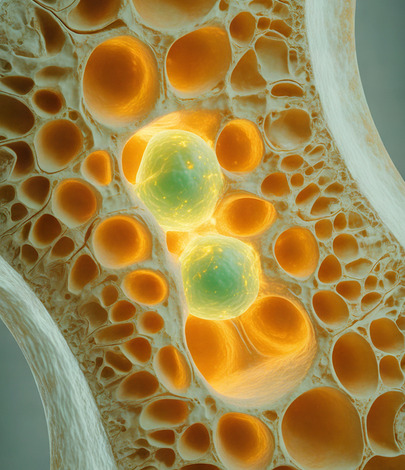
Protein also plays a role. Adequate protein intake supports bone remodelling, the continuous process by which old bone tissue is replaced with new. Some plant-based diets, particularly those that rely heavily on fruit, grains, and raw foods without sufficient legumes, nuts, or soy, fall short on total protein. The combination of lower calcium and lower protein creates conditions where bone mineral density can decline over time.
None of this means a plant-based diet is inherently bad for bones. It means that bone health requires deliberate attention when you are not relying on the dietary patterns most public health guidance was built around.
What the Research Shows: Fracture Risk on Vegan and Vegetarian Diets
The most comprehensive evidence comes from the EPIC-Oxford study, a large prospective cohort that followed nearly 55,000 UK adults for an average of 17.6 years. Published in BMC Medicine in 2020, the study compared fracture rates across four dietary groups: meat eaters, fish eaters, vegetarians, and vegans.
The findings were significant. Vegans had a 43% higher risk of total fractures and more than double the risk of leg fractures compared with meat eaters. Hip fracture risk was elevated across all non-meat-eating groups, including fish eaters and vegetarians. The researchers attributed much of this increased risk to lower average calcium intake among vegans, many of whom consumed less than 525mg per day.
Crucially, the study also showed that the gap narrowed when calcium and protein intake were adequate. Vegans who consumed at least 525mg of calcium daily and maintained a healthy BMI had a substantially lower fracture risk than those who did not. This suggests that the problem is not the plant-based diet itself, but rather the nutritional gaps that can accompany it when meals are not carefully planned.
A 2025 systematic review and meta-analysis published in Clinical Nutrition reinforced this nuance. It found that a healthy plant-based diet index was associated with a 36% reduction in osteoporosis risk, while an unhealthy plant-based diet index (high in refined grains, sugary drinks, and processed foods) increased the risk by 41%. Quality matters more than the label.
How a DEXA Scan Measures Bone Density
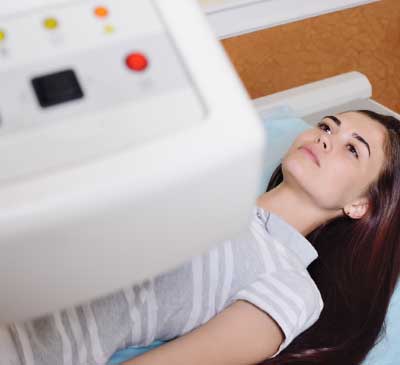
Dual-energy X-ray absorptiometry, known as DEXA or DXA, is the gold standard for measuring bone mineral density. The scan passes two low-dose X-ray beams through the body at different energy levels. Because bone, fat, and lean tissue absorb these beams differently, the scanner can calculate precisely how dense your bones are at key sites: the lumbar spine, the femoral neck (top of the thighbone), and sometimes the forearm.
Your results are reported as a T-score, which compares your bone density to that of a healthy 30-year-old adult at peak bone mass. A T-score above -1.0 is considered normal. Between -1.0 and -2.5 indicates osteopenia (lower than normal bone density). Below -2.5 is classified as osteoporosis. You can learn more about how DEXA scanning works on our dedicated page.
For vegans and vegetarians, a DEXA scan serves as an early warning system. Bone loss is silent. You will not feel your bones thinning until a fracture occurs. A scan can detect reduced bone mineral density years before it becomes clinically dangerous, giving you time to adjust your nutrition, add targeted supplements, or begin weight-bearing exercise programmes that stimulate bone formation.
The scan itself takes around 10 to 15 minutes, involves minimal radiation (less than a transatlantic flight), and requires no preparation. It is painless, non-invasive, and provides data you simply cannot get from blood tests or dietary tracking alone.
The Nutrients That Matter Most for Bone Health on a Plant-Based Diet
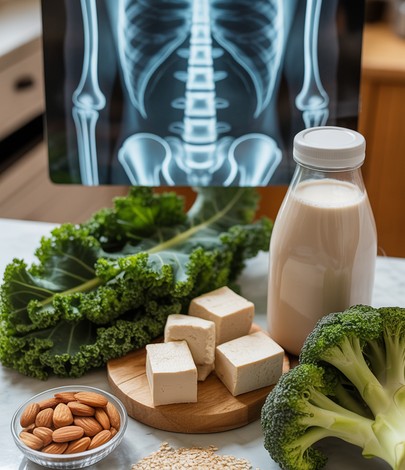
Calcium is the foundation. The NHS recommends 700mg per day for adults, though some guidelines suggest up to 1,200mg for postmenopausal women or those at elevated risk. Good plant-based sources include fortified plant milks (look for at least 120mg per 100ml), calcium-set tofu, kale, broccoli, bok choy, almonds, tahini, and fortified orange juice. Aim to include at least two or three of these at every meal.
Vitamin D is essential for calcium absorption. Without adequate vitamin D, your body cannot effectively use the calcium you consume. The NHS recommends a daily supplement of 10 micrograms (400 IU) for all UK adults during autumn and winter. Vegans should look specifically for vitamin D3 derived from lichen, as most D3 supplements come from lanolin (sheep’s wool). Vitamin D2 (ergocalciferol) is another plant-based option, though D3 is generally considered more effective at raising blood levels. We explored this relationship in detail in our guide to vitamin D and bone density on a DEXA scan.
Protein plays a structural role in bone that is often underestimated. Around 50% of bone volume is protein, primarily collagen. The EPIC-Oxford study found that higher protein intake was associated with lower fracture risk across all dietary groups. Plant-based protein sources include lentils, chickpeas, beans, tofu, tempeh, edamame, quinoa, nuts, and seeds. Aim for at least 0.8g per kilogram of body weight daily, and consider increasing to 1.0 to 1.2g if you are over 65.
Vitamin B12 deficiency has been linked to lower bone mineral density in several observational studies. Since B12 is found almost exclusively in animal products, all vegans and many vegetarians need a supplement or reliable intake from fortified foods. The recommended daily amount is 1.5 micrograms, though many clinicians suggest higher supplemental doses to ensure absorption.
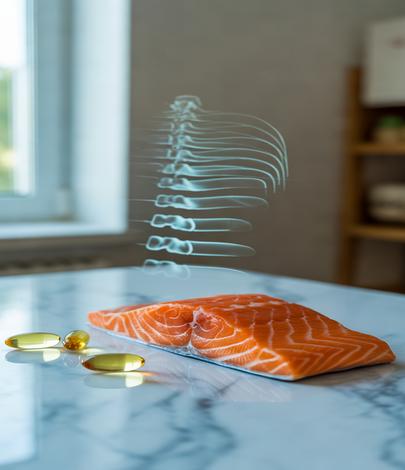
Omega-3 fatty acids, particularly EPA and DHA, support the regulation of bone remodelling. Algae-based omega-3 supplements provide these directly without the need for fish oil.
How to Protect Your Bones on a Plant-Based Diet
The Royal Osteoporosis Society emphasises that a well-planned vegan diet can fully support bone health. The key word is “planned.” Relying on whole foods alone without attention to fortification or supplementation leaves gaps that accumulate over years.
Prioritise fortified foods. Choose plant milks, yoghurts, and cereals that are fortified with calcium, vitamin D, and B12. Check labels carefully: not all brands fortify to the same level, and organic plant milks are often not fortified at all.
Supplement strategically. At minimum, vegans should supplement vitamin B12 and vitamin D year-round (or at least during autumn and winter for D). If your dietary calcium intake regularly falls below 500mg, a calcium supplement can bridge the gap. Take calcium supplements in divided doses of no more than 500mg at a time for optimal absorption.
Include weight-bearing and resistance exercise. Bones respond to mechanical loading. Walking, running, dancing, stair climbing, and resistance training all stimulate bone formation. Aim for at least 150 minutes of moderate activity per week, including some impact exercise and two sessions of resistance training.
Monitor with DEXA. A baseline bone density DEXA scan gives you a reference point. Follow-up scans every two to three years can track whether your bone mineral density is stable, improving, or declining. This data turns dietary guesswork into evidence-based decisions.
When Should Vegans and Vegetarians Get a DEXA Scan?
Not every plant-based eater needs a scan immediately, but certain groups should consider one sooner rather than later.
You have followed a vegan diet for five or more years. Long-term vegans have the most accumulated exposure to potential nutritional gaps. A scan provides a clear picture of where you stand.
You are a woman over 50 or postmenopausal. Oestrogen decline accelerates bone loss, and combining this with a diet that may be lower in calcium creates compounded risk. A DEXA scan is particularly valuable during this transition.
You have a family history of osteoporosis or fractures. Genetic factors influence peak bone mass and the rate of bone loss. If your parents or grandparents experienced fragility fractures, your baseline risk is higher.
You have experienced a fracture from a minor fall or impact. A fracture that occurs from standing height or less may indicate underlying osteoporosis. A DEXA scan can confirm whether your bone density is compromised.
You have a low BMI or a history of disordered eating. Low body weight is an independent risk factor for low bone mineral density. If you are underweight or have a history of restrictive eating alongside a plant-based diet, screening is strongly recommended.
You take medications known to affect bone density. Corticosteroids, proton pump inhibitors, certain anticonvulsants, and some cancer treatments can accelerate bone loss. If you are on any of these and follow a plant-based diet, a DEXA scan provides essential monitoring.
Frequently Asked Questions
Can vegans have normal bone density?
Yes. Vegans who consume adequate calcium (at least 700mg per day), supplement vitamin D and B12, maintain a healthy body weight, and engage in regular weight-bearing exercise can achieve and maintain normal bone mineral density. The research consistently shows that nutritional planning is the determining factor, not the dietary label.
How much calcium do vegans need per day?
The NHS recommends 700mg of calcium per day for all adults. Some clinical guidelines suggest higher intakes of 1,000 to 1,200mg for postmenopausal women or individuals at elevated fracture risk. Focus on fortified plant milks, calcium-set tofu, kale, broccoli, almonds, and tahini as primary sources.
Does a DEXA scan show whether my diet is affecting my bones?
A DEXA scan measures bone mineral density, which reflects the cumulative effect of your diet, exercise, hormones, and genetics over time. While it does not identify the specific cause of low bone density, a below-average T-score in someone following a plant-based diet is a strong signal to review calcium, vitamin D, and protein intake.
Is a vegetarian diet safer for bones than a vegan diet?
Vegetarians who include dairy and eggs typically have higher calcium intakes than vegans, and the EPIC-Oxford study found their fracture risk was only modestly elevated compared with meat eaters. However, lacto-ovo vegetarians who consume minimal dairy may face similar risks to vegans. The key factor is total calcium and vitamin D intake, regardless of the specific dietary pattern.
How often should I get a DEXA scan if I am vegan?
A reasonable approach is a baseline scan when you identify risk factors or have followed a vegan diet for several years, followed by repeat scans every two to three years. Your clinician may recommend more frequent monitoring if your initial results show osteopenia or if you are making significant dietary changes.
Book Your DEXA Bone Density Scan at Our Harley Street Clinic
Whether you have followed a plant-based diet for decades or recently made the switch, knowing your bone density gives you the clarity to make informed decisions about your health. A DEXA scan at our Harley Street clinic takes around 15 minutes, requires no special preparation, and provides precise measurements of your bone mineral density at the spine and hip.
Our reports include your T-scores, Z-scores, and a clear interpretation of what your results mean for your fracture risk. If your scan shows reduced bone density, we can discuss next steps including nutritional adjustments, supplementation, and referral pathways.
To book your scan or ask any questions, call us on 0207 637 8227 or visit our bone density scan page for more details.