

Thyroid Disorders and Body Composition: How Your Thyroid Affects Fat, Muscle, and Bone
Your thyroid gland sits at the base of your neck, yet it influences nearly every tissue in your body. When thyroid function shifts, whether too high or too low, your body composition follows. Fat distribution changes, muscle mass declines, and bone density weakens, often before obvious symptoms appear.
Quick answer: Thyroid disorders directly alter fat storage, lean muscle mass, and bone mineral density. A body composition DEXA scan is one of the most precise ways to detect these shifts early and track how treatment is restoring your body to a healthier baseline.
How the Thyroid Controls Body Composition
The thyroid produces two key hormones: triiodothyronine (T3) and thyroxine (T4). Together, they regulate your basal metabolic rate, the speed at which your cells convert nutrients into energy. When T3 and T4 levels fall outside their normal range, the downstream effects on fat, muscle, and bone can be significant.
According to the British Thyroid Foundation, around 1 in 20 people in the UK has some form of thyroid disorder. Many go undiagnosed for years, during which time measurable changes in body composition can accumulate silently.
Hypothyroidism: Weight Gain Beyond Calories
Hypothyroidism (underactive thyroid) slows your metabolic rate, which leads to fat accumulation even when eating habits remain unchanged. Research published in Thyroid journal found that patients with subclinical hypothyroidism had significantly higher body fat percentages and visceral fat levels compared to euthyroid controls, independent of BMI.
The weight gained in hypothyroidism is not simply “water weight” as sometimes assumed. DEXA scans of hypothyroid patients consistently show increased adipose tissue, particularly in the trunk region. This visceral fat accumulation carries metabolic risks including insulin resistance and elevated cardiovascular markers.
Crucially, standard scales cannot distinguish between fat gain, fluid retention, and muscle changes. A DEXA scan provides the regional breakdown needed to understand exactly what is changing and where.
Hyperthyroidism: The Hidden Cost to Muscle and Bone
Hyperthyroidism (overactive thyroid) accelerates metabolism, which often leads to weight loss. On the surface, this may seem benign or even desirable. However, the weight lost frequently includes lean muscle mass, not just fat.
A study in the Journal of Clinical Endocrinology and Metabolism demonstrated that hyperthyroid patients lost an average of 3.5% of their lean body mass over six months, even when total body weight appeared stable. This loss of muscle tissue reduces functional strength, slows resting metabolism further, and increases falls risk in older adults.
Excess thyroid hormone also accelerates bone turnover. The NHS lists hyperthyroidism as a recognised risk factor for osteoporosis, particularly in postmenopausal women. A bone density DEXA scan can quantify this loss precisely, giving your clinician data to guide treatment decisions around bone-protective therapies.
What a DEXA Scan Reveals for Thyroid Patients
A DEXA scan measures three distinct compartments: fat mass, lean mass, and bone mineral content. For thyroid patients, this triple measurement offers clinical value that blood tests alone cannot provide.
For hypothyroid patients, DEXA reveals whether treatment with levothyroxine is genuinely reducing fat mass or simply shifting fluid. It also shows whether visceral fat (the metabolically active fat surrounding organs) is improving or persisting despite normalised TSH levels.
For hyperthyroid patients, DEXA provides objective evidence of muscle preservation during treatment and quantifies bone mineral density changes that may warrant additional intervention. Serial scans taken every 6 to 12 months create a timeline that tracks whether body composition is recovering alongside thyroid hormone levels.
Thyroid Medication and Body Composition Recovery
Starting thyroid medication does not automatically reverse body composition changes. A 2022 meta-analysis in European Journal of Endocrinology found that while levothyroxine treatment improved TSH levels within weeks, significant reductions in body fat percentage took an average of 6 to 12 months, and some patients retained elevated visceral fat even after biochemical normalisation.
This disconnect between blood markers and physical composition is precisely why periodic DEXA scanning is valuable. Your TSH may read as “normal” while your body composition tells a different story. We explored this concept further in our guide to how DEXA scans reveal metabolic age and biological ageing, which shows how hormonal changes can accelerate the ageing of your body composition independently of chronological age. Clinicians increasingly recognise that optimising thyroid treatment requires looking beyond blood results to structural outcomes.
Resistance training plays a particularly important role in recovery. The Royal Osteoporosis Society recommends weight-bearing exercise for thyroid patients at risk of bone loss, and DEXA scanning can confirm whether these interventions are translating into measurable gains in lean mass and bone density.
When to Book a DEXA Scan if You Have a Thyroid Condition
Consider a baseline DEXA scan at the point of thyroid diagnosis, before treatment has had time to shift your composition. This gives you and your clinician a reference point against which future scans can be compared.
Follow-up scans are most informative at 6 and 12 months after starting or adjusting thyroid medication. If bone density is a concern (particularly with hyperthyroidism or long-term levothyroxine use at suppressive doses), annual bone density monitoring aligns with NICE guidance on osteoporosis screening in at-risk populations.
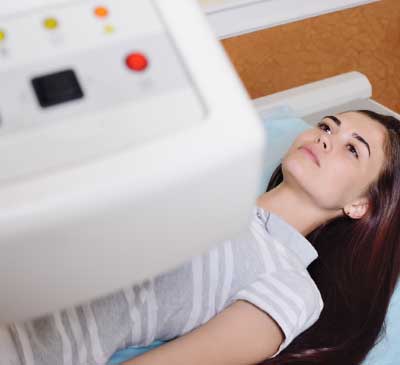
You do not need a GP referral for a private DEXA scan. At DEXA London, scans take approximately 12 minutes and provide a full breakdown of fat mass, lean mass, and bone mineral density across every region of the body.
Frequently Asked Questions
Can thyroid problems cause weight gain even with a healthy diet?
Yes. Hypothyroidism reduces your basal metabolic rate, meaning your body burns fewer calories at rest. This can lead to fat accumulation regardless of dietary habits. A DEXA scan can confirm whether the weight gained is fat tissue, fluid, or a combination.
Does hyperthyroidism cause muscle loss?
It can. Excess thyroid hormone accelerates protein breakdown in muscle tissue. Studies show that hyperthyroid patients may lose lean mass even when their overall weight remains stable or increases. DEXA scanning detects this loss with precision that scales and BMI calculations cannot match.
How often should thyroid patients get a DEXA scan?
A baseline scan at diagnosis followed by repeat scans at 6 and 12 months is a reasonable schedule for most patients. Those with bone density concerns may benefit from annual monitoring, in line with NICE recommendations for osteoporosis risk groups.
Will my body composition return to normal once my thyroid is treated?
Thyroid treatment improves blood markers relatively quickly, but body composition changes take longer to reverse. Research suggests fat loss and muscle recovery can take 6 to 12 months of optimised treatment, and some patients benefit from additional interventions such as resistance training and dietary adjustments.
Can levothyroxine cause bone loss?
Long-term levothyroxine at suppressive doses (used in some thyroid cancer patients) can accelerate bone turnover. At standard replacement doses, the risk is considerably lower. A bone density DEXA scan is the most reliable way to monitor this.
Book Your DEXA Scan at Harley Street
Weight management next step
If your DEXA results show elevated visceral fat linked to hypothyroidism, a supervised weight-loss programme may help alongside thyroid medication. CutKilo, the sister service to DEXA London, offers doctor-led Mounjaro treatment from Dr. Emil Gadimali, including guidance on managing Mounjaro alongside levothyroxine. Start the CutKilo questionnaire to see if you are suitable.
If you have a thyroid condition and want to understand how it is affecting your body composition, a DEXA scan provides the clearest picture available. At DEXA London, our Harley Street clinic offers both body composition and bone density scans with results reviewed by Dr Emil Gadimali.
To book your scan or ask a question, call us on 0207 637 8227 or visit our body composition scan page to learn more about what the scan measures and how to prepare.