

Cortisol and Body Composition: How Chronic Stress Changes Your Fat, Muscle, and Bone
If you have been eating well, exercising regularly, and still watching your body composition move in the wrong direction, cortisol could be the missing piece of the puzzle. This stress hormone plays a far bigger role in how your body stores fat, maintains muscle, and preserves bone density than most people realise.
A body composition DEXA scan can reveal patterns that point directly to cortisol-driven changes, from rising visceral fat to declining lean mass, even when the scales show no difference. Understanding the connection between stress and body composition is the first step toward doing something about it.
Quick Answer: Chronically elevated cortisol promotes visceral fat storage around the organs, accelerates muscle protein breakdown, and reduces bone mineral density over time. A DEXA scan is the most accurate way to measure all three of these changes in a single appointment, giving you a clear baseline and a way to track whether interventions are working.
What Is Cortisol and Why Does It Affect Body Composition?
Cortisol is a steroid hormone produced by the adrenal glands in response to stress. In short bursts, it is essential for survival: it raises blood glucose, sharpens focus, and helps the body respond to threats. The problem begins when cortisol stays elevated for weeks or months at a time.
Chronic psychological stress, poor sleep, overtraining, shift work, and certain medical conditions (such as Cushing’s syndrome) can all keep cortisol levels persistently high. According to the NHS, prolonged cortisol excess leads to weight gain concentrated around the abdomen and face, thinning skin, muscle weakness, and reduced bone strength.
Even without a clinical diagnosis, sub-clinical cortisol elevation from chronic lifestyle stress can shift your body composition in measurable ways. A 2017 systematic review published in Obesity found a consistent association between long-term cortisol exposure (measured in hair samples) and higher BMI, greater waist circumference, and increased abdominal fat mass (Jackson et al., 2017).
How Cortisol Drives Visceral Fat Accumulation
Not all body fat responds to cortisol equally. Visceral adipose tissue, the deep fat that surrounds your internal organs, has a significantly higher density of cortisol receptors compared to subcutaneous fat beneath the skin. This means that when cortisol is elevated, your body preferentially deposits fat in the visceral compartment.
A study published in Psychosomatic Medicine demonstrated that women with higher cortisol reactivity to stress had significantly more visceral fat, even after controlling for overall body weight (Epel et al., 2000). This matters because visceral fat is metabolically active: it releases inflammatory cytokines, disrupts insulin signalling, and raises cardiovascular risk independently of total body fat.
A DEXA scan quantifies visceral fat directly, something that scales, BMI, and even waist measurements cannot do with precision. If your DEXA report shows a rising visceral adipose tissue (VAT) mass while your subcutaneous fat stays stable, chronic cortisol is a strong candidate explanation worth discussing with your doctor.
Cortisol and Muscle Loss: Why Stress Makes You Weaker
Cortisol is catabolic, meaning it breaks tissue down rather than building it up. When cortisol stays high, it inhibits protein synthesis and accelerates the breakdown of muscle protein for gluconeogenesis (converting amino acids into glucose). Over time, this leads to measurable losses in lean body mass.
Research published in The Journal of Clinical Endocrinology and Metabolism has shown that even moderate chronic elevations in cortisol reduce muscle mass, particularly in the limbs (Schakman et al., 2013). This is especially concerning for people who are already losing muscle due to ageing, a process known as sarcopenia.
What makes cortisol-driven muscle loss insidious is that it can happen even when someone is exercising. Overtraining without adequate recovery is one of the most common causes of elevated cortisol in otherwise healthy, active individuals. If your DEXA scan shows declining appendicular lean mass despite consistent strength training, it is worth considering whether stress or recovery are undermining your efforts.
The Impact of Cortisol on Bone Density
Cortisol also affects bone health, and this relationship is well documented in clinical medicine. Chronic cortisol excess suppresses osteoblast activity (the cells that build new bone) while increasing osteoclast activity (the cells that break bone down). The net result is a gradual decline in bone mineral density.
The NICE guidelines on osteoporosis list glucocorticoid use (a synthetic form of cortisol) as one of the strongest risk factors for secondary osteoporosis. While endogenous cortisol from stress operates at lower concentrations than pharmaceutical doses, sustained elevation still carries risk, particularly for women approaching or past menopause.
A bone density DEXA scan measures your T-score and Z-score, providing an objective assessment of where your bone mineral density sits relative to healthy young adults and your age-matched peers. If your T-score is lower than expected for your age and activity level, cortisol exposure is one factor your clinician should consider.
Who Is Most at Risk of Cortisol-Related Body Composition Changes?
Certain groups face a higher risk of cortisol-driven body composition shifts. People in high-pressure careers with long working hours, shift workers whose circadian rhythms are disrupted, and those dealing with chronic anxiety or depression are all vulnerable to sustained cortisol elevation.
Endurance athletes and individuals who train intensely without adequate rest days or sleep are another at-risk group. Exercise is meant to be a short-term stressor that the body recovers from, but when training volume outpaces recovery, cortisol stays elevated and begins to erode lean mass and bone density.
Women during perimenopause and menopause are particularly susceptible because declining oestrogen amplifies the effects of cortisol on both visceral fat storage and bone turnover. A DEXA scan during this life stage can provide early warning of changes that are otherwise invisible.
People taking corticosteroid medications for conditions like asthma, inflammatory bowel disease, or rheumatoid arthritis should also be monitored closely, as these drugs directly mimic cortisol’s effects on the body.
How a DEXA Scan Detects Cortisol-Driven Changes
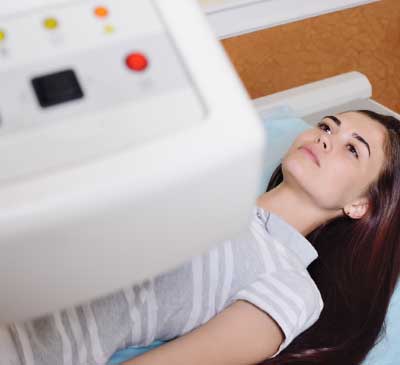
A DEXA scan is uniquely suited to detecting the pattern of body composition changes that cortisol produces, because it measures all three tissue compartments (fat, lean mass, and bone) in a single 12-minute appointment.
The classic cortisol signature on a DEXA report includes elevated visceral adipose tissue with a high android-to-gynoid fat ratio, declining appendicular lean mass (especially in the limbs), and lower-than-expected bone mineral density. Seeing two or all three of these findings together is a strong signal that cortisol may be playing a significant role. We covered the clinical significance of visceral fat in detail in our guide to what your DEXA scan reveals about visceral fat as a hidden health risk.
To learn more about how DEXA scanning works, including what the appointment involves and how results are reported, visit our dedicated page. Repeat scans every 6 to 12 months allow you to track whether stress-management interventions are translating into measurable improvements in fat distribution, lean mass, and bone strength.
Evidence-Based Strategies to Lower Cortisol and Protect Your Body Composition
Reducing chronic cortisol is not about eliminating stress entirely. It is about improving your body’s ability to recover from it. Several strategies have strong evidence behind them.
Sleep quality and duration: Sleep deprivation is one of the most potent drivers of cortisol elevation. A study in Sleep found that restricting sleep to four hours per night for just six nights increased evening cortisol levels by 37% (Spiegel et al., 1999). Prioritising 7 to 9 hours of sleep with consistent timing is one of the most effective cortisol-lowering interventions available.
Resistance training at moderate volume: Strength training stimulates muscle protein synthesis and promotes bone formation, both of which counteract cortisol’s catabolic effects. The key is to train with enough intensity to stimulate adaptation but avoid the excessive volume that drives cortisol higher. Three to four sessions per week with adequate rest days is a well-supported approach.
Mindfulness and breathwork: A randomised controlled trial published in Psychoneuroendocrinology found that an eight-week mindfulness-based stress reduction programme significantly reduced salivary cortisol levels compared to a control group (Turakitwanakan et al., 2013).
Nutrition: A diet adequate in protein (1.6 to 2.2 grams per kilogram of body weight per day) supports muscle maintenance under cortisol stress. Adequate calcium and vitamin D intake protects bone. Reducing excessive caffeine intake, particularly after midday, can also help normalise cortisol rhythms.
Frequently Asked Questions
Can a DEXA scan measure cortisol levels directly?
No. A DEXA scan measures body composition (fat, lean mass, and bone mineral density), not hormone levels. However, the pattern of changes it reveals, such as high visceral fat with low lean mass and reduced bone density, can suggest chronic cortisol exposure and prompt further investigation with blood or saliva tests.
How quickly does cortisol affect body composition?
Acute stress does not meaningfully change body composition. Sustained elevation over weeks to months is needed before shifts in visceral fat, lean mass, and bone density become measurable. This is why repeat DEXA scans spaced 6 to 12 months apart are more informative than a single snapshot.
I exercise regularly but my visceral fat is still high. Could cortisol be the reason?
It is possible, especially if you are also dealing with chronic work stress, poor sleep, or overtraining. Exercise is beneficial for body composition, but it cannot fully compensate for the metabolic effects of chronically elevated cortisol. A DEXA scan can help clarify whether your exercise programme is actually shifting the metrics that matter.
Does reducing stress actually improve DEXA scan results?
Yes. Research consistently shows that interventions that lower cortisol, including improved sleep, stress management, and appropriate training load, lead to measurable improvements in visceral fat, lean mass preservation, and bone mineral density over time.
Should I get my cortisol tested before booking a DEXA scan?
You do not need a cortisol test before a DEXA scan. The two assessments provide complementary information. A DEXA scan shows you the current state of your body composition and bone health, while cortisol testing explores one possible explanation for unfavourable patterns. Many patients find it helpful to start with a DEXA scan and then discuss the results with their GP or endocrinologist.
Book Your DEXA Scan at Our Harley Street Clinic
If you suspect that chronic stress may be affecting your body composition, a DEXA scan provides the clearest, most accurate picture of where you stand. At DEXA London, our Harley Street clinic offers comprehensive body composition and bone density scans in a single 12-minute appointment, with results reviewed by a clinician.
Whether you want a baseline to track future changes or you are looking for answers about stubborn visceral fat, declining muscle mass, or bone health concerns, a DEXA scan gives you the objective data you need to make informed decisions about your health.
Weight management next step
If your DEXA results point to elevated visceral fat linked to chronic stress, a supervised weight-loss programme may help accelerate your progress alongside stress-management strategies. CutKilo, the sister service to DEXA London, offers doctor-led Mounjaro treatment from Dr. Emil Gadimali. Start the CutKilo questionnaire to see if you are suitable.
To book your scan or ask any questions, call us on 0207 637 8227 or book online through our website.