



Visceral Fat: What Your DEXA Scan Reveals About Your Hidden Health Risk
Visceral fat is one of the strongest predictors of metabolic disease, yet it is completely invisible on a bathroom scale. Unlike the fat you can pinch beneath your skin, visceral fat wraps around your liver, pancreas, and intestines, quietly driving up your risk of type 2 diabetes, cardiovascular disease, and certain cancers. A visceral fat DEXA scan provides a precise, medical-grade measurement of exactly how much of this hidden fat you carry. At DEXA London at 3Beam Diagnostic Imaging Centre on Harley Street, a four-minute body composition scan gives you the data your scales simply cannot.
QUICK ANSWER: A DEXA body composition scan measures visceral adipose tissue (VAT) with clinical precision, reporting the exact area in cm² and your android-to-gynoid fat ratio. A VAT area above 100 cm² is associated with elevated cardiovascular and metabolic risk according to published clinical research. DEXA London offers this visceral fat test at 86 Harley Street with no GP referral required.
What Is Visceral Fat and Why Does It Matter?
Your body stores fat in two distinct ways. Subcutaneous fat sits directly beneath the skin and accounts for most of the fat you can see and feel. Visceral fat, by contrast, is stored deep inside the abdominal cavity, surrounding and sometimes infiltrating vital organs.
This distinction matters because visceral fat is metabolically active tissue. It releases inflammatory compounds called cytokines, disrupts normal insulin signalling, and contributes to chronic low-grade inflammation throughout the body. Two people with identical weight on the scales can have vastly different visceral fat levels, and therefore vastly different health risk profiles.
Clinical Note: Visceral fat behaves almost like an endocrine organ. According to the World Health Organisation, excess visceral adipose tissue is independently associated with insulin resistance, dyslipidaemia, and hypertension, regardless of total body weight.
The Health Risks of High Visceral Fat
Elevated visceral fat is not a cosmetic concern. It is a clinical one. Research published in major medical journals and supported by NHS clinical guidance has linked high visceral fat levels to a range of serious health conditions.
Cardiovascular disease. Visceral fat contributes to arterial inflammation and elevated LDL cholesterol. Individuals with high VAT levels face a measurably increased risk of heart attack and stroke, even when their BMI falls within a “normal” range.
Type 2 diabetes and insulin resistance. Visceral adipose tissue directly impairs the body’s ability to regulate blood sugar. The inflammatory cytokines it produces interfere with insulin receptors, which is why visceral fat is considered one of the earliest warning signs of metabolic syndrome.
Certain cancers. The WHO has identified excess body fat, particularly visceral fat, as a contributing factor in several cancers including colorectal, breast (post-menopausal), and pancreatic cancer.
Non-alcoholic fatty liver disease. Visceral fat accumulation around the liver is strongly associated with non-alcoholic fatty liver disease (NAFLD), a condition that affects an estimated one in three adults in the UK according to the British Liver Trust.
How a DEXA Scan Measures Visceral Fat
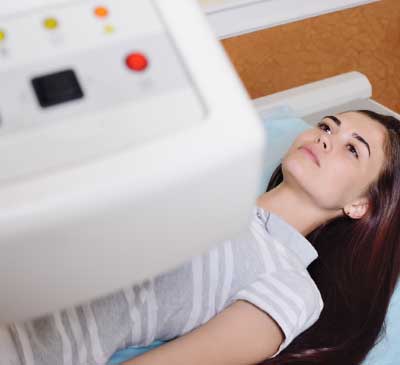
A body composition DEXA scan uses dual-energy X-ray absorptiometry to differentiate between fat tissue, lean muscle mass, and bone mineral content across your entire body. The scan takes approximately four minutes and involves lying still on a padded table while a low-dose X-ray arm passes over you.
For visceral fat specifically, the DEXA scanner analyses the android region of your torso, the area between your ribs and the top of your pelvis. It calculates your visceral adipose tissue (VAT) area in cm² and provides your android-to-gynoid fat ratio, which compares abdominal fat distribution to hip and thigh fat distribution.
This level of detail is not available from bathroom scales, BMI calculations, or bioelectrical impedance devices like InBody. A DEXA scan provides the only non-invasive, clinically validated method of quantifying visceral fat with this degree of precision outside of a CT or MRI scan.
Clinical Note: A visceral adipose tissue (VAT) area greater than 100 cm² is associated with significantly elevated cardiovascular and metabolic risk. An android-to-gynoid fat ratio greater than 1.0 suggests a predominantly central fat distribution pattern, which is an independent risk factor. At DEXA London, your body composition results include both of these measurements.
Understanding Your Visceral Fat DEXA Scan Results
When you receive your DEXA body composition report, your visceral fat data will include several key metrics.
VAT Area (cm²). This is the most direct measurement. Below 100 cm² is generally considered within a lower risk range. Between 100 cm² and 160 cm² indicates moderately elevated risk. Above 160 cm² is associated with high metabolic and cardiovascular risk.
Android-to-Gynoid Ratio. A ratio below 1.0 suggests your fat is distributed more around the hips and thighs, which carries lower metabolic risk. A ratio above 1.0 indicates more fat is concentrated in the abdominal region. This ratio is particularly useful for tracking changes over time.
Total Body Fat Percentage. While not specific to visceral fat, your overall body fat percentage provides important context. Your DEXA report breaks this down by body region, showing exactly where fat and lean mass are distributed.
Your results are reviewed by trained clinical staff. If you have questions about what your numbers mean for your individual health, DEXA London can guide you through your report in detail.
Who Should Get a Visceral Fat Test?
A visceral fat DEXA scan is relevant for a broad range of patients. You may benefit from a scan if you fall into any of the following groups.
Adults carrying weight around the midsection. A waist circumference above 94 cm in men or 80 cm in women is a simple indicator that visceral fat may be elevated, but only a DEXA scan can confirm the actual level.
Patients on GLP-1 medications. If you are taking Mounjaro, Ozempic, or Wegovy for weight loss, a DEXA scan tracks whether you are losing visceral fat specifically, or whether you are also losing lean muscle mass. This distinction matters for long-term metabolic health. Read more about tracking body composition on Mounjaro and Ozempic.
Anyone with a family history of type 2 diabetes or cardiovascular disease. Visceral fat is a modifiable risk factor. Knowing your baseline allows you to take targeted action before symptoms develop.
People who exercise regularly but are unsure of their body composition. Fitness does not automatically mean low visceral fat. Some regular gym-goers carry more visceral fat than they expect, particularly if their diet is not aligned with their training.
Adults over 40. Visceral fat tends to increase with age, particularly during and after perimenopause in women and with declining testosterone in men.
What to Do if Your DEXA Results Show High Visceral Fat
If your visceral fat DEXA scan reveals elevated VAT levels, the good news is that visceral fat responds well to targeted intervention. It is often the first type of fat your body loses when you make the right changes.
Lifestyle modifications. Resistance training combined with cardiovascular exercise has been shown to reduce visceral fat more effectively than either alone. Dietary changes that reduce refined carbohydrates and increase protein intake also have a measurable impact on visceral adipose tissue.
Medical weight loss. For patients whose visceral fat levels indicate clinical metabolic risk, lifestyle changes alone may not be sufficient or fast enough. In these cases, a conversation with a doctor-led weight loss programme may be appropriate.
CutKilo, the sister service to DEXA London, offers supervised Mounjaro (tirzepatide) treatment led by Dr. Emil Gadimali, the Medical Director of DEXA London. CutKilo patients can use their DEXA body composition results as a clinical baseline, then track visceral fat reduction over the course of treatment.
If your results suggest that medical weight loss could benefit you, you can complete the CutKilo questionnaire to find out whether you are eligible for doctor-led treatment.
Clinical Note: DEXA London is CQC regulated and operated by 3Beam Diagnostic Imaging Centre. All body composition scans are performed by trained radiographers using medical-grade DEXA equipment. No GP referral is needed.
What Happens at Your Appointment at 86 Harley Street
Your visceral fat DEXA scan at DEXA London follows a straightforward process.
- Step 1: You arrive at 86 Harley Street, London W1G 7HP. No special preparation is required, though it helps to wear comfortable clothing without metal fastenings.
- Step 2: A trained radiographer explains the scan and positions you on the DEXA scanner bed.
- Step 3: The scan itself takes approximately four minutes. You lie still while the scanner arm makes three passes over your body. The radiation dose is extremely low, comparable to a few hours of natural background radiation.
- Step 4: Your results are available promptly and include your full body composition breakdown: body fat percentage by region, lean muscle mass, bone mineral content, visceral adipose tissue area, and android-to-gynoid ratio.
To learn more about how DEXA scanning works, visit the DEXA London information page.
How Often Should You Get a Visceral Fat DEXA Scan?
For most patients, a baseline visceral fat DEXA scan followed by a progress scan every 3 to 6 months is appropriate. This interval allows enough time for measurable changes in body composition while keeping you on track.
If you are on a GLP-1 medication such as Mounjaro, scanning every 3 months is recommended to ensure you are losing fat rather than muscle. For patients focused on fitness goals or general health monitoring, every 6 to 12 months provides useful tracking data.
Key Takeaways
- Visceral fat is stored around your internal organs and is a major driver of metabolic disease, cardiovascular risk, and certain cancers
- A DEXA body composition scan is the gold standard for measuring visceral fat with clinical precision
- A VAT area above 100 cm² is associated with elevated health risk; your DEXA report gives you the exact number
- Bathroom scales, BMI, and bioelectrical impedance devices cannot accurately measure visceral fat
- DEXA London at 86 Harley Street offers visceral fat testing with no GP referral, taking just four minutes
- If your results indicate high visceral fat, both lifestyle changes and doctor-led treatment (via CutKilo) can help reduce it
- Regular DEXA scans every 3 to 6 months allow you to track progress and ensure you are losing fat, not muscle
Frequently Asked Questions
What is visceral fat and why is it dangerous?
Visceral fat is a type of body fat stored deep inside the abdominal cavity, surrounding organs including the liver, pancreas, and intestines. Unlike subcutaneous fat beneath the skin, visceral fat is metabolically active and releases inflammatory compounds that disrupt insulin signalling and increase cardiovascular risk. The World Health Organisation identifies excess visceral fat as a contributing factor in type 2 diabetes, heart disease, and certain cancers.
Can a DEXA scan measure visceral fat?
Yes. A DEXA body composition scan precisely measures visceral adipose tissue (VAT) in the android region of your torso. It reports your VAT area in cm² and your android-to-gynoid fat ratio, giving you a clear picture of how much visceral fat you carry and how it compares to your overall fat distribution. This is more accurate than waist circumference measurements or bioelectrical impedance scales.
How much does a visceral fat DEXA scan cost in London?
A body composition DEXA scan at DEXA London costs £150. This includes your full body composition analysis with visceral fat measurement, lean muscle mass by region, total body fat percentage, and bone mineral content. No GP referral is required and you can book your scan at Harley Street directly online.
What is a healthy visceral fat level on a DEXA scan?
On a DEXA body composition report, a visceral adipose tissue (VAT) area below 100 cm² is generally associated with lower metabolic risk. A VAT area between 100 cm² and 160 cm² indicates moderately elevated risk, and levels above 160 cm² are associated with high cardiovascular and metabolic risk. Your android-to-gynoid ratio should ideally be below 1.0.
Do I need a GP referral for a DEXA body composition scan?
No. DEXA London is a self-referral clinic. You can book a body composition DEXA scan directly online without a GP referral. The clinic is CQC regulated and operated by 3Beam Diagnostic Imaging Centre at 86 Harley Street, London.
How often should I get a DEXA scan to track visceral fat?
For most patients, a baseline scan followed by progress scans every 3 to 6 months provides the best tracking data. If you are taking a GLP-1 medication such as Mounjaro, scanning every 3 months helps ensure you are losing visceral fat rather than lean muscle mass. For general health monitoring, every 6 to 12 months is appropriate.
Book Your DEXA Scan at 86 Harley Street
DEXA London at 3Beam Diagnostic Imaging Centre, 86 Harley Street, London W1G 7HP.
Call: 0207 637 8227 | Email: scan@dexa.london
Book your scan online. No GP referral needed.