
Gut Health and Bone Density: How Your Microbiome Affects Osteoporosis Risk and What a DEXA Scan Reveals
Your gut does far more than digest food. A growing body of clinical research now points to a direct connection between the bacteria living in your intestines and the strength of your bones. This relationship, known as the gut-bone axis, helps explain why some people develop osteoporosis despite doing everything else right, and why addressing gut health could be one of the most overlooked strategies for protecting bone density as you age.
Quick Answer: Your gut microbiome directly influences bone density by regulating calcium absorption, producing bone-protective vitamins, and controlling inflammation that drives bone loss. A DEXA scan is the gold-standard way to measure whether gut-related changes are affecting your skeleton. If you have digestive issues, chronic gut inflammation, or conditions like coeliac disease, monitoring your bone density with regular DEXA scans is clinically recommended.
What Is the Gut-Bone Axis?
The gut-bone axis refers to the bidirectional communication network between your gastrointestinal tract and your skeletal system. Research published in Bone Research (2026) describes this as a complex pathway where dietary habits and nutrient intake modulate gut microbiota composition and metabolic activity, directly influencing skeletal health.
Your gut microbiome produces short-chain fatty acids (SCFAs) such as butyrate, propionate, and acetate. These metabolites regulate osteoblast (bone-building cell) activity and suppress osteoclast (bone-resorbing cell) function. When this microbial ecosystem is disrupted, known clinically as dysbiosis, the balance tips toward bone breakdown.
The gut also houses approximately 70% of your immune system. Immune cells in the intestinal lining communicate with bone marrow cells, meaning that inflammatory signals originating in the gut can accelerate bone loss throughout the body.
How Your Microbiome Affects Calcium and Mineral Absorption
Calcium cannot protect your bones if your body cannot absorb it efficiently. Your gut microbiome plays a direct role in this process.
Beneficial bacteria, particularly Lactobacillus and Bifidobacterium species, produce SCFAs that lower the pH of the intestinal environment. This more acidic environment increases the solubility of calcium and other minerals, making them easier for your intestinal cells to absorb. A 2025 meta-analysis published in Frontiers in Endocrinology confirmed that microbiome-targeted interventions improved mineral absorption in postmenopausal women at risk of osteoporosis.
Your gut bacteria also synthesise vitamin K2 (menaquinone), a nutrient essential for activating osteocalcin, the protein that binds calcium into your bone matrix. Without adequate vitamin K2, calcium may circulate in your blood without being incorporated into bone tissue. We covered the critical role of dietary calcium in our guide to calcium and bone density on a DEXA scan.
Dysbiosis reduces both mineral absorption efficiency and vitamin K2 production, creating a double deficit that silently weakens bones over months and years.
Gut Inflammation and Bone Remodelling
Chronic low-grade inflammation originating in the gut is one of the most significant drivers of bone loss that many people never consider.
When the intestinal barrier becomes compromised, bacterial endotoxins such as lipopolysaccharide (LPS) enter the bloodstream. These molecules trigger systemic inflammatory responses, including the release of pro-inflammatory cytokines such as TNF-alpha, IL-1, and IL-6.
Research published in Bone Research (2026) identified that specific gut bacteria, including Bifidobacterium longum, can induce TNF-positive T cells and Th17 cells that directly mediate bone loss. These immune cells stimulate osteoclast activity, accelerating the breakdown of existing bone tissue faster than your body can replace it.
This process is particularly relevant for people with inflammatory bowel conditions, food intolerances, or prolonged antibiotic use, all of which disturb gut microbial balance and can trigger this inflammatory cascade.
Probiotics, Prebiotics, and Bone Density: What the Evidence Shows
The emerging research on probiotics for bone health is encouraging, though it requires careful interpretation.
A 2025 meta-analysis in Frontiers in Cellular and Infection Microbiology examined multiple randomised controlled trials of probiotic supplementation in middle-aged and elderly patients with osteoporosis. The analysis found that probiotics improved bone turnover markers, with reductions in bone resorption indicators and increases in bone formation markers.
Specific strains showing promise include Bifidobacterium lactis Probio-M8, which increased serum vitamin D3 levels and decreased parathyroid hormone (PTH) levels in study participants. Lower PTH levels generally indicate reduced bone resorption pressure.
Prebiotics, the dietary fibres that feed beneficial gut bacteria, also show protective effects. Fructo-oligosaccharides (FOS) and inulin have been shown to increase calcium absorption by up to 20% in clinical trials when consumed regularly.
Synbiotics, which combine probiotics and prebiotics, appear to produce the most consistent improvements. A 2025 review in Metabolites concluded that synbiotics exert synergistic effects on gut microecology, mineral absorption, and immune regulation, leading to more robust improvements in bone health than any single intervention alone.
However, supplementation alone is not a substitute for monitoring. Without a baseline DEXA scan and follow-up measurements, there is no reliable way to know whether these interventions are actually improving your bone density.
Conditions That Damage Both Your Gut and Your Bones
Several medical conditions simultaneously affect gut health and bone density, making DEXA monitoring particularly important if you have been diagnosed with any of the following.
Coeliac disease damages the intestinal villi responsible for nutrient absorption. Even well-managed coeliac disease can lead to reduced calcium and vitamin D absorption, placing you at significantly higher risk of osteoporosis. The NHS recommends bone density assessment for all newly diagnosed coeliac patients.
Inflammatory bowel disease (IBD), including Crohn’s disease and ulcerative colitis, creates chronic gut inflammation that directly activates the bone-resorbing pathways described above. Many IBD patients also take corticosteroids, which independently accelerate bone loss.
Long-term proton pump inhibitor (PPI) use for acid reflux alters both stomach acid levels and gut bacterial composition. Reduced stomach acid impairs calcium absorption, and extended PPI use has been associated with increased fracture risk in multiple observational studies.
Prolonged antibiotic courses can substantially disrupt gut microbial diversity. While the microbiome typically recovers partially within weeks, repeated or extended antibiotic exposure may cause lasting changes that affect mineral metabolism and immune-mediated bone regulation.
How a DEXA Scan Measures the Impact on Your Bones
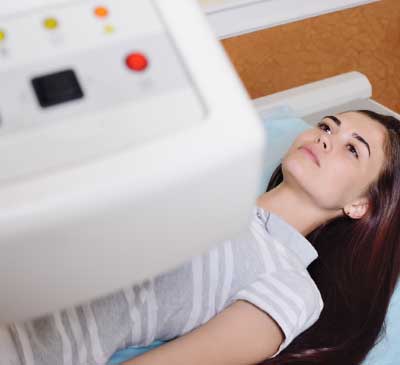
A bone density DEXA scan is the clinical gold standard for measuring bone mineral density (BMD) at the sites most vulnerable to osteoporotic fracture: the lumbar spine, femoral neck, and total hip.
The scan produces a T-score that compares your bone density to that of a healthy 30-year-old adult. A T-score of -1.0 or above is considered normal, between -1.0 and -2.5 indicates osteopenia (reduced bone density), and -2.5 or below indicates osteoporosis.
For anyone with gut health concerns, a DEXA scan provides objective data that no symptom assessment or blood test can replicate. You may feel well, maintain a healthy diet, and take supplements, but if gut inflammation or dysbiosis is silently impairing your calcium absorption or driving immune-mediated bone loss, only a DEXA scan will reveal the cumulative effect on your skeleton.
A body composition DEXA scan can also reveal changes in lean mass and fat distribution that often accompany chronic gut conditions, giving you and your clinician a more complete picture of how your digestive health is affecting your whole body.
If you are unsure whether a DEXA scan is appropriate for your situation, you can learn more about how DEXA scanning works and what the results mean.
What You Can Do to Protect Your Bones Through Better Gut Health
Protecting your bones through gut health involves both dietary and lifestyle strategies supported by clinical evidence.
Prioritise dietary fibre from diverse plant sources. Vegetables, legumes, whole grains, and fermented foods such as kefir, sauerkraut, and live-culture yoghurt support microbial diversity and SCFA production. Aim for at least 30 different plant foods per week, a target associated with greater microbiome diversity in the American Gut Project.
Consider probiotic supplementation with strains that have demonstrated bone-health benefits, particularly Lactobacillus reuteri, Bifidobacterium lactis, and Lactobacillus rhamnosus GG. Choose products with colony-forming unit (CFU) counts verified by independent testing.
Ensure adequate calcium and vitamin D intake regardless of gut status. If you have a condition that impairs absorption, your clinician may recommend higher doses or more bioavailable forms of these nutrients.
Limit unnecessary antibiotic use and discuss alternatives with your GP when appropriate. If antibiotics are clinically necessary, consider probiotic supplementation during and after the course to support microbiome recovery.
Finally, establish a baseline with a DEXA scan. If you have any of the gut-related risk factors discussed in this article, knowing your current bone density gives you and your healthcare team a clear starting point for monitoring and intervention.
Frequently Asked Questions
Can improving my gut health actually increase my bone density?
Research suggests that targeted interventions such as probiotics, prebiotics, and dietary changes can improve bone turnover markers, meaning the balance between bone breakdown and bone building shifts in a favourable direction. However, measurable increases in bone mineral density typically take 12 to 24 months to appear on a DEXA scan. The strongest evidence is for slowing bone loss rather than reversing established osteoporosis.
Should I get a DEXA scan if I have IBS?
IBS (irritable bowel syndrome) is a functional gut disorder that does not typically cause the same level of nutrient malabsorption as IBD or coeliac disease. However, if your IBS significantly restricts your diet, if you avoid dairy entirely, or if you have additional risk factors for osteoporosis, a baseline DEXA scan is a reasonable precaution.
How long after starting probiotics should I wait before getting a DEXA scan?
If you are starting probiotics specifically to support bone health, a baseline DEXA scan before or soon after beginning supplementation is ideal. A follow-up scan 12 to 24 months later will show whether there has been any measurable change in bone density.
Does stomach acid affect bone density?
Yes. Stomach acid is essential for dissolving calcium from food so it can be absorbed in the small intestine. Conditions that reduce stomach acid, including long-term PPI use and atrophic gastritis, are associated with reduced calcium absorption and increased fracture risk.
Can antibiotics cause osteoporosis?
A single short course of antibiotics is unlikely to affect bone density meaningfully. However, repeated or prolonged antibiotic use can disrupt the gut microbiome enough to impair calcium absorption and increase gut-derived inflammation over time. If you have taken frequent antibiotics over several years, a DEXA scan can determine whether your bone density has been affected.
Book Your DEXA Scan at Our Harley Street Clinic
If you have gut health concerns or any of the conditions discussed in this article, a DEXA scan provides the objective bone density data you need to make informed decisions about your health.
At DEXA London, we offer both bone density and body composition DEXA scans at our clinic at 86 Harley Street, in the heart of London’s medical district. Your scan is reported by Dr Emil Gadimali and includes a detailed breakdown of your T-scores, regional bone density, and, if you choose a body composition scan, your lean mass, fat mass, and visceral fat levels.
To book your scan or ask a question, call us on 0207 637 8227 or visit our website to book online.
Dr Emil Gadimali