

Long COVID and Body Composition: What Your DEXA Scan Reveals About Post-Viral Changes to Fat, Muscle, and Bone
Long COVID, or post-COVID syndrome, affects an estimated one in ten people who contract SARS-CoV-2. While fatigue, brain fog, and breathlessness receive the most attention, significant changes to body composition persist beneath the surface for months. Muscle loss, fat redistribution, and shifts in bone mineral density can all be measured by a body composition DEXA scan.
Unlike scales or BMI calculations, DEXA quantifies exactly how much lean mass, fat mass, and bone mineral density you carry, and where those tissues sit across different regions of your body.
Quick Answer: Research in Nutrients (2024) and Journal of Clinical Medicine (2024) shows COVID-19 survivors experience progressive lean body mass decline and visceral fat accumulation persisting six to twelve months post-infection. A DEXA scan provides the clinical precision needed to detect these changes early.
How COVID-19 Changes Your Body Composition
SARS-CoV-2 triggers a systemic inflammatory response extending far beyond the lungs. During acute infection, the body enters a catabolic state where muscle protein breakdown accelerates. A study in the International Journal of Obesity (2020) found hospitalised patients showed significant skeletal muscle mass reductions within two weeks.
Research from the Journal of Clinical Medicine (2024) tracked body composition using DXA over twelve months and found Long COVID patients maintained higher android and gynoid fat compared to controls at every assessment point.
Elevated interleukin-6 and tumour necrosis factor-alpha promote muscle degradation while encouraging visceral fat deposition. Prolonged inactivity compounds the problem, creating a cycle where lost muscle reduces metabolic rate, making further fat gain more likely.
Muscle Loss After COVID-19: What the Research Shows
Sarcopenia has emerged as one of the most consistent post-COVID findings. BMC Geriatrics (2023) found up to 70% of older adults recovering from severe COVID-19 met sarcopenia diagnostic criteria at hospital discharge.
DEXA scanning reveals the lower limbs are disproportionately affected, likely because prolonged bed rest hits weight-bearing muscles hardest. Quadriceps and calf muscles lose measurable mass within days of immobilisation.
Even mild or moderate COVID-19 causes muscle loss. Nutrients (2024) showed only COVID-19 survivors displayed lean body mass decline over six months, regardless of ongoing PASC symptoms.
A DEXA scan detects these losses with precision, measuring lean mass in each limb separately. Total body weight may remain stable while significant muscle-to-fat shifts occur underneath.
Visceral Fat Accumulation and Metabolic Risk
While muscle declines, fat often increases in a harmful pattern. Post-COVID studies show visceral fat tends to accumulate in the months following infection. Biomedicines (2023) documented measurable metabolic alterations including increased visceral adiposity persisting beyond the acute phase.
Visceral fat drives insulin resistance, systemic inflammation, and cardiovascular risk. For someone already dealing with Long COVID inflammation, adding visceral fat creates a compounding effect.
DEXA quantifies visceral fat with accuracy that waist circumference and BMI cannot match. The android-to-gynoid ratio provides a reliable proxy for cardiometabolic risk. Tracking it over sequential scans shows whether recovery interventions are shifting fat distribution in the right direction.
Bone Density Changes in Long COVID
The twelve-month longitudinal study in Journal of Clinical Medicine (2024) found no notable bone mineral density differences between Long COVID patients and controls. This is somewhat reassuring.
However, patients who received corticosteroid treatment during acute COVID-19 face well-documented glucocorticoid-induced bone loss risk. NHS guidelines note prolonged oral corticosteroids can reduce bone mineral density and increase fracture risk.
Reduced physical activity during recovery also poses a risk. A bone density DEXA scan can establish a baseline and track changes over time, giving early warning if bone loss develops.
For anyone prescribed dexamethasone, prednisolone, or other corticosteroids during COVID-19 treatment, a follow-up bone density scan is a sensible precaution.
Who Should Consider a Post-COVID DEXA Scan
Not everyone who has had COVID-19 needs a DEXA scan, but certain groups benefit significantly. Consider booking a scan if you:
- Were hospitalised with COVID-19, particularly if your stay included ICU admission
- Have persistent fatigue, weakness, or reduced exercise tolerance for more than three months post-infection
- Have noticed unexplained changes in body shape or weight
- Received corticosteroid treatment during your acute illness
- Have pre-existing risk factors for osteoporosis, sarcopenia, or metabolic syndrome
- Are returning to sport and want a baseline to guide training
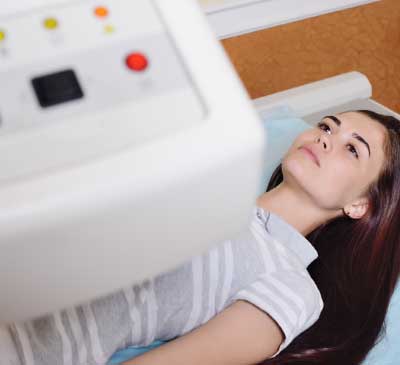
A DEXA scan takes approximately fifteen minutes with minimal radiation exposure. Results provide a comprehensive breakdown of lean mass, fat mass, and bone mineral density across every region of the body.
Using DEXA Results to Guide Long COVID Recovery
The real value of a post-COVID DEXA scan lies in tracking progress over time. Recovery from Long COVID is rarely linear, and objective measurements help distinguish genuine improvement from subjective fluctuations.
If your scan reveals reduced lean mass, the priority is structured rehabilitation emphasising progressive resistance training. NHS Long COVID rehabilitation guidelines support graduated exercise as the cornerstone of physical recovery.
If visceral fat has increased, dietary modifications combined with carefully paced aerobic activity can reverse the trend. Post-exertional symptom exacerbation is a hallmark of Long COVID, so exercise must respect current capacity.
The British Dietetic Association recommends adults recovering from illness aim for 1.2 to 1.5 grams of protein per kilogram of body weight daily to support muscle synthesis.
We covered the relationship between inflammation and body composition in our guide to chronic inflammation and what a DEXA scan reveals. A follow-up scan six to twelve months later provides objective evidence of whether interventions are working.
What This Means for You
Long COVID is not simply a prolonged cold. The evidence shows SARS-CoV-2 can reshape your body composition in ways that affect muscle function, metabolic health, and potentially bone density for months after infection resolves. These changes are often invisible on the scales.
A DEXA scan cuts through the uncertainty, telling you exactly how much muscle you have retained, whether visceral fat has accumulated, and whether your bones have been affected.
If you are recovering from COVID-19 and want to understand what has changed, a body composition DEXA scan at our Harley Street clinic provides the answers. Book your scan by calling 0207 637 8227 or through our online booking system.
Weight management next step
If your DEXA results show elevated visceral fat or metabolic changes following COVID-19, a supervised weight management programme may help accelerate recovery. CutKilo, the sister service to DEXA London, offers doctor-led Mounjaro treatment from Dr Emil Gadimali. Start the CutKilo questionnaire to see if you are suitable.
Frequently Asked Questions
Can a DEXA scan detect Long COVID?
A DEXA scan does not diagnose Long COVID directly. It measures the body composition changes Long COVID can cause, including muscle loss, fat redistribution, and bone density changes, helping clinicians assess physical impact and guide rehabilitation.
How soon after COVID-19 should I get a DEXA scan?
If you have persistent symptoms three months or more after infection, a DEXA scan provides useful baseline data. For those hospitalised, scanning at three and twelve months shows recovery trajectory.
Will my muscle mass recover after Long COVID?
Muscle recovery is possible with rehabilitation, adequate protein intake, and progressive resistance training. Sequential DEXA scans track whether lean mass is improving.
Does Long COVID affect bone density?
Current research suggests Long COVID itself does not cause rapid bone loss. However, corticosteroid treatment and prolonged deconditioning can reduce bone mineral density. A bone density DEXA scan is advisable for anyone who received steroid treatment.
How much does a DEXA scan cost at your Harley Street clinic?
Our body composition DEXA scans are competitively priced with results available immediately. Call us on 0207 637 8227 or visit our booking page for pricing and availability.