

Sedentary Lifestyle and Body Composition: What Your DEXA Scan Reveals About How Prolonged Sitting Affects Fat, Muscle, and Bone
You finished a full week of training. You ate well. You slept enough. But you also spent nine hours a day sitting at your desk, commuting, and scrolling on the sofa. A growing body of research now shows that prolonged sitting has independent, measurable effects on fat distribution, muscle mass, and bone mineral density, even in people who exercise regularly.
A DEXA scan is one of the few tools that captures all three of these changes in a single appointment: exactly where fat is accumulating, whether lean mass is declining, and how your bones are responding to your daily loading patterns. If your lifestyle involves long periods of sitting, whether at a desk, behind a wheel, or recovering from injury, your DEXA results can reveal body composition shifts that weight on a scale will never show.
Quick answer: Prolonged sitting is independently associated with higher visceral fat, lower skeletal muscle mass, and reduced bone mineral density, particularly in the pelvis and spine. These changes occur even in people who meet recommended physical activity guidelines. A body composition DEXA scan quantifies all three compartments with clinical precision, giving you and your doctor an objective baseline and a way to track improvement.
Why Sitting Time Matters Independently of Exercise
For years, public health messaging focused on how much exercise you get. But a landmark finding from the UK Chief Medical Officers’ Physical Activity Guidelines established that prolonged sedentary behaviour is harmful even in people who achieve the recommended 150 minutes of moderate-to-vigorous activity per week. In other words, exercising for an hour in the morning does not fully offset ten hours of sitting afterward.
The average UK adult sits for eight to ten hours per day across work, transport, and leisure. A 2023 systematic review published in The Lancet Healthy Longevity found that higher sedentary time was independently associated with sarcopenia (clinically significant muscle loss) in older adults, with a pooled odds ratio of 1.36 after adjusting for physical activity levels. A 2025 study from the International Osteoporosis Foundation confirmed that sedentary behaviour is an independent risk factor for bone loss, driven by reduced mechanical loading and diminished muscle activation around weight-bearing joints.
This independence is the key point. You cannot outrun a chair. The hours you spend sitting exert their own separate influence on your body composition, layered on top of whatever benefit your training provides.
How Prolonged Sitting Shifts Fat Distribution Toward Your Organs
Not all fat responds to sitting the same way. Research published in the Journal of Obesity shows that prolonged daily sitting is associated with preferential fat accumulation in the trunk and abdomen, the region where visceral adipose tissue surrounds your liver, kidneys, and intestines. A cross-sectional study of US adults found that those sitting more than eight hours per day had nearly two percentage points more total body fat and significantly higher trunk fat compared with those sitting fewer than four hours.
Visceral fat is metabolically active. It releases inflammatory cytokines and free fatty acids directly into the portal circulation, disrupting insulin signalling and raising cardiovascular risk markers including triglycerides and LDL cholesterol. A body composition DEXA scan measures visceral adipose tissue in the android (abdominal) region with high precision, and the android-to-gynoid fat ratio on your report reflects whether your fat distribution has shifted toward this higher-risk pattern.
Crucially, this visceral fat accumulation can happen without meaningful weight gain. Your total weight might stay stable while fat quietly redistributes from subcutaneous stores to visceral depots, a shift that bathroom scales cannot detect but a DEXA scan quantifies clearly.
Muscle Loss From Disuse: the Sedentary Sarcopenia Link
Skeletal muscle is metabolically expensive tissue. Your body maintains it only if you give it a reason to. During prolonged sitting, large muscle groups in the legs, glutes, and lower back receive almost no activation. Over months and years, this leads to disuse-mediated muscle protein breakdown exceeding synthesis, a process described in a qualitative review in Frontiers in Physiology.
A 2023 meta-analysis in BMC Geriatrics pooling data from fourteen studies found that sedentary behaviour raised sarcopenia risk by approximately 40%, independently of age and exercise habits. The mechanism involves reduced insulin sensitivity in inactive muscle fibres, elevated inflammatory markers, and a decline in the neuromuscular activation patterns that signal muscle-protein synthesis.
On a DEXA scan, this shows up as declining appendicular lean mass index (ALMI), the measurement of lean tissue in your arms and legs normalised to height. It is the metric used in clinical definitions of sarcopenia published by the European Working Group on Sarcopenia in Older People (EWGSOP2). Tracking ALMI over serial DEXA scans gives you an early warning system before functional strength declines to a point you would notice in daily life.
Bone Density and the Missing Mechanical Signal
Bone is living tissue that remodels itself in response to mechanical stress. When you walk, run, or lift weight, the dynamic forces transmitted through your skeleton stimulate osteoblast activity and new bone formation. When you sit for hours, those mechanical signals drop to near zero in the pelvis, lumbar spine, and proximal femur.
A 2025 study published in BMC Musculoskeletal Disorders found that longer sedentary time was significantly associated with lower pelvic bone mineral density. Participants sitting eight or more hours daily had measurably lower BMD at load-bearing skeletal sites compared with those sitting fewer than four hours. The International Osteoporosis Foundation’s 2025 narrative review confirmed that reduced lumbopelvic muscle activation during sitting attenuates the mechanotransduction signals that drive bone formation.
A bone density DEXA scan measures BMD at the lumbar spine and hip with T-score and Z-score reporting. For people with sedentary occupations, particularly those over 50, this baseline measurement can reveal early bone thinning before a fracture occurs, giving you the opportunity to intervene with targeted loading exercise and, if needed, pharmacological support.
The Office Worker’s Body Composition Profile
Research from independent studies of occupational health suggests that office-based workers can spend ten to eleven hours per day in a seated static posture when commuting and evening screen time are included. The resulting body composition pattern is distinctive and often invisible to standard health checks.
Typical findings on a DEXA scan for a sedentary professional include: BMI within the normal range, elevated trunk fat percentage relative to limb fat, reduced appendicular lean mass relative to predicted values, a higher android-to-gynoid ratio indicating central fat dominance, and in some cases, lower bone density at the lumbar spine and femoral neck than would be expected for their age. This pattern is sometimes called “normal weight obesity” or “metabolically unhealthy normal weight”, a condition where cardiovascular and metabolic risk is elevated despite an outwardly healthy appearance. We covered this in detail in our guide to understanding normal weight obesity and hidden body fat on a DEXA scan.
A DEXA scan is uniquely positioned to catch this profile because it measures fat, lean tissue, and bone simultaneously and regionally. Blood tests can flag metabolic markers, and scales report weight, but neither reveals the internal redistribution of tissue that sitting quietly drives over years. If you work a desk-based job, your DEXA scan report may contain the earliest objective evidence that your body composition has started to shift, often before symptoms or blood markers change.
What the Research Says You Can Do About It
The evidence is not all bleak. Multiple intervention studies show that breaking up sitting time with even brief movement has measurable benefits. A randomised controlled trial published in the BMJ found that using a sit-stand desk reduced workplace sitting by 94 minutes per day and improved markers of cardiometabolic health. The UK Chief Medical Officers’ guidelines recommend breaking up prolonged sedentary bouts with at least light physical activity, noting that standing alone is beneficial for older adults.
For body composition specifically, the evidence points toward three practical interventions. First, resistance training two to three times per week directly counteracts disuse-mediated muscle loss by stimulating muscle protein synthesis. Second, regular walking or weight-bearing activity throughout the day, not just concentrated in one gym session, maintains the mechanical loading signals that sustain bone density. Third, reducing total daily sitting time to below six hours, or breaking prolonged bouts every 30 minutes, limits the metabolic disruption that drives visceral fat accumulation.
A baseline DEXA scan gives you the numbers to act on: your visceral fat level, your lean mass index, your regional bone density. A follow-up scan six to twelve months later shows whether your interventions are working, not in subjective terms but in grams of lean tissue gained, percentage points of visceral fat reduced, and T-score changes at the hip and spine.
Frequently Asked Questions
Can exercise cancel out the effects of sitting all day?
Exercise reduces the overall risk, but current evidence shows that prolonged sitting has independent harmful effects on fat distribution, muscle mass, and bone density that are not fully offset by a single daily exercise session. Both increasing activity and reducing sitting time matter.
How many hours of sitting per day is considered harmful?
Research consistently shows increased metabolic and musculoskeletal risk above eight hours of daily sitting. The UK Chief Medical Officers’ guidelines do not set a specific safe threshold but recommend minimising sedentary time and breaking up long bouts with movement.
Will a DEXA scan show me if sitting is affecting my body?
Yes. A DEXA scan measures visceral fat, regional lean mass, and bone mineral density. Sedentary-related changes such as elevated trunk fat, declining appendicular muscle, or lower-than-expected pelvic and spinal bone density will appear on your DEXA report, often before symptoms develop.
How often should I get a DEXA scan if I have a desk job?
An initial baseline scan is the most important step. If your results reveal elevated visceral fat or low lean mass, a follow-up scan after six to twelve months of targeted intervention (resistance training, movement breaks, dietary changes) will show whether your efforts are producing measurable improvement.
Is standing all day better than sitting?
Standing is better than sitting for maintaining bone-loading signals and low-level muscle activation, but it is not a substitute for intentional exercise. The best approach for body composition is a combination: alternating between sitting and standing throughout the day, taking walking breaks, and including structured resistance training.
Book Your DEXA Scan at Our Harley Street Clinic
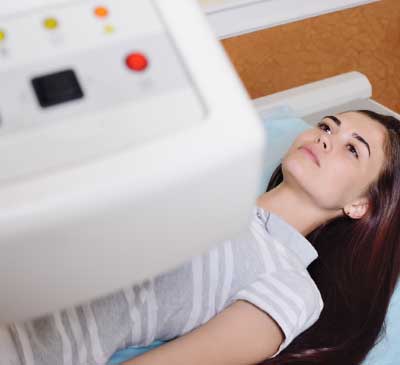
If you spend most of your working day seated, your body composition may have shifted in ways that standard health checks and bathroom scales cannot detect. A body composition DEXA scan at our Harley Street clinic gives you a detailed, objective picture of your fat distribution, lean muscle mass, and bone mineral density in a single 15-minute appointment.
At DEXA London, your scan is reported by Dr Emil Gadimali, who will explain your results and help you understand what they mean for your metabolic and musculoskeletal health. Whether you want a baseline to benchmark against, or you are tracking the impact of changes to your movement habits, your DEXA report gives you the precision data to make informed decisions.
To book your scan, call us on 0207 637 8227 or visit our clinic at 86 Harley Street, London.
Weight management next step
If your DEXA results point to elevated visceral fat driven by a sedentary lifestyle, a supervised weight-loss programme may help you reset your body composition more effectively. CutKilo, the sister service to DEXA London, offers doctor-led Mounjaro treatment from Dr. Emil Gadimali. Start the CutKilo questionnaire to see if you are suitable.