
RED-S and Your DEXA Scan: What Relative Energy Deficiency in Sport Reveals About Bone, Muscle, and Metabolic Health
You train consistently. You watch what you eat. You push through fatigue because that is what committed athletes do. But what if the very dedication driving your performance is quietly eroding your bones, stripping your muscle, and disrupting your metabolism?
Relative Energy Deficiency in Sport, known as RED-S, is one of the most underdiagnosed conditions in active people. It occurs when you consistently burn more energy through training than you take in through food, and the consequences run far deeper than feeling tired. A body composition DEXA scan can detect the damage before it becomes a stress fracture, a hormonal crisis, or a career-ending injury.
Quick Answer: RED-S develops when athletes or highly active individuals do not eat enough to match their training energy demands. Over time, this energy deficit causes measurable bone density loss, muscle composition changes, and metabolic disruption. A body composition DEXA scan and a bone density DEXA scan together provide the most accurate clinical picture of RED-S damage, often detecting problems months or years before symptoms appear.
What Is Relative Energy Deficiency in Sport (RED-S)?
RED-S was formally defined by the International Olympic Committee (IOC) in 2014 and updated in their 2023 consensus statement published in the British Journal of Sports Medicine. It replaced the older concept of the “Female Athlete Triad,” which focused only on women. RED-S affects both men and women across all sports and all levels of competition.
The core mechanism is low energy availability (LEA). Energy availability is the amount of dietary energy left over for normal body functions after you subtract the energy used during exercise. When energy availability drops below roughly 30 kcal per kilogram of fat-free mass per day, your body begins shutting down non-essential processes to conserve fuel.
These “non-essential” processes include bone remodelling, reproductive hormone production, immune function, cardiovascular maintenance, and metabolic regulation. Your body prioritises keeping you alive and moving over keeping your bones strong or your hormones balanced.
The IOC consensus statement identified over 20 health and performance consequences of RED-S, including reduced bone mineral density, menstrual dysfunction, increased injury risk, decreased training response, impaired judgement, depression, and cardiovascular complications.
How RED-S Affects Your Bones
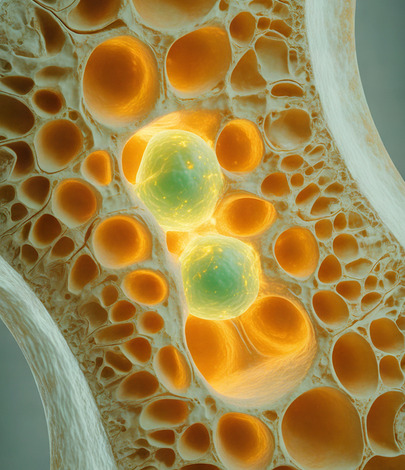
Bone density loss is one of the earliest and most measurable consequences of RED-S. When energy availability is chronically low, your body reduces the activity of osteoblasts (the cells that build new bone) while osteoclast activity (the cells that break bone down) continues largely unchecked. The result is a net loss of bone mineral density that accumulates over months and years.
Research published in the British Journal of Sports Medicine found that athletes with RED-S exhibited significantly reduced Z-scores at the lumbar spine and hip compared with athletes without RED-S. A 2025 retrospective analysis in Sports Health reported that stress fractures occurred in 70% of athletes diagnosed with RED-S, compared with just 25% of those without the condition.
In female athletes, the mechanism is partly driven by oestrogen suppression. Low energy availability disrupts the hypothalamic-pituitary-ovarian axis, leading to irregular or absent periods (amenorrhoea). Since oestrogen is essential for maintaining bone density, its loss accelerates bone thinning in a pattern similar to early menopause.
In male athletes, testosterone suppression plays an equivalent role. Low energy availability reduces luteinising hormone (LH) pulsatility, which in turn lowers testosterone production. Since testosterone supports bone formation, male athletes with RED-S can develop clinically significant bone density loss that often goes unrecognised because osteoporosis screening is rarely offered to young men.
A bone density DEXA scan is the gold standard for quantifying this damage. It provides precise T-scores and Z-scores at the lumbar spine, femoral neck, and total hip, allowing clinicians to identify bone loss before it reaches the fracture threshold.
What RED-S Does to Muscle and Body Composition
RED-S does not just weaken bones. It reshapes your entire body composition in ways that undermine both health and performance.
When energy availability is chronically low, your body breaks down lean tissue for fuel. Research shows that athletes in sustained energy deficit lose disproportionately more muscle mass relative to fat mass, particularly when protein intake is also inadequate. This is the opposite of what most athletes intend when they restrict calories.
A body composition DEXA scan reveals these changes with precision that scales and mirrors cannot. DEXA measures lean mass and fat mass in each body region independently, so it can detect asymmetric muscle loss (common in runners with a dominant leg pattern), trunk lean mass decline (an early marker of systemic underfuelling), and paradoxical fat gain in the abdominal region even as total body weight drops.
The android-to-gynoid fat ratio, another metric captured by DEXA, often shifts unfavourably in athletes with RED-S. Despite being lean overall, they may accumulate proportionally more visceral fat as their body enters a metabolic conservation mode. This pattern carries cardiovascular and metabolic risks that are invisible on the surface.
Why a DEXA Scan Is the Best Tool for Detecting RED-S
Several assessment tools exist for RED-S, including the IOC’s RED-S Clinical Assessment Tool (CAT2), blood tests for hormone levels, and dietary intake questionnaires. But none of these directly measures the structural damage that RED-S causes. That is where DEXA scanning becomes indispensable.
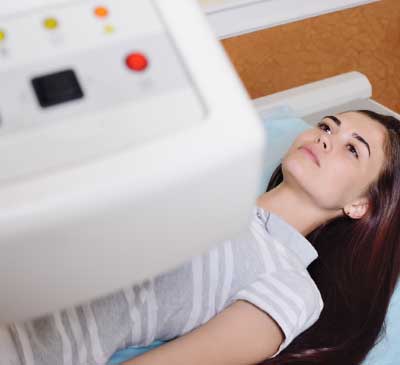
A DEXA scan provides two complementary assessments in a single visit. The bone density scan measures bone mineral density at the spine, hip, and femoral neck, producing Z-scores that compare your bones to healthy individuals of your age and sex. A Z-score below -1.0 in an athlete is considered a clinical red flag for RED-S by the American College of Sports Medicine. The body composition scan maps your lean mass, fat mass, and visceral fat across your entire body, quantifying the muscle loss and metabolic shifts that accompany chronic underfuelling.
Together, these two scans create a detailed clinical picture that no blood test or questionnaire can match. They also provide a measurable baseline against which recovery can be tracked over time.
At DEXA London, both scans are performed on the same visit at our Harley Street clinic, taking approximately 20 minutes in total. You can learn more about how DEXA scanning works on our dedicated information page.
Who Is Most at Risk of RED-S?
RED-S can affect anyone who exercises regularly without eating enough, but certain groups face elevated risk.
Endurance athletes top the list. Runners, cyclists, triathletes, and swimmers often train at high volumes while maintaining caloric restriction, whether intentional or simply because appetite suppression during heavy training leads to inadvertent underfuelling. Research estimates that 23% to 80% of female endurance athletes and 15% to 70% of male endurance athletes show markers of RED-S.
We explored the specific bone density challenges facing these athletes in our guide to endurance exercise and bone density in runners, cyclists, and swimmers.
Athletes in aesthetic and weight-class sports face particular pressure. Gymnasts, figure skaters, dancers, boxers, and judo competitors often restrict food intake to meet appearance or weight requirements. The combination of high training volume and deliberate caloric restriction creates the conditions for RED-S to develop rapidly.
Recreational exercisers are an increasingly recognised risk group. You do not need to be an elite athlete to develop RED-S. People who combine frequent gym sessions, running, or group fitness classes with restrictive eating patterns, including intermittent fasting, low-carbohydrate diets, or calorie-tracking apps that set aggressive targets, can develop clinically meaningful energy deficiency.
Adolescent athletes deserve special attention because their growing bodies have higher energy requirements than adults. A young athlete in chronic energy deficit risks permanent consequences to bone development, growth, and hormonal maturation that cannot be fully reversed later.
How to Interpret Your DEXA Results If You Suspect RED-S
If you are an active person concerned about RED-S, there are specific markers to look for in your DEXA results.
On the bone density report, focus on your Z-scores rather than T-scores. Z-scores compare your bone density to healthy people of your own age. In athletes, who should have above-average bone density due to mechanical loading, a Z-score at or below -1.0 is clinically significant. The American College of Sports Medicine defines a Z-score below -2.0 as “low bone density” in premenopausal women and men under 50.
On the body composition report, look at regional lean mass values. Declining lean mass over serial scans, particularly in the limbs, suggests that your body is catabolising muscle for energy. Compare your appendicular lean mass index (total arm and leg lean mass divided by height squared) to published reference ranges for your age and sex. Values below the 20th percentile warrant further investigation.
Check your android-to-gynoid fat ratio. An increasing ratio over time, or a ratio above 1.0 in women or above 1.2 in men, may indicate that metabolic stress is driving central fat accumulation despite overall leanness.
Your clinician can correlate these DEXA findings with blood markers (oestradiol, testosterone, thyroid function, cortisol, IGF-1) and menstrual history to build a comprehensive RED-S assessment.
Recovery from RED-S: What Your Follow-Up DEXA Scan Should Show
The good news is that RED-S is reversible when energy availability is restored. The treatment is straightforward in principle, though often difficult in practice: eat more, train less (or the same), and allow your body to rebuild.
Research published in the Journal of Bone and Mineral Research shows that bone density can begin recovering within 12 to 18 months of restoring adequate energy availability, with the most significant improvements seen in the first two years. However, recovery rates vary by age, duration of energy deficit, and the severity of initial bone loss. Athletes who have been in energy deficit for years may not fully recover to their expected bone density.
Lean mass typically recovers faster than bone, with measurable improvements in muscle mass appearing within 3 to 6 months of increased energy intake, particularly when combined with adequate protein (1.6 to 2.2 grams per kilogram of body weight per day) and continued resistance training.
A follow-up DEXA scan 12 months after beginning recovery provides the most clinically useful comparison. Serial scans track whether bone density Z-scores are trending upward, whether lean mass is being restored, and whether the android-to-gynoid fat ratio is normalising.
At DEXA London, we recommend athletes recovering from RED-S schedule scans at 12-month intervals to monitor progress. This interval allows enough time for measurable bone density changes while keeping the clinical picture current.
Frequently Asked Questions
Can RED-S be diagnosed from a DEXA scan alone?
A DEXA scan cannot diagnose RED-S by itself, but it provides essential objective evidence. Low bone density Z-scores and unfavourable body composition changes, combined with clinical history and blood tests, support the diagnosis. DEXA is the only tool that directly measures the structural damage RED-S causes.
I eat well and train hard. Could I still have RED-S?
Yes. Many athletes with RED-S believe they eat adequately, but their energy intake does not match their training expenditure. Inadvertent underfuelling, where appetite suppression during heavy training leads to an energy deficit without deliberate restriction, is one of the most common causes.
How quickly does RED-S cause bone density loss?
Bone density can begin declining within months of sustained low energy availability. Research suggests that athletes with amenorrhoea (absent periods) for more than six months are at significantly elevated risk. However, bone density loss is often silent until a stress fracture occurs, which is why proactive screening with a DEXA scan is so valuable.
Does RED-S only affect women?
No. While RED-S was historically associated with female athletes (as the “Female Athlete Triad”), the IOC’s updated definition recognises that men are equally affected. Male athletes with RED-S may experience testosterone suppression, reduced bone density, and impaired performance, but are less likely to be screened because awareness remains lower.
Is a body composition scan or a bone density scan more important for RED-S?
Both are important and provide different information. The bone density scan measures skeletal damage, while the body composition scan reveals muscle loss, fat redistribution, and metabolic changes. At DEXA London, both scans are performed in a single appointment at our Harley Street clinic.
Book Your DEXA Scan at Our Harley Street Clinic
If you are an athlete, coach, or active individual concerned about RED-S, a DEXA scan is the most informative single test you can book. Our body composition and bone density scans at 86 Harley Street provide the precise measurements needed to detect underfuelling damage early, before it becomes a stress fracture or a long-term health problem.
To book your scan, call us on 0207 637 8227 or visit our online booking page. Both body composition and bone density scans can be completed in the same 20-minute appointment.
Written by Dr Emil Gadimali